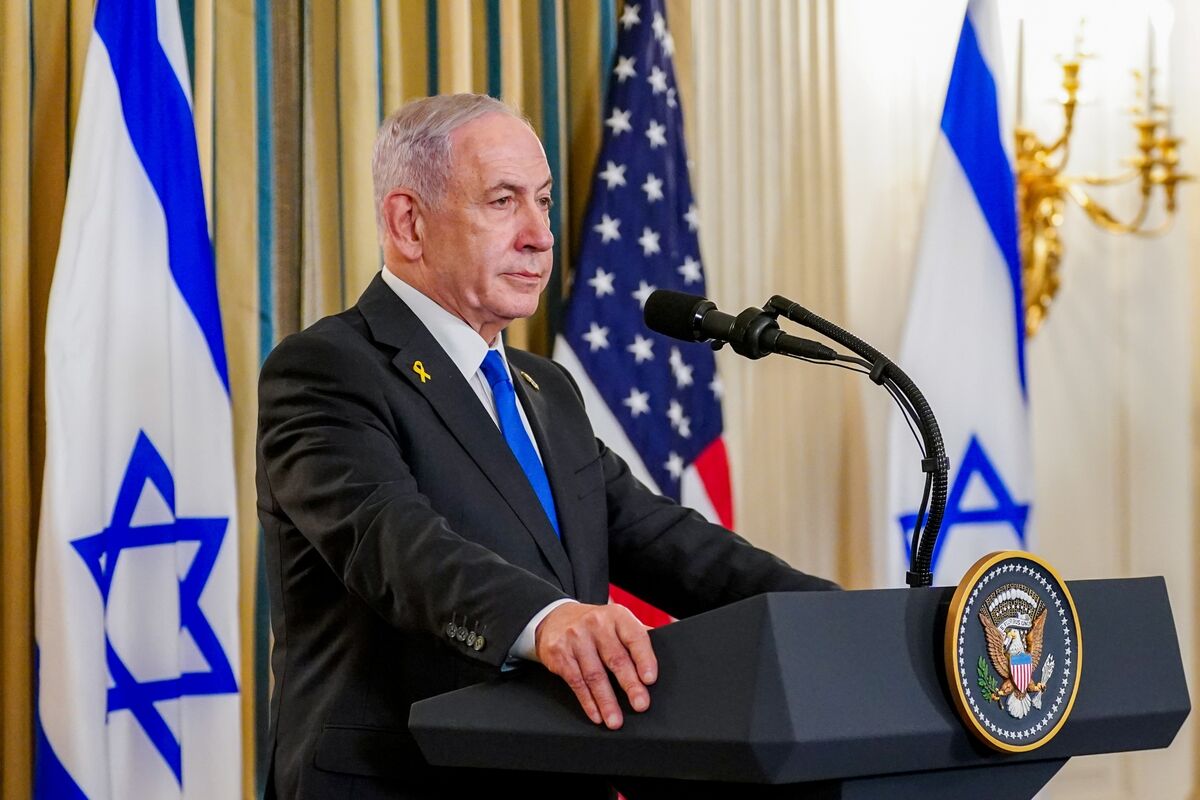
Israeli Prime Minister Benjamin Netanyahu has formally submitted a request for a pardon to the Israeli president in relation to charges of bribery, fraud and breach of trust, the president’s office said on Sunday. While the filing is a significant legal and political development that could affect domestic governance and investor sentiment in Israel if it precipitates prolonged legal or political turmoil, the immediate market implications are likely limited absent further developments.
Market structure: A formal pardon request increases political uncertainty in Israel, favoring defensive exporters and security suppliers while penalizing domestically focused banks, consumer cyclicals and real estate. Expect a 1–3% near-term ILS depreciation and a >20–50bp widening in 5–10y Israeli sovereign yields under sustained political friction, which benefits USD/ILS longs, gold and export-oriented names (TEVA, CHKP) while compressing local lending margins.
Risk assessment: Tail risks include large-scale protests, a snap election or a credit-rating action — low probability but high impact (TA-35 down 8–15%; CDS +100–200bps). Immediate horizon (days) should see volatility spikes and liquidity dislocations; 1–3 months could bring policy paralysis and lower fiscal support; 6–12+ months could see structural shifts in governance and investor access to Israeli assets.
Trade implications: Tactical trades include FX options to capture ILS depreciation, short-duration sovereign protection (buy CDS or EIS puts) and long selective defense/cyber names (ESLT, CHKP) that typically outperform in geopolitical uncertainty. Rotate away from domestic banks/real-estate exposures into exporters and global software/pharma; set entry on objective triggers (ILS move, CDS widening, TA-35 drop) and use 1–3 month option expiries to limit time premium.
Contrarian angles: Consensus likely underprices duration of political paralysis — markets may slowly reprice through credit and foreign capital flight rather than a one-day selloff. Historical Israeli political/legal cycles produced multi-week shekel weakness (~2–4%) and TA-35 underperformance (~5–10%); if the president delays or rejects the pardon this could amplify moves, so asymmetric payoffs favor hedges and selective longs in defense/cyber.
AI-powered research, real-time alerts, and portfolio analytics for institutional investors.
Request DemoOverall Sentiment
neutral
Sentiment Score
0.00
