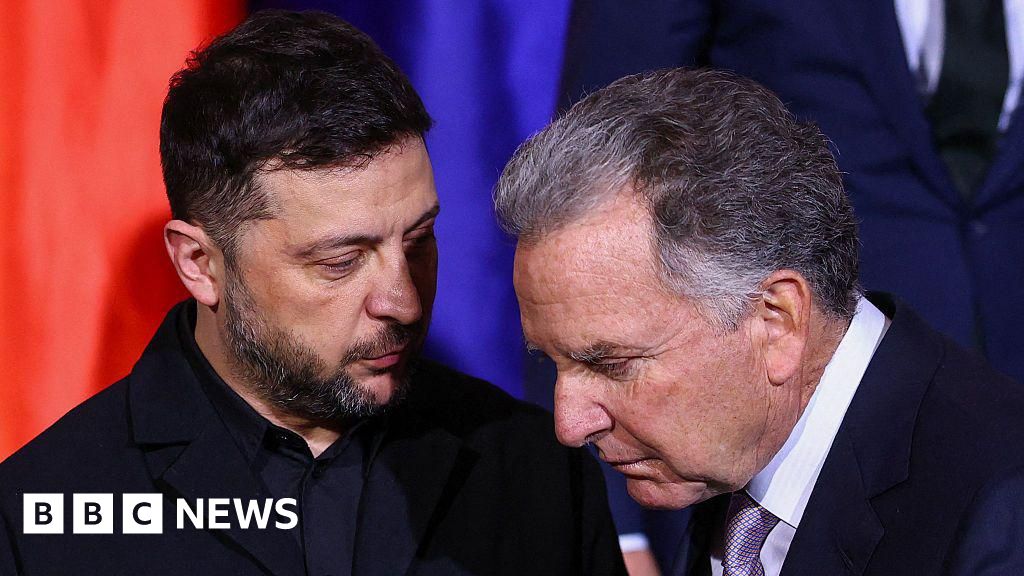
US special envoy Steve Witkoff and Ukraine's Rustem Umerov described three days of Miami talks with European allies as "productive and constructive" but yielded no major breakthrough on ending the war; discussions centered on a 20‑point plan, multilateral and US security‑guarantee frameworks and an economic recovery plan. Separate US meetings with Russian envoy Kirill Dmitriev (which involved Jared Kushner) were also described as productive, even as a leaked 28‑point US plan and Moscow's territorial demands continue to complicate diplomacy. Meanwhile, a reported Ukrainian drone strike damaged two vessels, two piers and possibly oil infrastructure in Russia's Krasnodar region, underscoring persistent kinetic risk and continued upside volatility for energy and risk‑off positioning in markets.
Market structure: The Miami talks reduce near-term probability of an immediate ceasefire but keep a negotiated outcome plausible — that implies a persistent geopolitical risk premium. Expect oil and energy names to trade with higher realized volatility (intraday moves of 3–8%) and defense contractors to command higher forward multiples if stalemate continues; sovereign yields should see safe-haven inbound flows that can compress 10y UST yields by ~10–25 bps in acute risk-off episodes.
Risk assessment: Tail risks include a sharp escalation (attack on major oil export hubs or wider NATO involvement) that could spike Brent 15%+ in days and force broad sanctions/extensions, or a rapid diplomatic breakthrough that collapses the defense risk-premium. Hidden dependencies: US domestic politics (pro-Trump envoys) can pivot policy quickly — a public US-Russia engagement could reduce defense spending expectations and knock 10–20% off defense names in 3–6 months.
Trade implications: Near-term (days–weeks) favor volatility hedges and selective longs: energy exposure for supply-risk spikes, and convex exposure to defense wins. Over 3–12 months, discriminate between prime contractors with backlog/leverage (LMT, RTX, GD, NOC) and cyclical travel/airline names which will underperform if conflict persists.
Contrarian angles: The market underestimates the speed at which a negotiated settlement could remove the premium — defense equities are not binary; buy optionality, not full conviction. Conversely, energy downside from a fast settlement is limited by already-tight supply; shorting defense on a diplomatic breakthrough is risky without a clear fiscal signal (budget cuts) within 60–90 days.
AI-powered research, real-time alerts, and portfolio analytics for institutional investors.
Request DemoOverall Sentiment
moderately negative
Sentiment Score
-0.35
