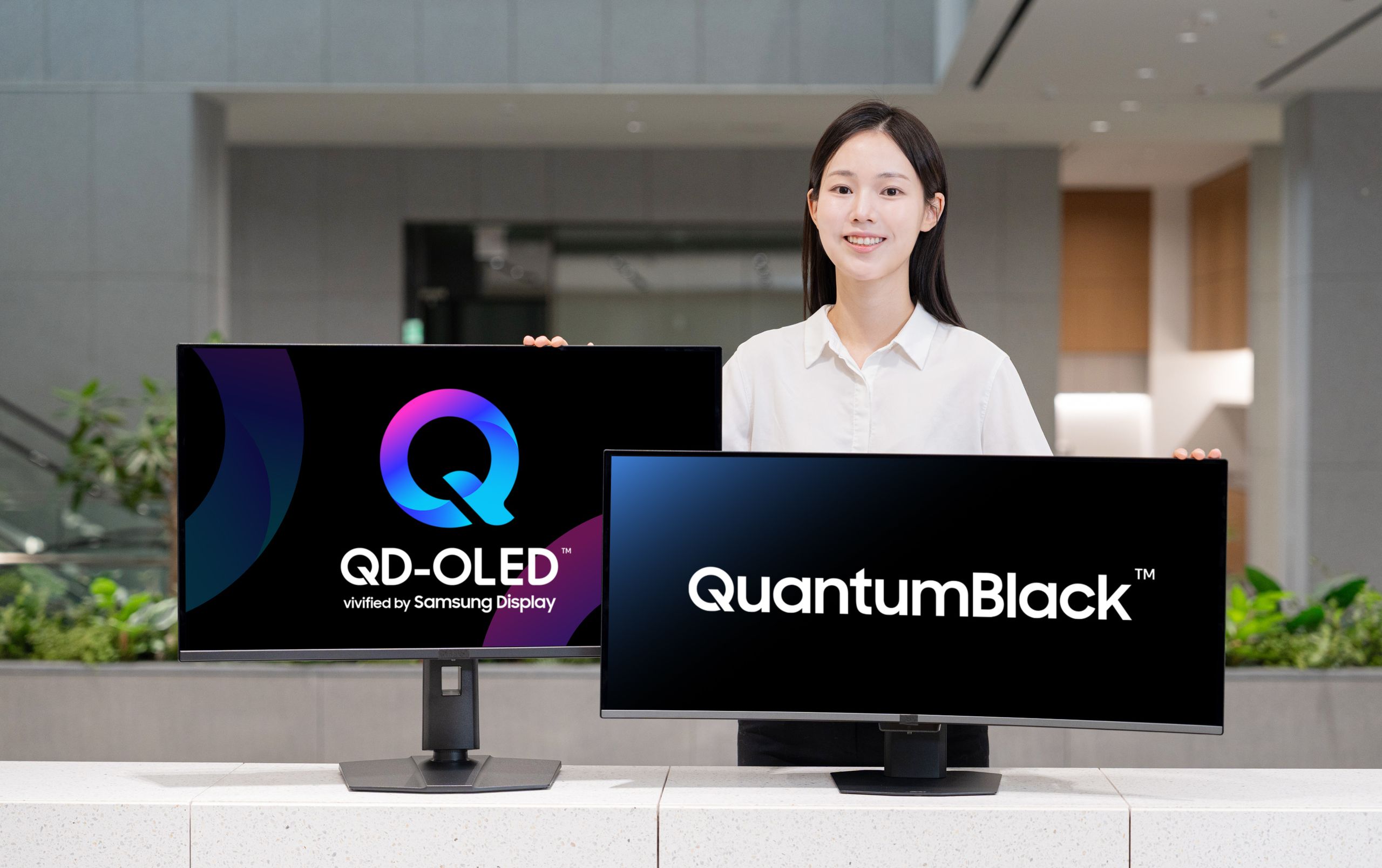
Samsung Display launched 'QuantumBlack,' a factory-applied film for QD-OLED panels that cuts light reflections by ~20% and raises surface hardness from 2H to 3H. The coating will be applied to all 2026 QD-OLED monitors and is rebranded by OEMs (Asus, AOC, MSI, Gigabyte), addressing ambient black-level raise and purple tint issues to improve real-world usability and durability. Expect a modest positive impact on QD-OLED adoption and panel-supplier competitiveness, but limited near-term financial impact absent volume or pricing disclosure.
This factory-applied AR/durability step is a classic productization lever that can broaden QD‑OLED from a niche premium-gamer halo into a mainstream desktop monitor category. If final-user acceptance increases so that QD‑OLED captures an incremental 5–10% of the >$400 monitor segment within 12–18 months, expect a meaningful reallocation of channel inventory away from high-refresh IPS/VA panels and a 6–12% uplift in ASPs for leading OEM SKUs as vendors reprice for the improved utility in ambient-lit environments.
On the supply side the move centralizes differentiation at the panel-maker layer and creates a small, high-velocity market for factory film capacity and related adhesives/coating chemistries. That gives Samsung Display negotiating leverage over downstream OEMs and raises the marginal value of panel yields (a single-point coating defect now has outsized SKU-level ramifications), which implies capex and yield-readiness will be the gating items to watch over the next 3–9 months.
Key reversal risks are execution and copy: coatings that fail durability claims or underperform in real-world lighting will produce warranty/return spikes and negative press that compress adoption; conversely, rapid licensing or competitor parity would limit pricing power and compress the expected ASP improvement. Watch retail sell-through, OEM margins, and GPU channel stocking as 2–6 month leading indicators — those will tell you whether this is a product-cycle tweak or the start of a durable structural reallocation in premium monitor demand.
AI-powered research, real-time alerts, and portfolio analytics for institutional investors.
Overall Sentiment
mildly positive
Sentiment Score
0.25
Ticker Sentiment
