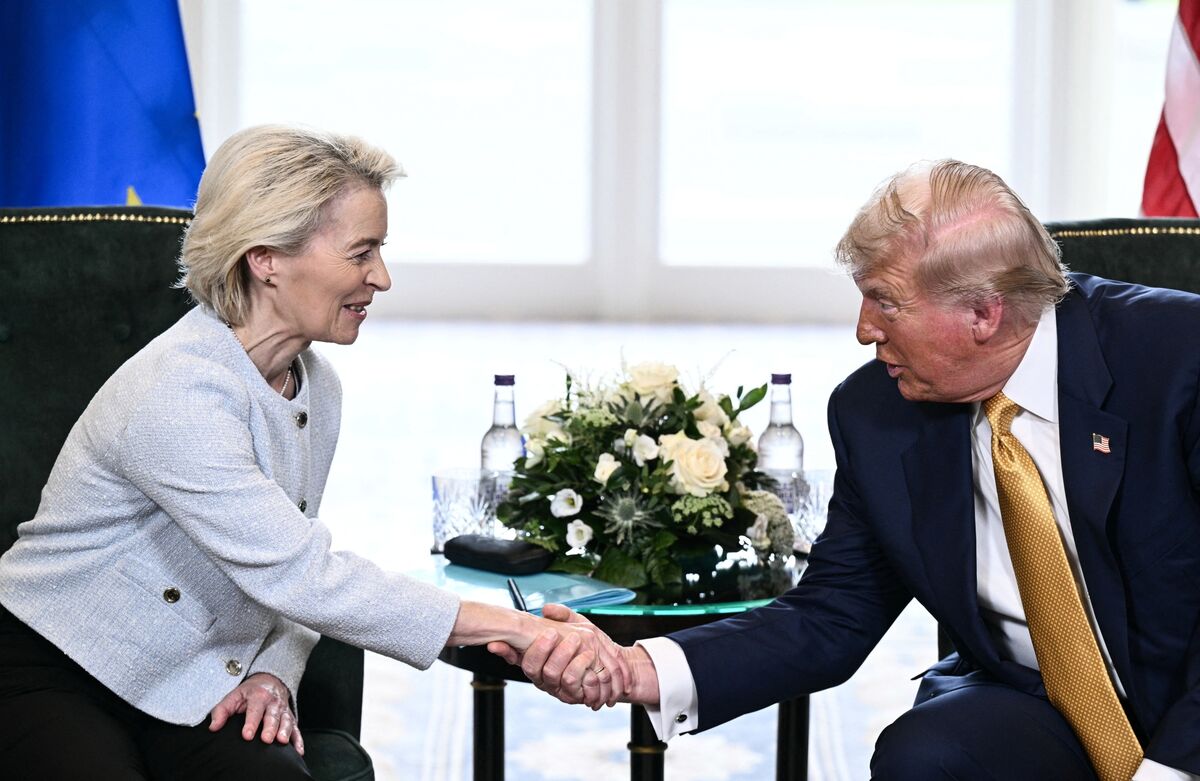
European Union leaders are undergoing "soul-searching" regarding their diminished global influence, particularly in transatlantic relations, as they confront a "bitter reality" of lost clout with the US. This sentiment is underscored by European Commission chief Ursula von der Leyen's experience waiting for then-President Donald Trump to conclude a golf round before discussing trade, while Trump prioritized personal business and unrelated topics. The incident highlights the EU's perceived struggle to assert its standing in critical international dialogues.
The provided text indicates a significant deterioration in the perceived influence of the European Union within the transatlantic relationship, described as a "bitter reality" of "lost clout." This narrative is supported by a strongly negative sentiment score of -0.65 and a pessimistic tone. The central evidence is an anecdotal but symbolic account of the European Commission chief waiting for the US president to finish leisure activities before discussing the critical transatlantic trade relationship. This dynamic suggests that EU priorities may be secondary in negotiations, creating uncertainty around future trade policies. The identified themes of "Trade Policy," "Geopolitics," and "Elections" confirm that this is not merely a diplomatic slight but a development with potential economic and political ramifications for entities reliant on stable EU-US relations.
AI-powered research, real-time alerts, and portfolio analytics for institutional investors.
Request DemoOverall Sentiment
strongly negative
Sentiment Score
-0.65
