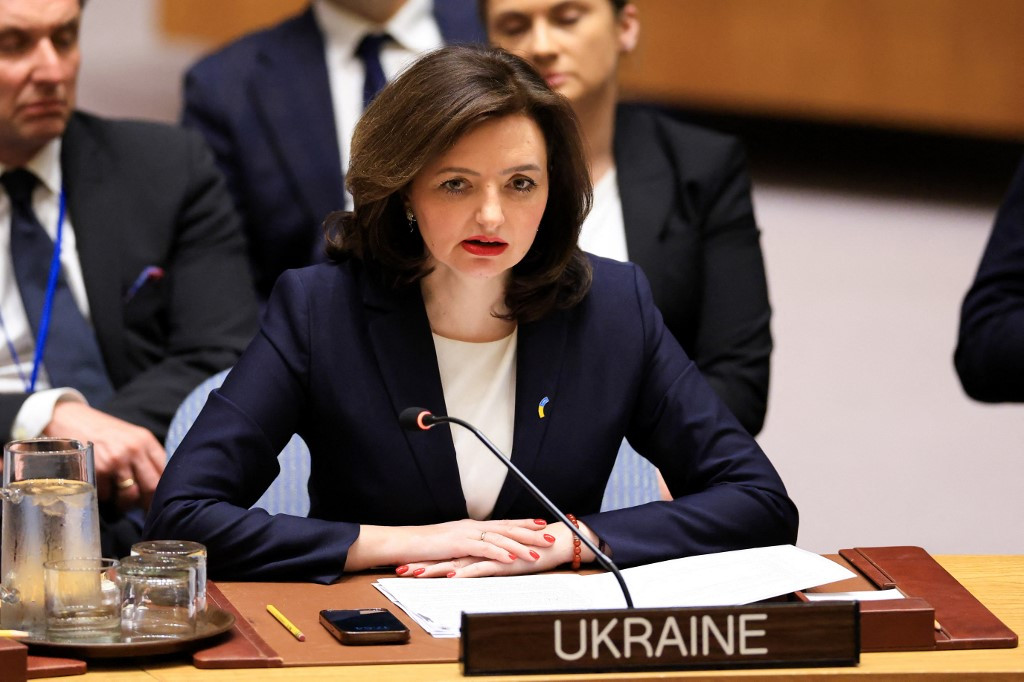
UN General Assembly adopted a concise ceasefire resolution with 107 votes supporting Ukraine, 12 voting with Russia and the US abstaining; Ukraine frames this as a diplomatic success. Deputy FM Mariana Betsa stresses a ‘just peace’ requires restoration of sovereignty, full accountability (ICC warrants and a Special Tribunal for the crime of aggression), and strengthened sanctions (shadow fleet, oil price cap, Russian banks) while noting Russia’s intensified strikes on energy and critical infrastructure. She highlights severe humanitarian crimes including ~20,000 Ukrainian children deported and warns the conflict’s outcome will shape global rules-based order, implying continued geopolitical risk and potential energy/infrastructure market volatility.
Legal escalation (special tribunals + ICC momentum) raises the probability that seized or frozen Russian assets will be pursued for restitution or leveraged as political insurance within 6–24 months. That changes the marginal calculus for counterparties handling Russian cashflows: greater legal counterparty risk will increase banks’ compliance costs and push incremental Russian trade into higher-friction channels, raising effective transaction costs across energy and commodity flows.
Enforcement pressure on the “shadow fleet” and tighter compliance to the oil price cap will create a persistent premium on freight, insurance and broker margins; a sustained 10–30% rise in those costs is plausible over the next 3–12 months and would effectively raise delivered Russian hydrocarbon costs even without a supply cut. That friction disproportionately benefits integrated majors with diversified distribution (CVX, XOM) and U.S. shale capture-the-spread dynamics, while punishing spot-dependent traders and shadow-shipping operators.
Geopolitical distraction risk (Middle East escalation, U.S. diplomatic pivots) creates a non-linear catalyst set: on a days-to-weeks horizon, weapons deliveries can be delayed; on a 6–24 month horizon, fragmented enforcement reduces sanction effectiveness and compresses the upside for defense names. Conversely, if Western unity holds and legal actions accelerate, expect 12–36 month multi-year procurement programs and reconstruction mandates to lock in revenue for large defense primes and European system integrators.
Key tail risks: (1) fragmentation of sanctions enforcement by key Global South actors within 6–18 months, which would reverse energy-cost premia and re-rate defensive shorts; (2) rapid militarization or battlefield shocks causing knee-jerk spikes in oil and defense flows over days. Monitor enforcement actions (asset seizures, shipping interdictions) and major budget votes as binary catalysts for trade entry or exit.
AI-powered research, real-time alerts, and portfolio analytics for institutional investors.
Request DemoOverall Sentiment
strongly negative
Sentiment Score
-0.60
