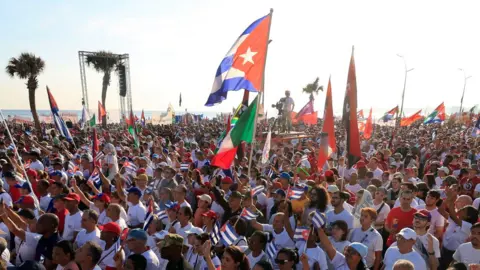
Cuba says it may review a $100m US aid offer as the island's energy crisis deepens, with officials warning the country has completely run out of diesel and fuel oil. Nationwide blackouts, hospital and school closures, and rare street protests underscore the severity of the disruption. The article also highlights intensified US sanctions and oil-supply restrictions, which Cuba says are the main driver of the crisis.
The market significance is not the humanitarian headline; it is the forced repricing of Cuba’s near-term energy balance. When a sovereign effectively runs out of diesel and fuel oil, the binding constraint shifts from demand weakness to physical logistics, which usually produces nonlinear outcomes: transport paralysis, lower hotel occupancy, hospital strain, and a faster deterioration in tax receipts and FX availability. That raises the probability of additional rationing, emergency barter deals, and arrears across suppliers over the next 2-8 weeks. Second-order winners are any regional energy and shipping intermediaries able to intermediate scarce barrels without direct sovereign exposure. The more the island is cut off from conventional suppliers, the more it relies on opportunistic cargo routing, smaller counterparties, and informal settlement mechanisms, which increases spreads for traders but also default and seizure risk. For EM investors, the larger implication is policy contagion: a visible domestic stress event can accelerate capital flight and further constrain external financing for other sanction-sensitive sovereigns with weak reserves. The key catalyst is not the aid offer itself but whether Washington signals any relaxation of enforcement around fuel flows. If restrictions remain intact, this is a months-long balance-of-payments and social-stability problem, not a days-long weather event; blackouts become the leading indicator for regime pressure. A partial reversal would require a credible bridging arrangement on fuel or a meaningful policy de-escalation, but absent that, the downside skew is toward deeper operational disruption and more protest activity. The contrarian read is that the immediate market impact on broad EM assets may be overstated because Cuba is too small to matter directly, while the real tradeable angle is political optionality: any change in U.S. policy would create a sharp but temporary relief rally in Cuba-adjacent risk proxies. For now, the better expression is to fade optimism around any fast normalization and focus on assets exposed to Caribbean logistics, regional fuel scarcity, and sanction-sensitive shipping flows.
AI-powered research, real-time alerts, and portfolio analytics for institutional investors.
Request DemoOverall Sentiment
strongly negative
Sentiment Score
-0.72
