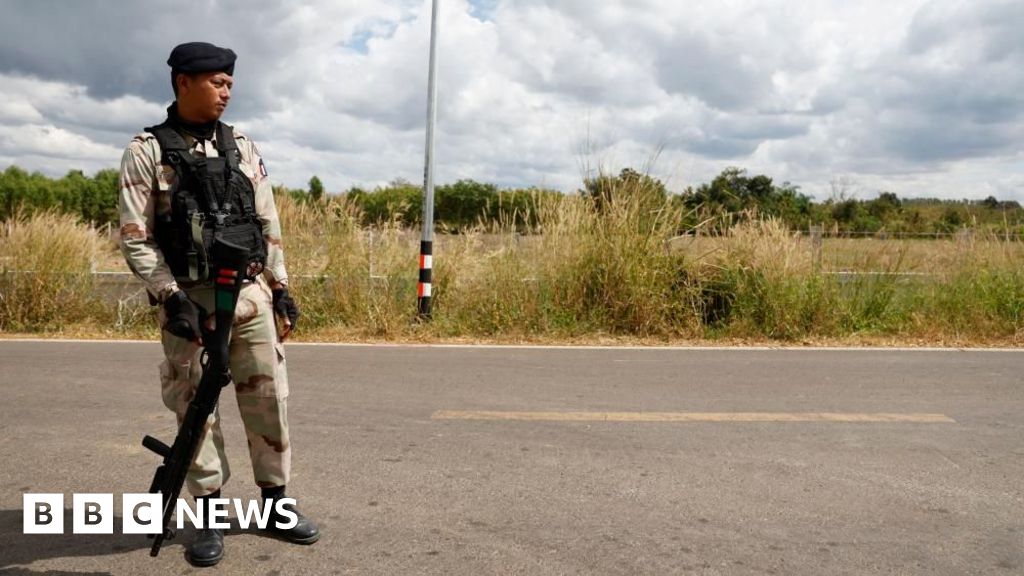
Thailand conducted air strikes against Cambodian positions—reportedly dropping up to 40 bombs from F-16s in Banteay Meanchey—as bilateral ceasefire talks continued; fighting has spread along the roughly 800km border since clashes resumed, leaving at least 41 dead and nearly one million displaced. Negotiators from both sides are meeting with defense ministers expected to join, and the US and China are mediating; sustained escalation threatens regional stability and could pressure Southeast Asian risk assets, tourism flows and cross-border trade in the near term.
Market structure: Short, sharp cross-border strikes favour defence OEMs and liquid commodity/FX safe havens while compressing pricing power for Thailand’s travel & leisure complex. Expect immediate demand uptick for precision munitions, ISR and logistics services (outsized orders within 1–6 months) while airport/airline revenue and local hotel ADRs face a 10–40% hit in affected provinces over the next 1–3 months. FX and sovereign risk repricing will pressure THB and Thai sovereign spreads; oil impact is minimal but gold and US Treasuries should see safe-haven inflows.
Risk assessment: Tail risk of wider ASEAN escalation or major-power intervention is low but high-impact — if hostilities expand beyond border (probability <10% over 3 months) expect >200bp EM spread widening and >5% THB depreciation. Near-term (days–weeks) catalysts: weekend defence minister talks and US/China mediation; medium-term (3–6 months) hinge on whether a durable ceasefire is signed and enforced. Hidden dependencies include tourism seasonality (high sensitivity through Q1) and insurer/reinsurance loss accumulation that could trigger secondary credit events.
Trade implications: Tactical defensive positioning — rotate into large-cap defence (LMT, RTX, NOC) with 1–3% portfolio longs sized for 3–6 month horizons, hedge with 3–6 month call spreads to cap cost; buy GLD (1–2%) and 2–5y Treasuries (IEF or TLH) as flight-to-quality. Reduce Thailand tourism exposure (trim AOT.BK and Thai-listed carriers by 30–50% within 7 trading days) and establish USD/THB long (or THB put) positions sized to 1–2% notional if USD/THB moves +1.5% from today.
Contrarian angles: The market may overprice permanent defence demand — if a ceasefire is signed within 7–14 days, defense equipment order visibility can reverse and LMT/RTX may give back 5–12% of gains; conversely, >3% THB weakness creates a tactical buy window for Thailand exporters and battered tourism names at 6–12 month horizons. Historical parallels (localized ASEAN skirmishes) point to reversions within 1–3 quarters, so prefer option-limited or spread structures over outright, undisciplined directional exposure.
AI-powered research, real-time alerts, and portfolio analytics for institutional investors.
Request DemoOverall Sentiment
moderately negative
Sentiment Score
-0.50
