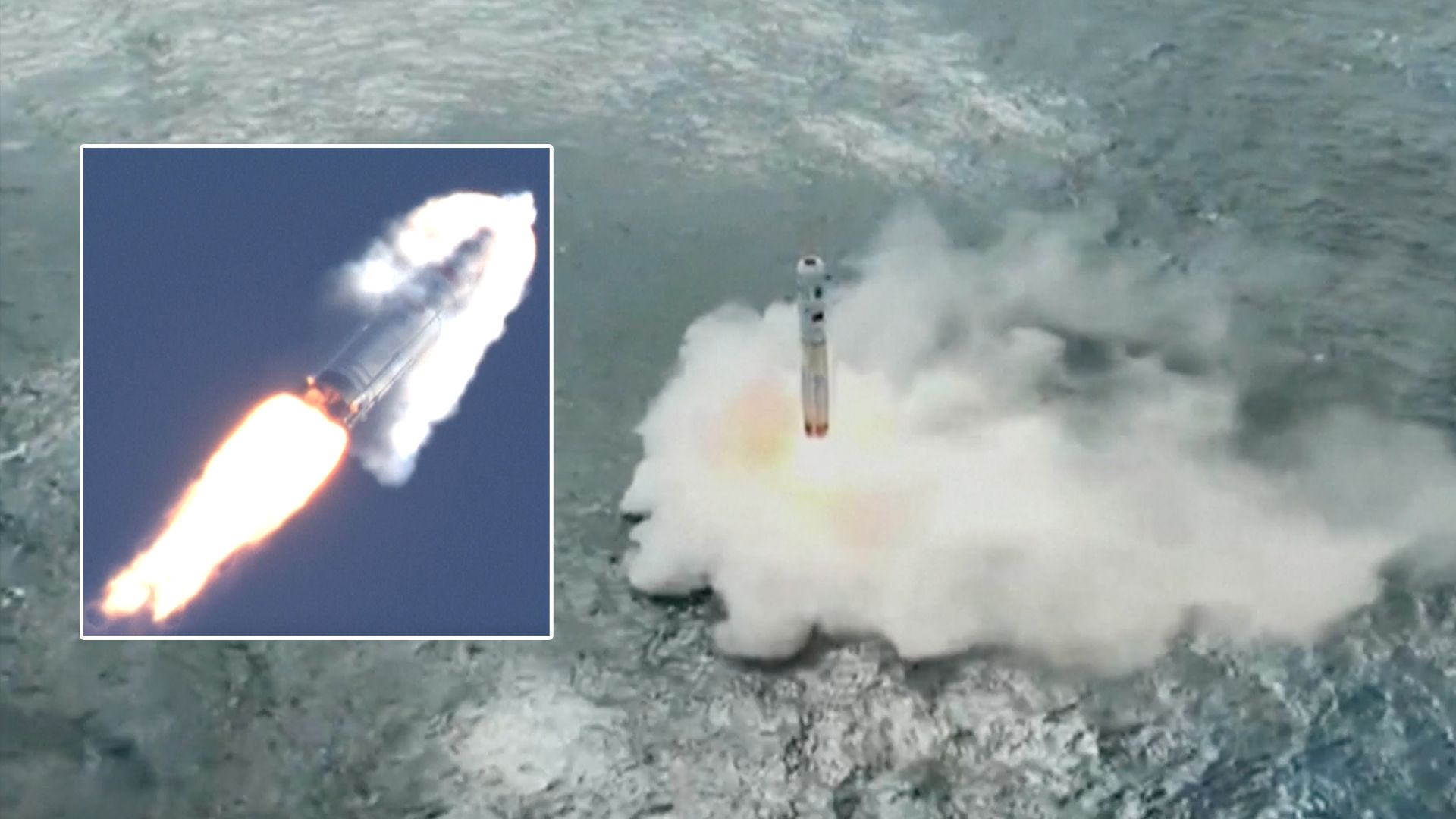
On Feb. 11 China conducted a successful low-altitude abort test of its next-generation Mengzhou crew capsule and a recovery trial of the Long March 10 first stage from Wenchang; the capsule separated and parachuted to an ocean splashdown while the booster achieved a powered, vertical splashdown, demonstrating early reusability capability. These technical milestones advance China’s crewed lunar program — including the Lanyue lander — and keep a crewed lunar timeline (potentially by 2030) plausible, increasing strategic competition with NASA’s Artemis efforts but representing limited immediate market-moving news.
Market structure: China’s successful Mengzhou/Long March 10 abort and booster recovery de-risks crewed lunar capability and strengthens state-owned OEMs and domestic supply chains (composite structures, avionics, propulsion). Near-term winners are defense/aerospace primes and materials suppliers tied to launch cadence; near-term losers include small-cap commercial launchers and Western exporters to China as Beijing accelerates localization. Expect incremental demand for carbon-fiber, high-grade aluminium/titanium and propellant logistics — a multi-year demand tail that could lift supplier revenue by low-double-digits annually if China executes a 2026–2030 cadence.
Risk assessment: Tail risks include a major in-flight failure causing program delays (probability ~5–15% annually) and geopolitically driven export controls or sanctions that can sharply re-route supply chains. Immediate (days) impact is minimal; short-term (weeks–months) moves hinge on NASA/Artemis milestones and news flow; long-term (2026–2030) outcomes determine market shares. Hidden dependencies: Chinese systems still rely on some foreign semiconductors and sensors — U.S./EU export controls or component shortages could materially slow progress.
Trade implications: Favor large-cap defense/aero primes (LMT, NOC, RTX, BA) and materials/rare-earth names (MP, LYC) with 6–24 month horizons; use ETFs (UFO, ARKX) for diversified exposure at 1–2% position sizes. Sell/underweight speculative small-cap commercial launchers (SPCE, RKLB) — they face pricing pressure and margin compression as China scales. Options: use 9–12 month call spreads on LMT/NOC to capture upside while financing premium; consider protective collars on small-cap shorts.
Contrarian angles: Consensus assumes China’s progress only expands market — overlooked is aggressive localization that shrinks addressable export markets for Western suppliers, creating relative winners domestically but losers internationally. Market may underprice semiconductor/sensor export risk; a targeted export control could re-rate Chinese timelines and lift Western suppliers of alternative sources. Historical parallel: Russian/Soviet space advances generated domestic industrial growth but limited Western upside; expect asymmetric outcomes and repricing events tied to policy shocks.
AI-powered research, real-time alerts, and portfolio analytics for institutional investors.
Request DemoOverall Sentiment
moderately positive
Sentiment Score
0.45
