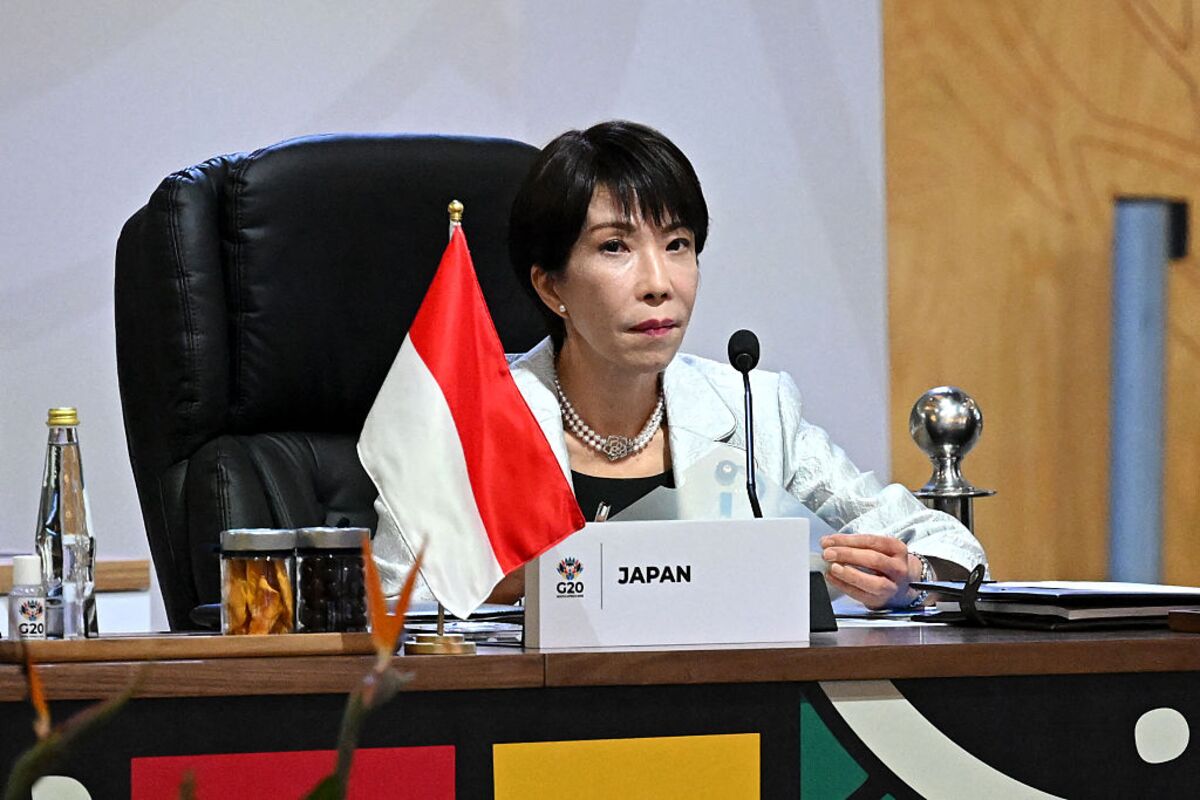
China delivered a letter to the United Nations warning it would take resolute self-defense if Japan intervened militarily in the Taiwan Strait and is seeking international backing for its position; Tokyo dismissed Beijing's claim that Prime Minister Sanae Takaichi has altered Japan's stance as entirely baseless and urged more dialogue to prevent ties between Asia's two largest economies from spiraling. The dispute elevates geopolitical risk around Taiwan—the global semiconductor hub—and could heighten market and supply‑chain uncertainty for investors with exposure to the region.
China delivered a letter to the United Nations warning it would take "resolute self-defense" if Japan "dared to intervene militarily in the Taiwan Strait," and is seeking international support amid a spat over Taiwan, which Beijing views as its territory. Tokyo publicly rejected Beijing's characterization that Prime Minister Sanae Takaichi has shifted Japan's position as "entirely baseless" and called for more dialogue to prevent ties between the two largest Asian economies from deteriorating. The dispute raises direct geopolitical risk around Taiwan—the article highlights it as the global semiconductor hub—and therefore increases potential supply‑chain and market uncertainty for investors exposed to chip production and related sectors. Market signals included in the briefing show a moderately negative sentiment score of -0.5 and a market impact score of 0.55, indicating a risk‑off tone and a meaningful but not extreme probability of market disruption.
The immediate investor-relevant implication is elevated event risk for Asia‑exposed equities and semiconductor supply chains, with potential for episodic volatility tied to diplomatic exchanges or further Chinese military rhetoric. Separately, the themes flagged (Geopolitics & War; Infrastructure & Defense; Elections & Domestic Politics) point to a directional opportunity for defense and infrastructure suppliers if tensions persist, but any trade should account for the uncertain timing and political dynamics. Given the limited factual scope of the article, the situation is a watch‑and‑manage risk scenario rather than a confirmed structural break in trade or supply‑chain patterns; investors should prioritize monitoring specific developments at the UN, bilateral statements, and any concrete measures affecting semiconductor exports or military deployments.
AI-powered research, real-time alerts, and portfolio analytics for institutional investors.
Request DemoOverall Sentiment
moderately negative
Sentiment Score
-0.50
