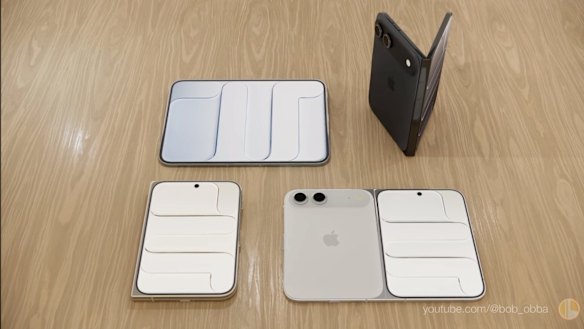
Apple is reportedly preparing a folding iPhone in a passport/notepad form factor that may be unveiled alongside iPhone 18 models and targeted for a 2026 launch; analysts including Ming‑Chi Kuo and Mark Gurman describe a 5.5‑inch outer (≈8×12 cm folded) display opening to about a 7.8‑inch 4:3 tablet, a gap‑eliminating hinge and a fingerprint sensor instead of Face ID. Price estimates are above $2,000 (Gurman cited >$2,000 and speculation up to ~$3,000), and Apple is prioritising thin, premium design even if volumes are limited; demand uncertainty and durability concerns suggest the device may be niche initially. For investors, the product could boost Apple and selective suppliers if adoption scales, but high price and unproven form factor imply limited near‑term market impact and notable execution risk.
Market structure: A folding iPhone at $2k–$3k would create a low-volume, high-ASP premium niche that benefits Apple (AAPL) gross margins and select component suppliers (flexible OLED, ultra-thin glass, hinge makers) while depressing demand for low‑end Android substitutes. Expect first 12 months supply tightness (inventory-to-sales down 10–30% vs. standard iPhone launches) with price inelasticity among Apple’s top 20% spenders, but the device is unlikely to materially move overall smartphone share in year one.
Risk assessment: Main tail risks are a durability recall or hinge patent injunction (low probability, high impact — >5% hit to iPhone EBIT in worst case) and poor adoption forcing price cuts >15% within 12 months. Near-term volatility will cluster around September 2026 launch; structural outcomes (ecosystem cannibalization or halo effect) play out over 2–4 quarters. Hidden dependencies include supplier yield curves (flex-OLED yield <80% would delay shipments) and Apple’s decision to omit Face ID, which can change consumer acceptance.
Trade implications: Favor concentrated, size-limited bullish exposure to AAPL and upstream suppliers of UTG/hinges rather than broad handset incumbents; use defined-risk options around the September event to cap downside. Rotate modest capital from commodity-dependent Asian OEMs into US-listed component plays (Corning GLW) and consider shorting high-cost Android OEMs that rely on foldable margins to justify R&D. Monitor order flow and supplier shipment notices for 2–6 week leading signals.
Contrarian angles: The market assumes Apple will instantly legitimize foldables; this is underdone — price elasticity and app fragmentation could keep volumes <1–2% of iPhone unit sales in year one, preserving standard iPhone economics. Historical parallel: iPad and Apple Watch began niche and then scaled; expect a multi-year adoption curve, so the best risk/reward is staged exposure (buy on post-launch weakness), not all-in at debut. Unintended consequence: cannibalization of iPad mini could lower ASPs in tablet line by 3–7% if Apple converts 10–20% of mini buyers to the foldable.
AI-powered research, real-time alerts, and portfolio analytics for institutional investors.
Request DemoOverall Sentiment
mixed
Sentiment Score
0.05
Ticker Sentiment
