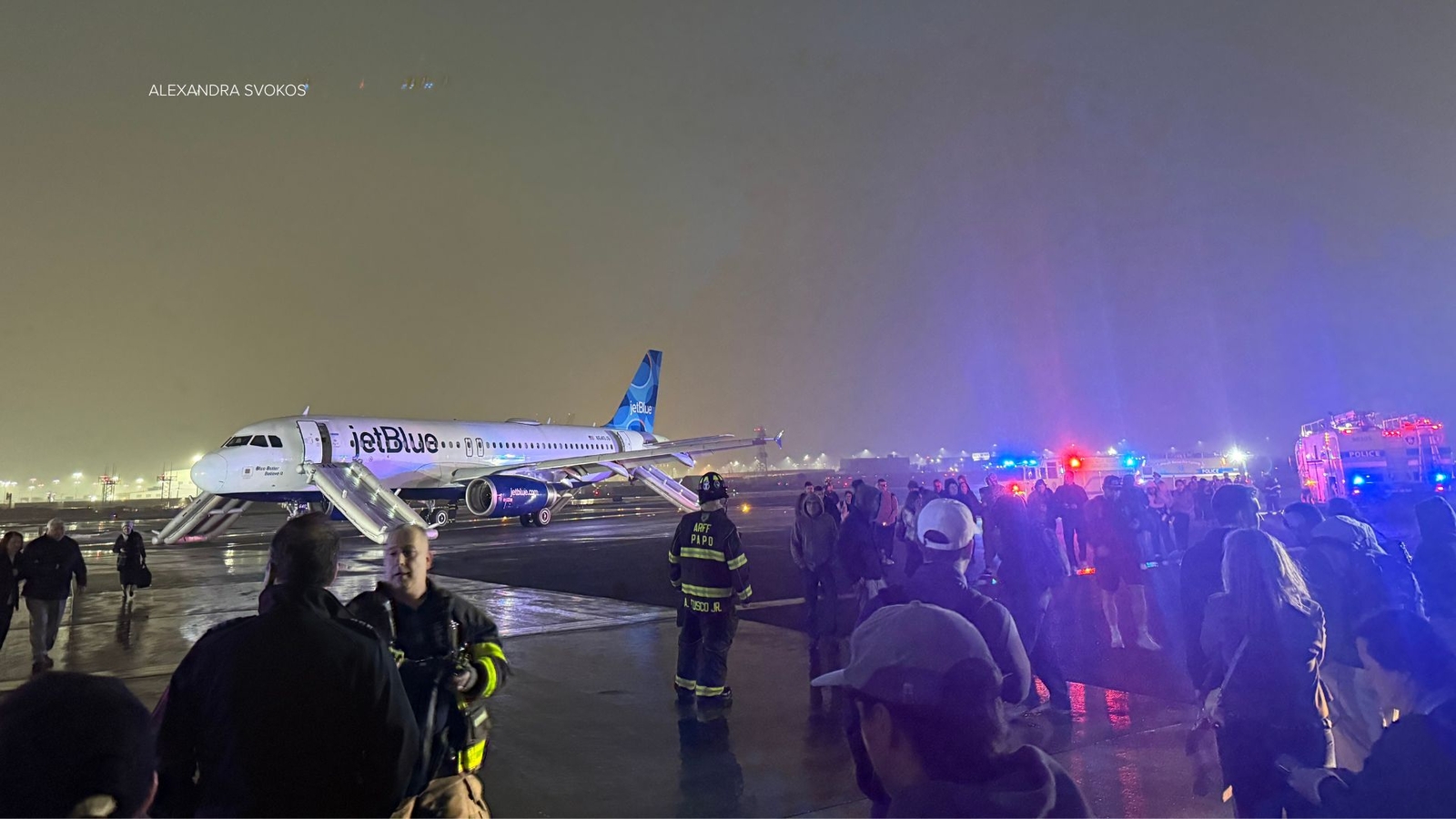
JetBlue Flight 543, an Airbus A320 departing Newark Liberty for West Palm Beach around 5:45 p.m., returned immediately after an apparent engine failure and crew-reported smoke in the cockpit; passengers evacuated via slides and no injuries were reported. Newark suspended operations for about an hour while the aircraft was removed and reopened around 7:00 p.m.; JetBlue said it is supporting customers and will cooperate with federal authorities, implying limited near-term operational disruption, potential inspection/repair costs and possible regulatory scrutiny but minimal immediate market impact.
Market structure: This is a single-aircraft operational incident that creates short-lived negative publicity for JetBlue (JBLU) and small systemic noise for U.S. air travel demand; direct winners are short-haul competitors on the NYC–Florida corridor (LUV, AAL) and airport/ground-handling vendors that can demonstrate superior safety. Pricing power and capacity effects are minimal — one-hour Newark suspension is immaterial to quarterly ASMs — but reputational slippage can produce a transient 3–7% revenue yield pressure for the affected carrier over 2–6 weeks if amplified by social media.
Risk assessment: Tail risks include a regulatory finding that forces inspections/groundings of a common engine/airframe subset (low probability but high impact: 5–15% capacity hit for carriers with concentrated A320 fleets over 2–8 weeks). Hidden dependencies: engine OEM attribution (CFM vs Pratt) and maintenance vendor contracts will determine cascade effects; monitor FAA/NTSB report within 30–90 days. Catalysts that would amplify impact are viral video coverage, class-action suits, or discovery of systemic maintenance lapses.
Trade implications: Expect headline-driven volatility in JBLU for days to weeks; a disciplined short-duration volatility play is optimal (buy protection or sell reversal on mean reversion). Relative-value: long higher-quality, better-capitalized carriers (LUV, DAL) vs JBLU to capture potential market-share shifts; aerospace suppliers (RTX, SAF.PA) could see service-demand tailwinds if inspections increase.
Contrarian angle: Consensus will over-emphasize safety headlines; historically (e.g., isolated engine failures) share-price hits are recovered in 2–8 weeks unless regulator grounds fleets. If JBLU underperforms peers by >5% on the headline without an adverse FAA/NTSB interim finding in 30 days, it's a buy-the-dip opportunity for long-term exposure to U.S. travel recovery.
AI-powered research, real-time alerts, and portfolio analytics for institutional investors.
Request DemoOverall Sentiment
mildly negative
Sentiment Score
-0.25
