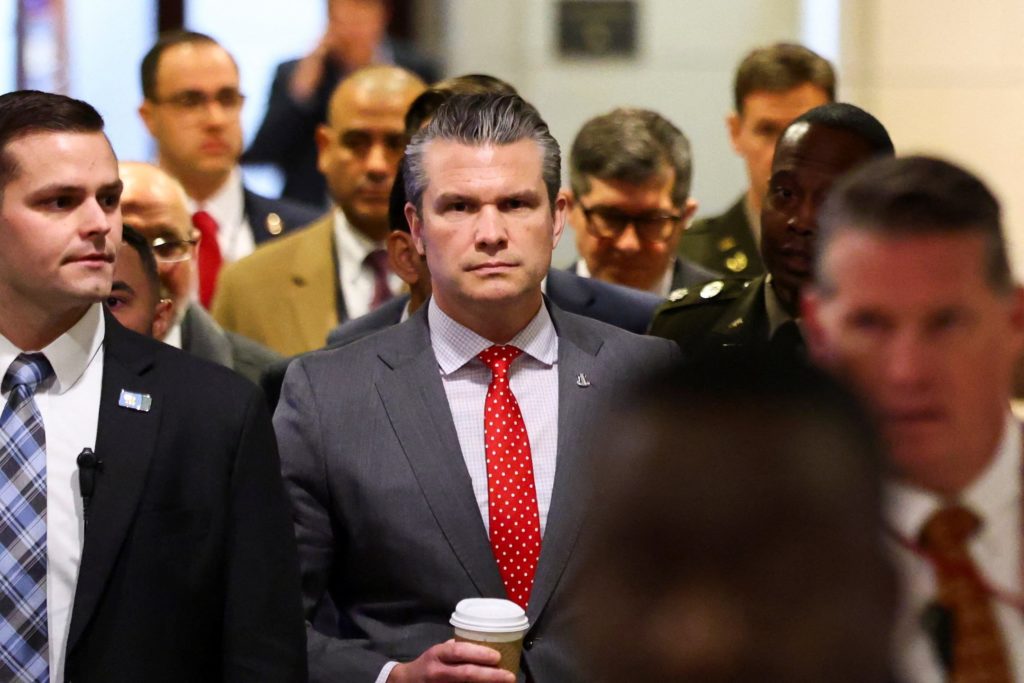
The Senate is advancing a roughly $900 billion National Defense Authorization Act that both tightens congressional oversight of recent U.S. counterdrug strikes—ordering a 25% cut to Defense Secretary Hegseth’s travel budget until an unedited Sept. 2 strike video and related execution orders are delivered to Armed Services committees—and embeds major policy shifts: restrictions on unilateral troop withdrawals (e.g., Europe, South Korea), authorization of U.S. weapons funding to Ukraine, characterization of Russia as an adversary, repeal of the 1991 and 2002 AUMFs, and sweeping procurement reform. The bill also repeals the Caesar sanctions on Syria (potentially opening the door to large-scale reconstruction investment), codifies limits on Pentagon diversity, equity and inclusion offices into law, grants federal recognition to the Lumbee Tribe, and has been delayed by a dispute over an air‑safety waiver tied to a January crash—elements with material implications for defense contractors, geopolitical risk, and investor opportunities in post‑conflict reconstruction.
The Senate is advancing an approximately $900 billion National Defense Authorization Act that ties congressional oversight to immediate operational accountability by cutting Defense Secretary Hegseth’s travel budget 25% until he delivers the unedited Sept. 2 strike video and the execution order to the Armed Services Committees. The Sept. 2 counterdrug operation involved an initial missile strike the Pentagon says killed nine people and a second strike some 30 minutes later that killed two others; Democrats and former military lawyers allege the second strike may have hit shipwrecked sailors, and the administration has classified the full footage.
Substantive policy shifts in the bill include restrictions on unilateral troop withdrawals (Europe, South Korea), authorization of U.S. weapons funding to Ukraine, formal characterization of Russia as an adversary, repeal of the 1991 and 2002 AUMFs, and the most ambitious Pentagon procurement reform in a generation. The bill also codifies a ban on creating Pentagon DEI offices (page 728), grants federal recognition to the Lumbee Tribe, and repeals Caesar sanctions on Syria—potentially unlocking private reconstruction investment against a World Bank-estimated $215 billion need.
Market implications are mildly positive yet cautious: sustained weapons funding and procurement reform are structural tails for defense contractors, while the Syria repeal creates a nascent reconstruction opportunity; however, passage timing is uncertain due to an air-safety waiver dispute tied to the Jan. 29 crash that killed 67 people, creating short-term political and implementation risk.
AI-powered research, real-time alerts, and portfolio analytics for institutional investors.
Request DemoOverall Sentiment
mildly positive
Sentiment Score
0.25
