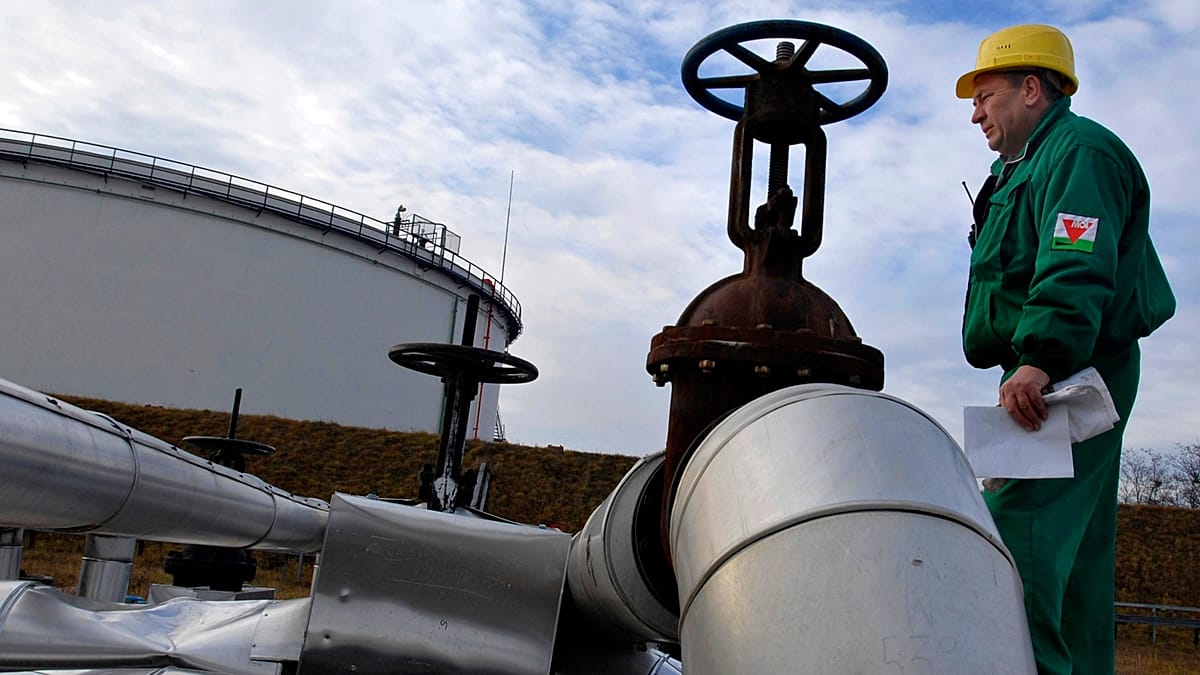
Damage to the Druzhba pipeline on 27 January has prompted the European Commission to identify the Adria (JANAF) pipeline as the most viable alternative to supply Hungary and Slovakia, with JANAF claiming capacity to meet Hungary's 5.75 million tonnes and Slovakia's 4.66 million tonnes annual needs. The dispute has paralysed a €90 billion EU loan and a new sanctions package for Ukraine, with Brussels urging accelerated repairs while Croatia examines the legalities of handling Russian crude under sanctions; the standoff and upcoming Hungarian election elevate political risk and could drive volatility in regional oil logistics and policy-sensitive sovereign flows.
Market structure: The Adria (JANAF) route materially reduces immediate risk of physical oil shortages for Hungary (5.75 mtpa) and Slovakia (4.66 mtpa) and therefore caps the tail of a pure supply shock. However switching from discounted Russian Urals to non‑Russian grades raises logistics and grade‑mix costs, which should push refining margins for diesel and heating oil higher in Central Europe for 1–6 months. Expect regional refiners and oil storage/logistics operators to gain pricing power while importers contracting on Urals see margin compression.
Risk assessment: Key tail risks include (1) EU/US legal blocks on Russian crude transiting Croatian ports, (2) renewed sabotage of Druzhba delaying repairs >3 months, and (3) escalation tied to Hungary’s election (12 Apr) causing longer HUF/sovereign stress. Immediate volatility (days) will be in oil spreads and HUF, short term (weeks–months) in refiners’ crack spreads and Central‑EU sovereign spreads, long term (quarters) in rerouting capex and supply‑chain realignment. Hidden dependency: available tanker capacity and port throughput in Croatian terminals — not guaranteed without contractual and sanction clarity.
Trade implications: Tactical plays should favor directional oil exposure (Brent) and European refiners/logistics while hedging political exposure in Hungary. FX and credit of Hungary/Slovakia are short‑duration risk points — EUR/HUF and 2–5y sovereign CDS should be monitored/traded. Options are preferable to outright futures for capped downside given event risk around the election and sanction decisions within 30–60 days.
Contrarian angles: The market may be overstating a long‑lasting oil shortage; JANAF can meet full annual needs if legal/sanction frictions are resolved, so a sustained oil price spike is unlikely absent coordinated escalation. Conversely, consensus underestimates refinery margin volatility and HUF sovereign stress; these relative mispricings create pair‑trade opportunities (refiners long vs Hungary sovereign/FX short). Historical analog: Nord Stream disruptions showed quick rerouting curtailed price spikes but left regionals with persistent margin gains for quarters.
AI-powered research, real-time alerts, and portfolio analytics for institutional investors.
Request DemoOverall Sentiment
moderately negative
Sentiment Score
-0.35
