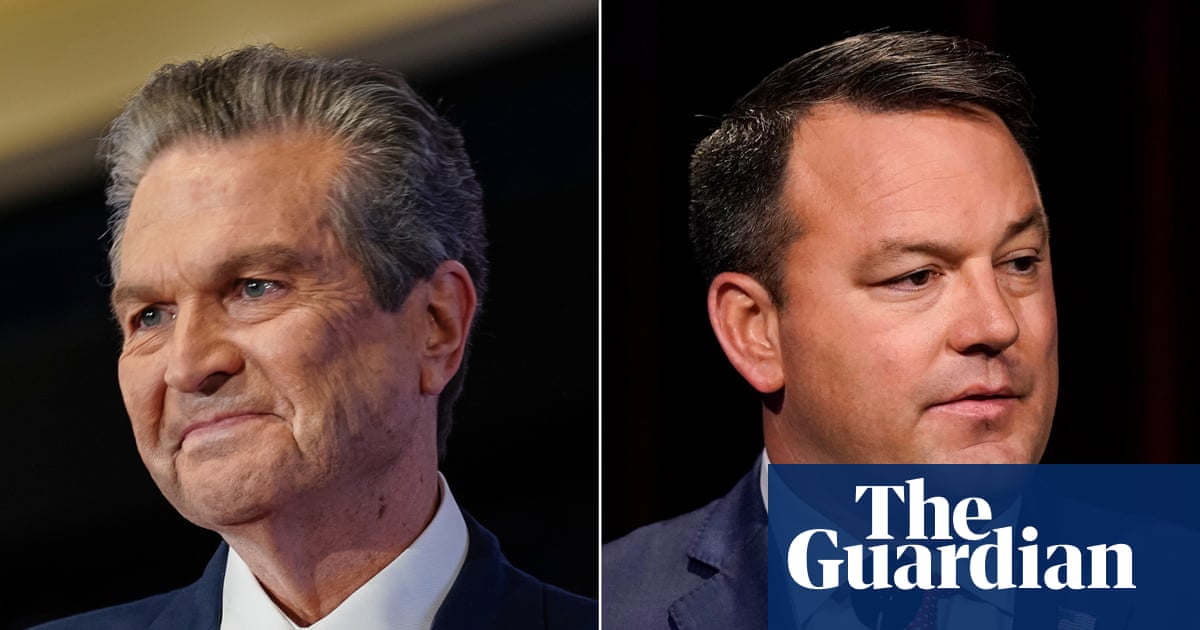
Georgia's Republican governor primary is headed to a June runoff between Burt Jones and Rick Jackson, while Keisha Lance Bottoms won the Democratic nomination outright. The article also notes Mike Collins and Derek Dooley advancing to a runoff in the race to challenge Sen. Jon Ossoff, and two Georgia Supreme Court justices winning re-election amid attention on the court's abortion-ban review. The news is primarily political and judicial in nature, with limited direct market impact.
The immediate market read is not about the governor’s race itself, but about the pricing of governorship-linked regulatory optionality in a state that has become a high-value battleground for healthcare, consumer, and infrastructure lobbying. A runoff materially extends the period of donor burn and media saturation, which tends to advantage the candidate with deeper self-funding and creates a late-stage consolidation window where outside groups can reallocate into the highest-odds lane. That favors incumbency-like network effects in the runoff rather than the original multi-way field. The more interesting second-order effect is on policy variance. A Trump-backed nominee versus a self-funded outsider changes the expected tail distribution for state-level legal and administrative actions, especially around election administration, healthcare oversight, and abortion-related litigation posture. For healthcare and managed-care names with Georgia exposure, the key is not near-term revenue but the probability of headline-driven regulatory friction over the next 6-12 months; that probability rises if the contest hardens into a highly nationalized proxy fight. The judicial results matter more over a multi-quarter horizon than the governor’s race because they reduce the chance of an immediate jurisprudential pivot on the abortion case, but they do not eliminate it. The market is likely underestimating how much this court remains a venue for national issues; even a stable bench can still generate legal uncertainty if the case moves quickly or if the legislature responds. That keeps healthcare litigation risk bid, but not enough to justify broad panic unless the runoff narrative spills into a larger statewide backlash. Consensus is probably overfocusing on the headline winner and underweighting the financing and TV inventory distortion. The runoff keeps political ad spend elevated for weeks, which is a short-duration positive for local media but a negative for any business with Georgia consumer concentration because it amplifies volatility in sentiment and policy expectations. The best trades are therefore relative-value and event-driven, not outright directional state-election bets.
AI-powered research, real-time alerts, and portfolio analytics for institutional investors.
Request DemoOverall Sentiment
neutral
Sentiment Score
0.05
