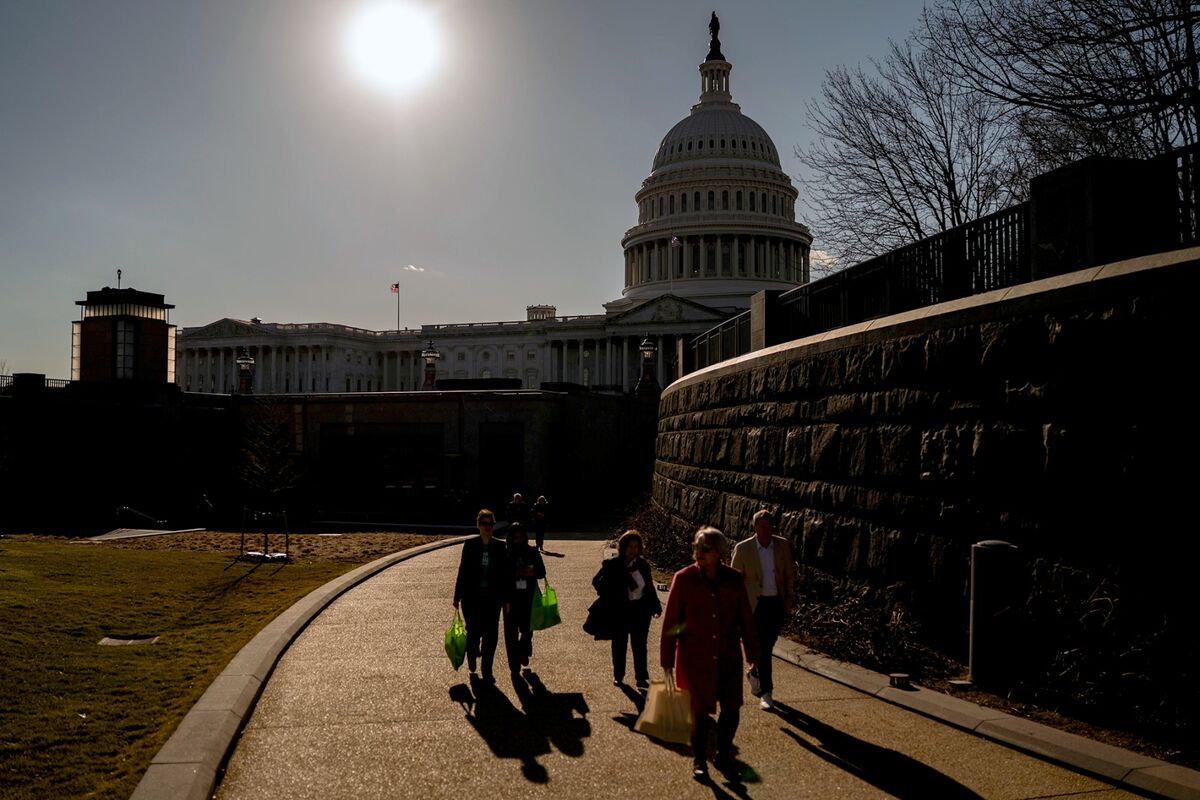
US federal agencies are preparing for a potential government shutdown, with contingency plans detailing temporary furloughs for over 400,000 employees across at least eight cabinet departments. Despite prior White House directives to consider reductions in force, these plans do not include permanent mass firings, indicating a significant but temporary disruption to federal operations and potential economic activity.
Federal agencies are executing contingency plans for a potential US government shutdown, preparing to furlough over 400,000 employees across at least eight cabinet departments, which collectively represent more than two-thirds of the federal workforce. The key insight from these plans is the explicit focus on temporary furloughs rather than the permanent 'reductions in force' that the White House had previously encouraged departments to consider. This distinction suggests that agency leadership is anticipating a temporary political impasse and operational disruption, not a fundamental, long-term restructuring of the government workforce. The immediate economic consequence will likely be a temporary drag on consumer spending and a slowdown in regional economic activity, particularly in areas with a high concentration of federal workers, with the severity directly correlated to the shutdown's duration.
AI-powered research, real-time alerts, and portfolio analytics for institutional investors.
Request DemoOverall Sentiment
moderately negative
Sentiment Score
-0.50
