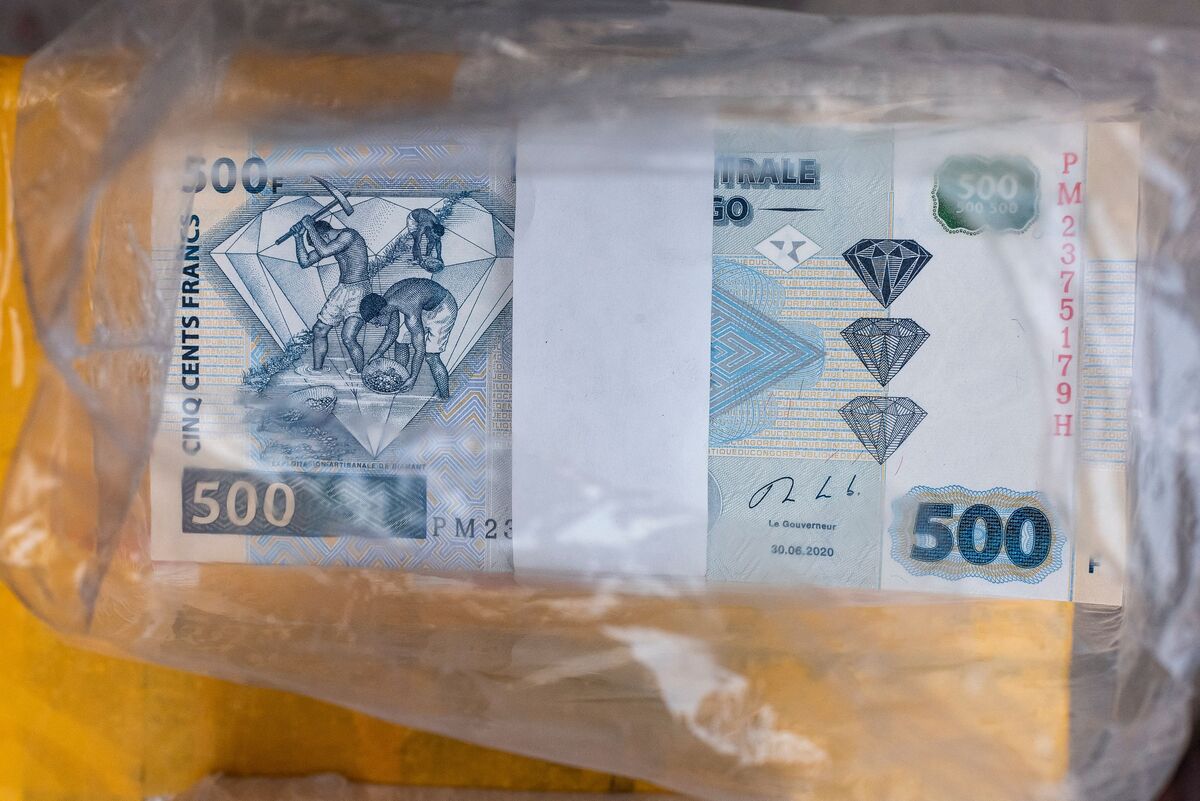
The Democratic Republic of Congo’s franc has rallied almost 29% year-to-date, driven by a surge in the country’s foreign-currency reserves and a shift in central-bank policy, lifting it to co–top spot in Africa alongside Ghana’s cedi. Bloomberg-compiled data show the franc is now level with the cedi, a development that underscores stronger FX buffers and policy support in the DRC and has implications for emerging-market FX positioning and sovereign risk assessments.
Market structure: The 29% YTD appreciation of the Congolese franc (CDF) concentrates winners in domestic-currency savers, importers and holders of CDF-denominated sovereign/local-bank paper while creating friction for USD-based importers and some exporters. Mining firms with high local-currency cost bases (operations, wages) should see improved USD margins, but exporters whose local receivables or tax bases are tied to CDF face mixed effects; expect re‑rating pressure on DRC-exposed miners and short-term rotation into EM local‑currency debt and FX carry. Cross-asset flows will reprice EM local yields (downward pressure), tighten FX volatility in CDF, and potentially reduce commodity-equity volatility as FX hedges are rebalanced.
Risk assessment: Key tail risks are a rapid depletion of FX reserves (one large commodity receipt vs sustainable inflows), sudden capital controls or a change in central‑bank sterilization policy, and political/regulatory action (royalty/tax changes) that can erase gains. Immediate (days–weeks): momentum and positioning-driven squeezes; short-term (1–3 months): reserve trajectories and commodity prices drive mean reversion; long-term (quarters+): structural fiscal/royalty changes and convertibility improvements matter. Hidden dependencies include FX market depth (low) and OTC counterparty credit for forwards; catalyst watch: monthly reserve reports, copper/cobalt price moves (>15% move) and central‑bank minutes.
Trade implications: Tactical OTC FX: 6–12M long CDF positions (forwards/NDFs) sized small (0.5–1% NAV) to capture continuation, paired with stop/profit triggers tied to reserve moves. Equity trades: overweight/underweight miners with DRC exposure rather than broad EM—target selective longs in Ivanhoe Mines (IVN.TO) and Glencore (GLEN.L) or copper ETF COPX for 3–9 months, with exits if copper falls >15% or CDF reverses >10%. Options: buy priced call spreads on CDF or call spreads on miners to limit premium outlay and hedge political tail risk.
Contrarian angles: The market may be underestimating liquidity limits—a 29% rally in a low‑liquidity FX often contains mean‑reversion risk once reserves stop growing; similar localized EM rallies in 2016–2017 faded once central banks stopped intervention. The cheaper and less-visible risk is capital‑control reaction or fiscal grab for windfall gains (royalty hikes) that would hit miners and foreign holders abruptly. Unintended consequence: reserve accumulation can tighten domestic liquidity, pressuring banks and local equities even as the currency strengthens; use reserve trends as primary stop‑loss signal.
AI-powered research, real-time alerts, and portfolio analytics for institutional investors.
Request DemoOverall Sentiment
moderately positive
Sentiment Score
0.40
