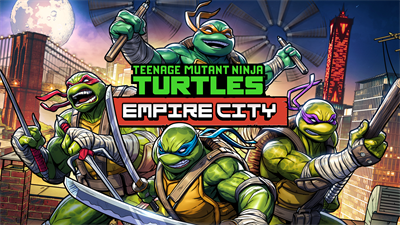
Beyond Frames’ Cortopia Studios announced Teenage Mutant Ninja Turtles: Empire City, the first standalone TMNT VR title, will launch Spring 2026 on Meta Quest, Steam VR and Pico at a $24.99 price point; Meta Quest pre-orders begin immediately with a 20% discount. The game supports up to four-player co-op, a Steam Next Fest single-player demo (first 15 minutes) will run Feb 23–Mar 2, and Legacy TMNT artists are contributing promotional art; Beyond Frames is a Stockholm-headquartered XR publisher listed on the Swedish Spotlight Stock Market (ISIN SE0011614965). For investors, the timed demo, discounted pre-orders and multi-platform release are relevant near-term commercialization catalysts but are unlikely to move broader markets absent concrete sales or financial guidance.
Market structure: Licensed, low-price VR IP like Teenage Mutant Ninja Turtles (TMNT) benefits VR platform owners (Meta Platforms - META) and middleware/hardware suppliers (Unity - U, Nvidia - NVDA) by lowering consumer acquisition cost; $24.99 list / 20% pre-order ($19.99) sets a sub-$25 benchmark that can increase conversion but compress per-title revenue for small publishers. Losers: mid/AAA console-only studios with little VR strategy and premium pricing models may see marginal engagement diverted; aftermarket merchandise/licensing could shift toward in-game monetization rather than physical sales over 12–24 months.
Risk assessment: Immediate catalyst is Steam demo on Feb 23 (Next Fest) — demo download velocity (>50k downloads in 9 days) would be an early proxy for consumer demand; tail risks include technical/latency issues, poor reviews, IP/royalty disputes, or platform revenue share shocks (30% cuts) that can wipe small-studio economics. Short-term (weeks–months) sentiment hinges on demo metrics and pre-order pace; long-term (1–3 years) depends on cross-platform retention and Meta Quest unit growth.
Trade implications: Direct exposures favor platform and tooling leaders: asymmetric option structures on META and NVDA, modest linear longs in U; speculative micro-cap exposure to Beyond Frames (Spotlight-listed) is high-reward but should be size-constrained. Pair trades: go long META vs short higher-multiple non-VR incumbents (Take-Two - TTWO) to isolate VR content adoption. Entry/exit keyed to measurable thresholds (demo downloads, pre-order counts, QoQ Quest DAU).
Contrarian view: Consensus focuses on headline IP — the market underestimates that sub-$25 VR flagship titles can scale hardware attach rates quickly (historical parallel: Beat Saber driving Quest sales). Conversely, success may be underpriced for platform owners but overstates upside for mid-cap game publishers; unintended consequence: rapid proliferation of cheap licensed VR content could commoditize VR storefronts and shift bargaining power back to platform operators within 6–18 months.
AI-powered research, real-time alerts, and portfolio analytics for institutional investors.
Request DemoOverall Sentiment
mildly positive
Sentiment Score
0.25
