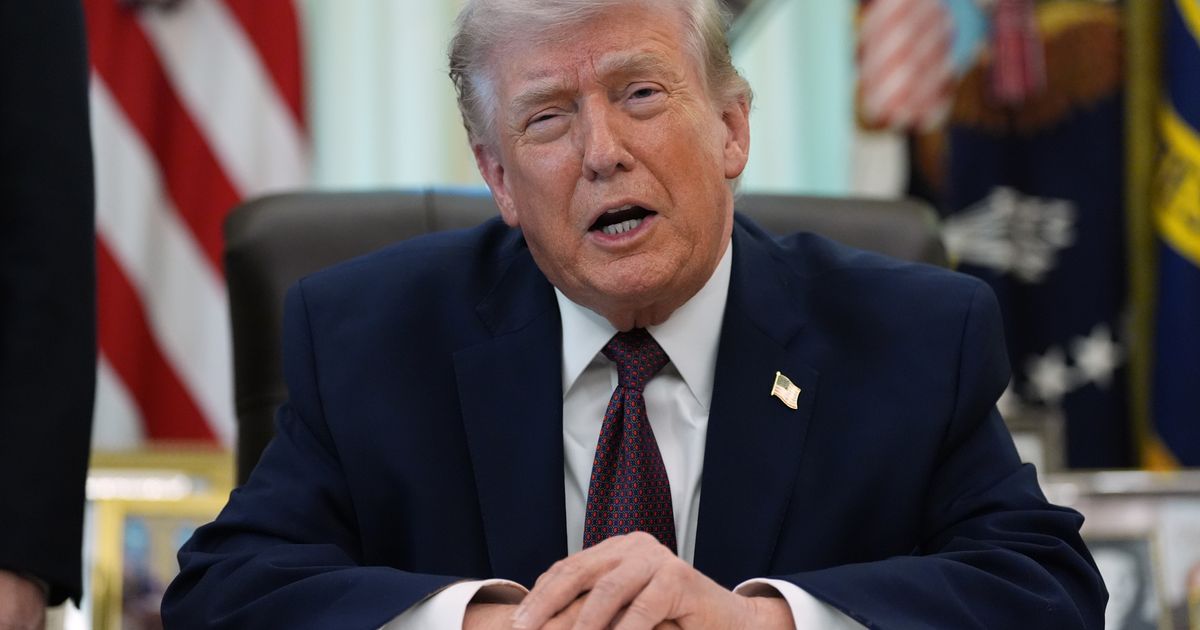
President Trump’s decision to engage militarily with Iran has disrupted oil shipments through the Strait of Hormuz, strained NATO and European support, and prompted calls for allies to secure the waterway; Trump said the U.S. would be done launching attacks in about 2–3 weeks. Markets reacted with the S&P 500 jumping 2.9% and the Dow rising more than 2.5% as hopes for a near-term deescalation increased, but European limits on airspace and bases and unclear coalition commitments leave persistent risk to oil flows and key trade routes (including the Red Sea). Implication: elevated geopolitical risk to energy markets and supply chains may force increased European diplomatic/defense involvement or sustained market volatility.
Shifting the security burden away from a single guarantor creates a procurement and operational funding vacuum that will be filled unevenly — fast for hardware and slow for coordination. Expect a near-term surge in orders for anti-ship, air-defense and ISR capacity that benefits prime contractors with available production slots; concurrently, European OEMs gain political cover to accelerate consolidation and joint programs that crowd out smaller suppliers over 12–36 months.
Energy flows will re-route in ways that mechanically raise freight and refining margins even if headline oil prices moderate. Longer voyages (Suez/Red Sea avoidance adds ~4,000–6,000 nm and 6–10 days per VLCC/AFR shipment) drive bunker burn and charter-rate inflation, improving earnings for owners on fixed-rate charters and pressuring spot tanker supply — a multi-quarter positive for integrated midstream/export hubs with export capacity.
Marine insurance and private maritime security vendors are a latent, high-margin beneficiary; rising premiums create a predictable P&L stream that can be underwritten quickly and priced into routes, but also signal demand destruction for just-in-time supply chains. That friction propagates into European manufacturing and consumer goods flows first, so regions dependent on maritime-exposed supply chains face disproportionate margin compression over the next 1–3 quarters.
The consensus complacency priced into risk assets (expecting a rapid de‑escalation) underestimates the political economy: allies will condition operational support on diplomatic off-ramps and visibility into long-term burden sharing, not on ad hoc deployment. Key catalysts to watch are announced multinational naval tasking, insurance premium moves (Lloyd’s market notices), and rapid defense order backlogs from major EU buyers; any of these flip the path dependence within weeks to months.
AI-powered research, real-time alerts, and portfolio analytics for institutional investors.
Request DemoOverall Sentiment
mildly negative
Sentiment Score
-0.25
