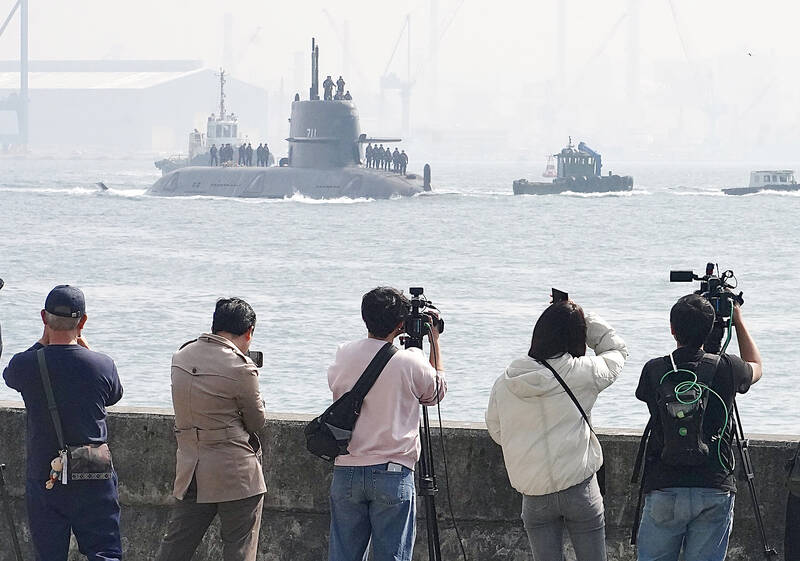
Taiwan’s first indigenous submarine, the Hai Kun (Narwhal), began its submerged sea trials from Kaohsiung with staged testing from snorkel depths (10–20m) through shallow (50–100m) to deep-water trials beyond 100m to validate watertightness, balance, sonar, endurance, combat systems and simulated weapons launches ahead of delivery for tactical evaluation. Separately, Taiwan staged integrated coastal-defense drills using drones, missile-armed patrol boats and HIMARS contingency planning; authorities flagged about 1,900 foreign vessels for monitoring and recent amendments permit denying ports of call near sensitive undersea cable areas. The US House passed an $838.7bn defense appropriations bill including US$1bn for the Taiwan Security Cooperation Initiative and US$150m to replace defense articles, pending Senate approval.
Market structure: Taiwan’s indigenous submarine trials and stepped-up littoral defenses shift incremental procurement toward shipbuilding, missiles, ISR drones, and shore-based launch mobility. Direct winners are defense prime contractors and specialty suppliers (ship steel, sonar, battery makers) while tourism, commercial shipping lanes and Taiwan equities face higher risk premia; expect near-term TWD weakness and USD/JPY strength if drills intensify.
Risk assessment: Tail risks include an escalatory PLA blockade or undersea-cable sabotage (low-probability, high-impact) that would spike insurance, freight rates and force semiconductor supply-chain rerouting. Immediate (days) risk is market volatility and safe-haven flows; short-term (weeks–months) hinge on US Senate passage of Taiwan aid; long-term (years) drives sustained defense capex and on-shoring of critical suppliers.
Trade implications: Favor long defense exposure (US primes, defense ETFs) and materials (steel/shipbuilding) while hedging Taiwan equity exposure via EWT puts or short positions; buy 3–12 month option structures to capture volatility realizations. Cross-asset: bid bonds (yields down) and oil/insurance-sensitive commodities up in escalation scenarios — use tail hedges (long oil call spreads if conflict >7 days).
Contrarian angles: Consensus discounts the domestic Taiwanese supplier opportunity—local SMEs and CSBC-adjacent suppliers could rerate over 12–36 months as procurement shifts onshore. Historical parallels (1996 Strait crisis) show Taipei equities can overshoot to the downside then recover; opportunistic accumulation on drawdowns of 15–30% is a valid asymmetric play.
AI-powered research, real-time alerts, and portfolio analytics for institutional investors.
Request DemoOverall Sentiment
neutral
Sentiment Score
-0.10
Ticker Sentiment
