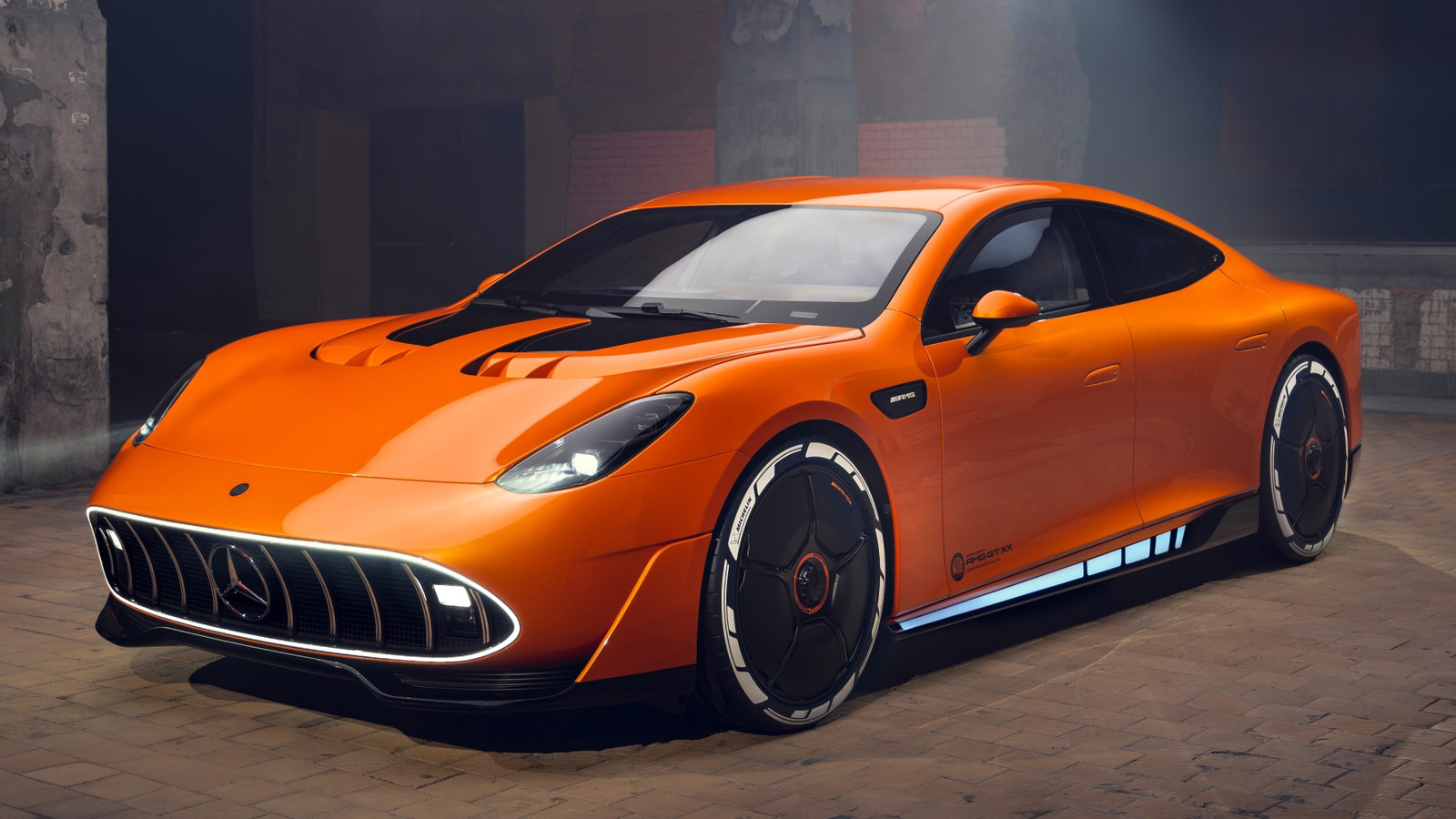
Mercedes-owned YASA has developed a second-generation axial flux motor (AFM) that weighs 12.7 kg and delivers 750 kW (≈1,005+ hp) for a power density of 59 kW/kg, with estimated continuous output of 469–536 hp; the prior summer 2025 design weighed 13.1 kg and produced 550 kW (42 kW/kg). The AFM prototype — notable for avoiding exotic materials and undergoing extended validation — will enter production in 2026 at Mercedes' Marienfelde plant after ~100 manufacturing processes (one-third new) that have yielded 30+ patent filings involving AI, joining and laser techniques. Mercedes is using the motors in an AMG GT XX Concept testbed (three motors, 1,341 hp peak) and paired the car with a new NCMA/silicon cylindrical-cell battery architecture with aluminum housings and direct oil cooling enabling fast-charge performance (≈248 miles/400 km in 5 minutes); the technology could materially reduce vehicle weight (up to ~1,100 lbs in AFM-optimized designs) and shift competitive dynamics in high-performance EV powertrains.
Market structure: Mercedes-Benz (MBG.DE) and its YASA unit gain a multi-year technology edge in high-performance EVs — a 59 kW/kg motor vs. ~2.75 kW/kg for a Tesla Model 3 motor implies ~3x–20x density advantages depending on vehicle segment. Direct winners: Mercedes, AMG sub-brand, precision manufacturing suppliers (laser/AI/joining tech) and power-electronics vendors; losers: incumbent radial-flux motor specialists and downstream battery-kWh sellers if vehicle designers trim pack size. Expect luxury/performance EV niches to re-price on performance-to-weight metrics within 12–36 months while mass-market adoption lags due to cost and manufacturing complexity.
Risk assessment: Key tail risks include scale-up failure (100 new processes, >30 patents unproven in volume), IP litigation, and thermal/safety certification delays that could push production past 2026; if >30% of processes fail to meet yield targets, unit economics collapse. Near-term (days–months): market noise; short-term (6–18 months): supplier re-contracting and patent grants; long-term (2–5 years): potential structural reduction in battery kWh per vehicle by 5%–20% in performance segments. Hidden dependency: AFM adoption depends on cell chemistry advances (NCMA+Si anodes) and direct liquid-oil cooling scale-up.
Trade implications: Prefer idiosyncratic long on MBG.DE (capture 2026 production premium) and long power-electronics supplier Infineon (IFX.DE) for increased inverter/PWM demand; hedge by shorting high-valuation EV incumbents slow to adopt AFM (TSLA) via options. Commodities: defensive reduction in pure-play lithium/nickel exposure if AFM-driven weight cuts reduce pack sizes in premium EVs by >10% over 3 years; conversely, nickel/cobalt demand may persist for NCMA cells in short term.
Contrarian angles: Consensus may overstate immediate commodity downside — adoption curve is constrained by manufacturing complexity and cost; AFM may ramp first in low-volume high-margin cars, leaving mass-market battery demand intact through 2028. Patent-heavy manufacturing also creates licensing revenue upside for Mercedes if it opens IP; a “Mercedes-as-supplier” scenario would benefit precision-equipment and software/IP acquirers rather than raw-material miners.
AI-powered research, real-time alerts, and portfolio analytics for institutional investors.
Request DemoOverall Sentiment
moderately positive
Sentiment Score
0.46
Ticker Sentiment
