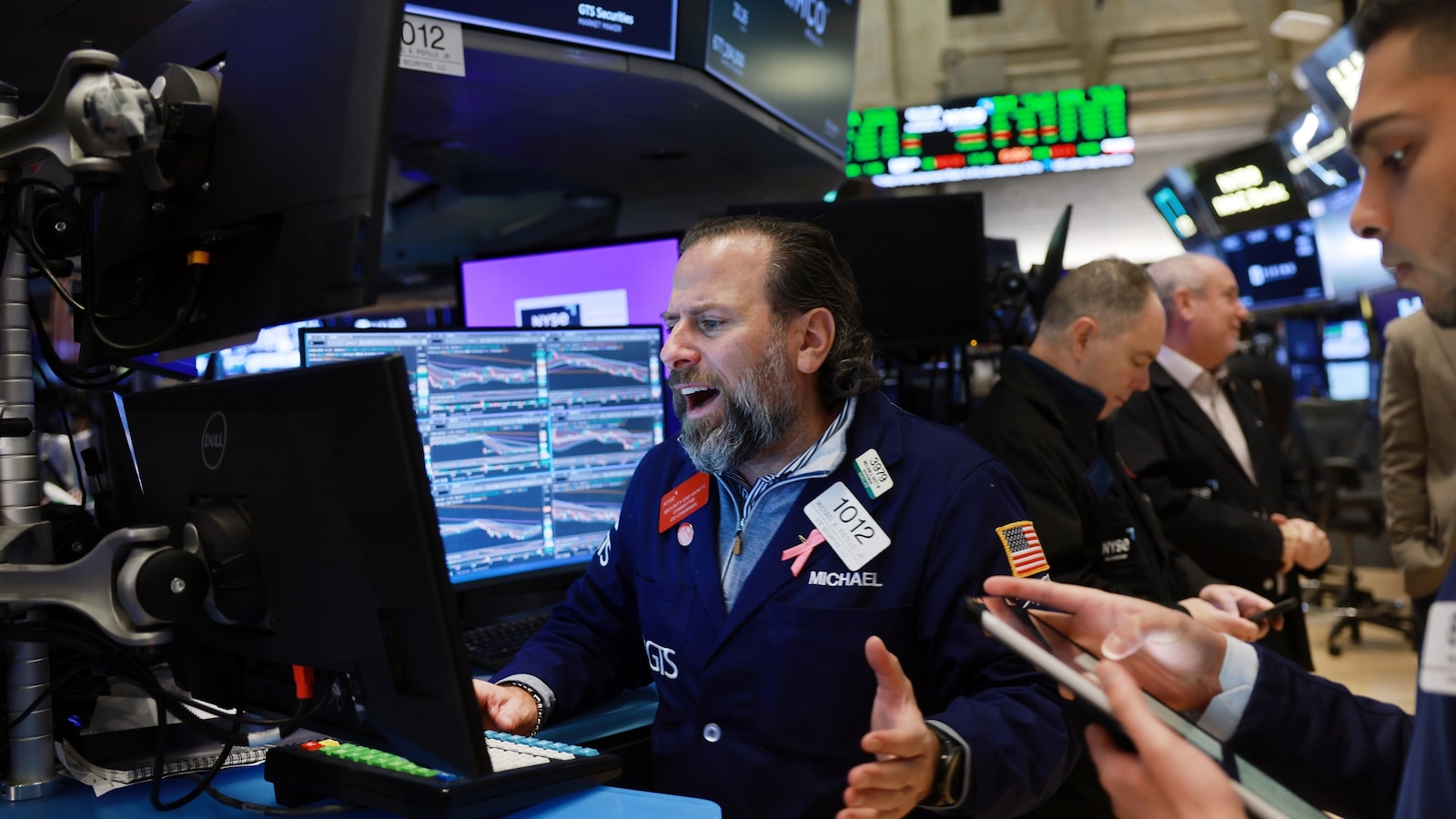
Stocks reversed an early rally driven by Nvidia's blockbuster earnings and a stronger-than-expected jobs report, with the Dow down about 60 points (-0.1%), the S&P 500 -0.2% and the Nasdaq -0.3% in midday trading after earlier gains of roughly 1.2%, 1.8% and 2.5% respectively; Nvidia slipped 0.1% after an initial surge. Markets remain jittery about an AI-driven bubble despite Nvidia's blowout as the S&P, Nasdaq and Dow are up about 15%, 19% and 10% YTD; the U.S. added 119,000 jobs in September (August revised from +22k to -4k) and Walmart topped revenue expectations. Investors parsed the data as modestly increasing the odds of a 25bp Fed cut next month (CME FedWatch odds rose from 33% to 43%), underscoring the Fed's dilemma balancing rising inflation risks and labor-market dynamics.
U.S. equities erased an early rally on Thursday despite Nvidia's blockbuster earnings, with the Dow down ~60 points (‑0.1%), the S&P 500 down 0.2% and the Nasdaq down 0.3% in midday trading after intra‑day highs of roughly +1.2%, +1.8% and +2.5% respectively; Nvidia, described as a $4.7 trillion company powering AI chip demand, slipped 0.1% after an initial surge. The recent multi‑day selloff driven by AI‑bubble concerns contrasts with Nvidia’s earnings beat, underscoring market sensitivity to positioning in AI names even when fundamentals appear strong.
Economic prints were mixed: the U.S. added 119,000 jobs in September, exceeding expectations but August was revised from +22,000 to a 4,000 job loss, and Walmart reported revenue above forecasts, providing some evidence of resilient consumer spending. Inflation has picked up recently while hiring has softened, creating stagflation risks that complicate the Federal Reserve’s policy path; CME FedWatch odds for a 25bp cut next month rose from 33% to 43% following the data.
The combination of large 2025 YTD gains (S&P +15%, Nasdaq +19%, Dow +10%), volatile intraday reversals and elevated sentiment toward AI (per‑ticker sentiment strong for NVDA) implies asymmetric risk: continued upside if AI earnings momentum persists, but meaningful drawdown risk if positioning reverses or macro surprises worsen.
AI-powered research, real-time alerts, and portfolio analytics for institutional investors.
Overall Sentiment
mixed
Sentiment Score
0.05
Ticker Sentiment
