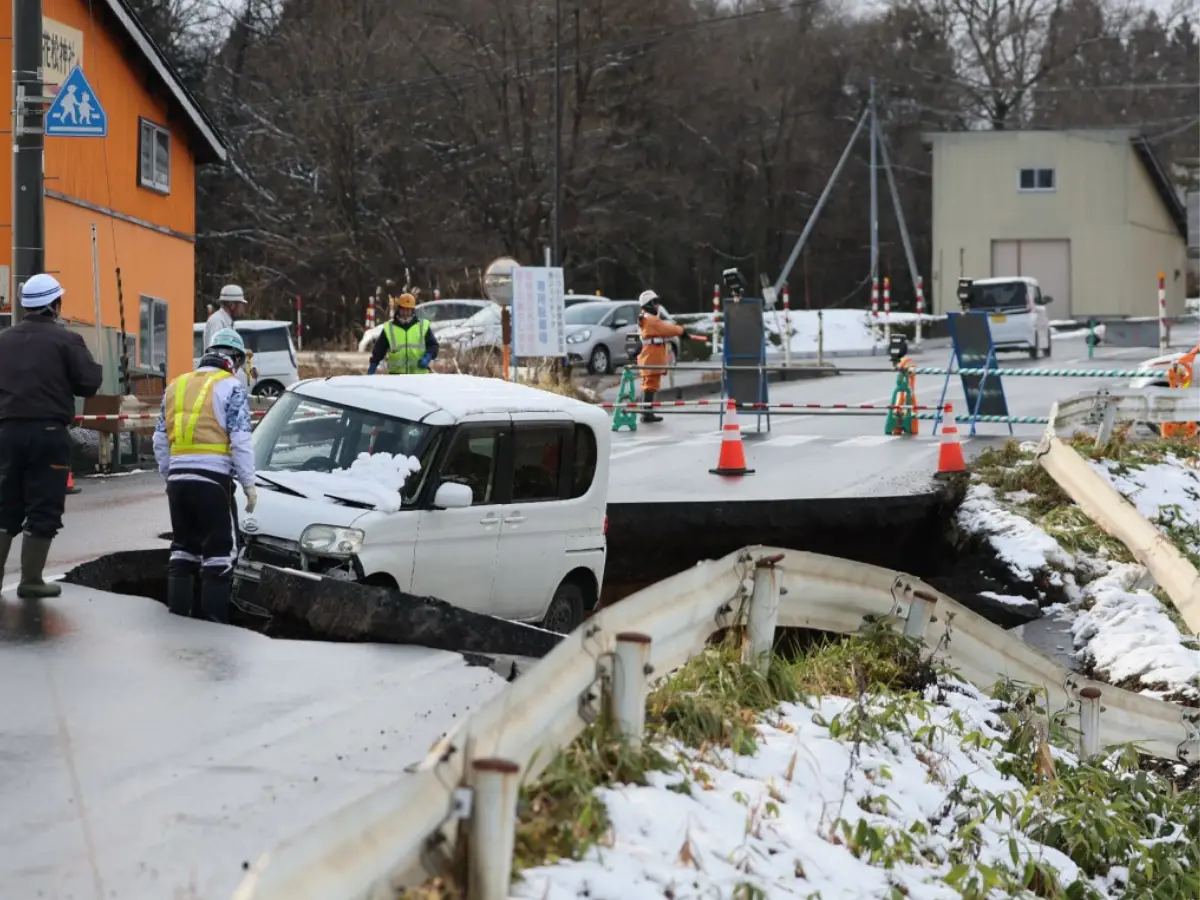
Since Monday’s offshore 7.5 quake that injured more than 50 people, Japan has recorded over a dozen aftershocks—including a 6.4, 5.7 and 4.9—and authorities issued a megaquake warning the next day that remains active until Dec. 16, warning the upgraded Earthquake Early Warning system could detect a potential magnitude‑8+ event. The Japan Meteorological Agency says a megaquake would produce catastrophic effects in coastal areas—projecting tsunami heights of roughly 30–65 feet across Hokkaido and up to about 100 feet in parts of Erimo and Aomori, plus intensity‑7 shaking in places such as Akkeshi—with officials urging immediate evacuation readiness and emergency preparations even as some facilities report uncertainty about response capabilities; JMA also notes such highest‑class megaquakes are extremely rare (on the order of once every thousand years).
A 7.5 magnitude offshore earthquake struck off Aomori on Monday, injuring more than 50 people and producing over a dozen aftershocks including a 6.4 on Tuesday, a 5.7 and a 4.9 in subsequent days. Authorities issued a megaquake warning the next day that remains active through December 16 based on an upgraded Earthquake Early Warning system, signalling the potential (but not certainty) of a magnitude-8+ event before that date.
The Japan Meteorological Agency projects severe coastal impacts in a worst-case megaquake: tsunami heights of 30–65 feet across Hokkaido with localized peaks near 100 feet in Erimo, tsunami risk along Aomori, Iwate, Miyagi and Fukushima coasts, and intensity-7 shaking in locations such as Akkeshi. Those outcomes would create concentrated damage to ports, coastal infrastructure, utilities and local supply chains and would require immediate evacuation and disaster-response capabilities.
JMA notes the highest-class megaquakes are extremely rare (on the order of once every thousand years), which reduces long-term probability but leaves meaningful short-term operational risk while the warning is active; some local facilities report uncertainty about response readiness. Market signals in the brief show moderately negative sentiment (score -0.5) and a modest market-impact score (0.35), suggesting caution for Japan-exposed positions rather than indication of systemic global market stress.
AI-powered research, real-time alerts, and portfolio analytics for institutional investors.
Request DemoOverall Sentiment
moderately negative
Sentiment Score
-0.50
