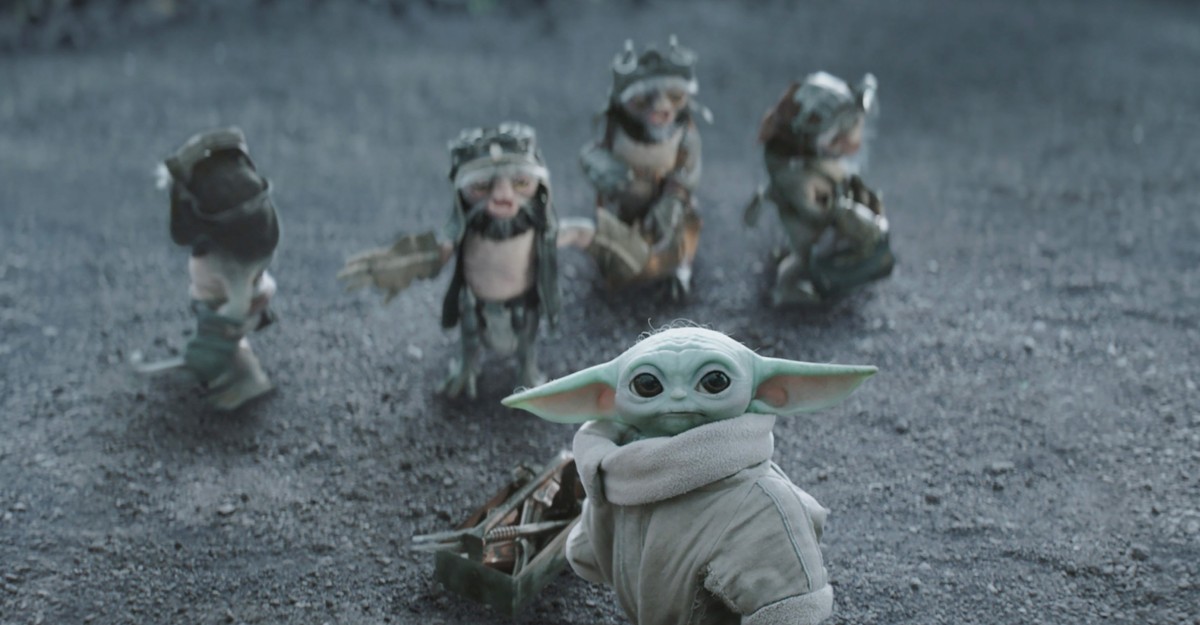
Disney's The Mandalorian and Grogu is described as a low-stakes, TV-like Star Wars release that is unlikely to excite fans or become mandatory viewing. The review suggests the film is serviceable for kids and diehard franchise followers, but lacks the ambition and originality needed to generate strong word-of-mouth. The piece implies only limited upside for Disney beyond keeping Star Wars merchandise and brand engagement intact.
This is less a film review than a signal that Disney is still monetizing Star Wars as a merchandising engine rather than a premium IP engine. That matters because the market has already largely discounted the TV-to-film strategy as a low-ROI content loop; the incremental read-through is not box office upside, but weaker pricing power for the broader franchise ecosystem if the theatrical halo fails to re-ignite demand. In other words, the risk is not one disappointing title — it is continued degradation in the willingness of consumers to pay for Star Wars as a destination brand rather than passive background content.
The second-order issue is churn economics. If the movie underdelivers creatively, Disney is more likely to lean harder on volume, packaging, and character spinoffs to defend engagement, which typically raises content spend without improving franchise efficiency. That is bearish for margin mix over the next 2-4 quarters because the company is already juggling theatrical, streaming, and licensing economics; more ‘safe’ content tends to preserve utilization but not pricing power.
The contrarian angle is that the market may be too focused on review quality and not enough on family co-viewing behavior. Even a mediocre Star Wars film can generate a meaningful short burst in parks, consumer products, and streaming back-catalog discovery if it pulls lapsed households back into the ecosystem for a few weeks. So the right bear case is not immediate revenue disappointment; it is that this likely reinforces a long-run franchise ceiling and reduces the probability of a durable re-rating in Disney’s IP monetization multiple.
Catalyst-wise, the near-term window is days to weeks around opening weekend and the first two box-office weekends, but the more important horizon is the next earnings call, where management will have to frame whether this title creates cross-platform lift or just noise. If consumer response is merely functional, the stock can stay rangebound; if weekend retention is poor, expect renewed skepticism on content ROI and streaming profitability assumptions.
AI-powered research, real-time alerts, and portfolio analytics for institutional investors.
Request DemoOverall Sentiment
mildly negative
Sentiment Score
-0.15
Ticker Sentiment
