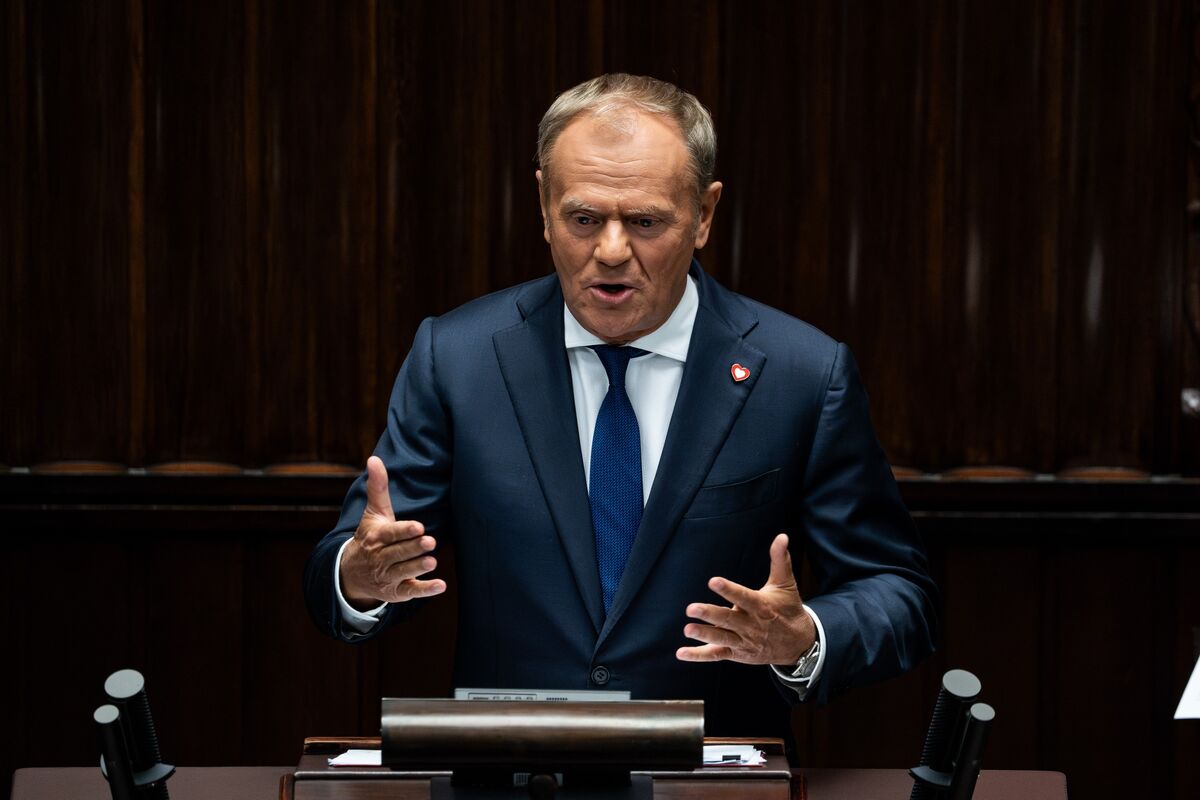
Poland's Prime Minister Donald Tusk announced the creation of a new 'superministry' combining finance and economy, led by current Finance Minister Andrzej Domanski. This cabinet reshuffle centralizes economic policy tools and aims to strengthen the ruling coalition, positioning it for more unified economic governance amidst anticipated political cohabitation with an opposition-backed president.
The Polish government, led by Prime Minister Donald Tusk, is undertaking a significant cabinet reshuffle to create a 'superministry' merging finance and the economy. This move will centralize economic policymaking under the current Finance Minister, Andrzej Domanski, granting him an expanded toolkit to steer the national economy. The strategic rationale for this consolidation is explicitly political: to strengthen the ruling coalition's governance in anticipation of a 'tense cohabitation' with an incoming president backed by the opposition. This centralization could lead to more cohesive and decisive implementation of fiscal policy, a development viewed as mildly positive by market sentiment signals. However, the underlying driver is domestic political positioning, which introduces a layer of potential conflict between the executive and presidential branches that could impact future policy certainty and regulatory environments.
AI-powered research, real-time alerts, and portfolio analytics for institutional investors.
Request DemoOverall Sentiment
mildly positive
Sentiment Score
0.30
