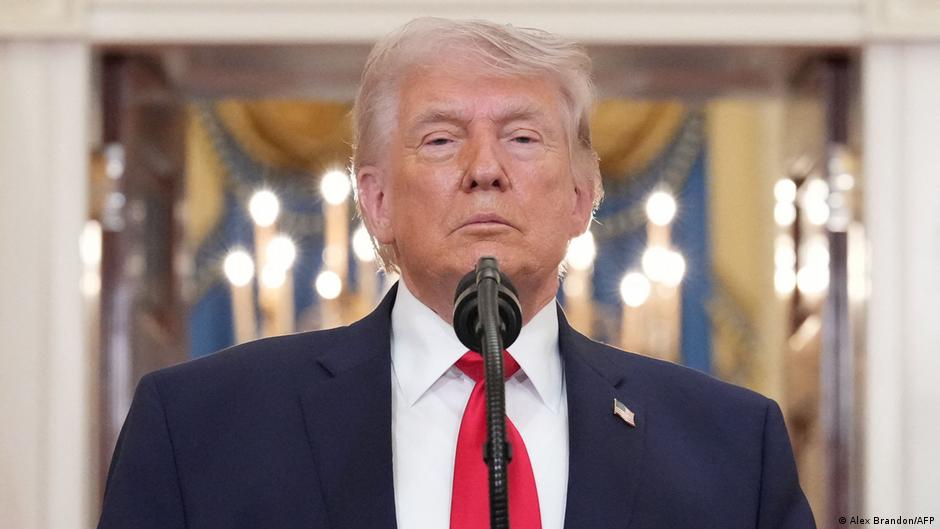
Brent crude jumped 5% to $106.22/bbl and US crude rose 4.2% to $104.36/bbl after President Trump’s prime-time address; Asian markets sold off (Nikkei -1.4% to 53,004.81, Kospi -3.4% to 5,292.36, Hang Seng -0.8% to 25,082.59) while US futures fell ~1% and European futures >1.5%. Trump said US objectives in the Iran campaign are "nearing completion" and warned of hitting Iran "extremely hard over the next two to three weeks," as the near-closure of the Strait of Hormuz has disrupted shipping and prompted a UK-led 35-country virtual summit to restore safe passage.
Immediate market moves understate the supply-chain mechanics that will persist even if headline fighting abates: rerouting oil tankers around Africa adds ~7-12 extra voyage days for Persian Gulf-to-Europe/Asia trips, increasing voyage costs roughly $0.50–$1.25/bbl equivalent and raising effective delivered crude breakevens for refiners. War-risk premiums for hull and war insurance are likely to remain elevated for months, creating a wedge between paper oil prices and physical flow economics that favors producers with low lifting costs and floating storage owners over refiners with tight feedstock margins.
Financial flows will bifurcate between short-term safety bids and medium-term real-economy passthroughs. Expect durable demand effects in regions with high oil price elasticity (notably India and parts of Asia): a sustained $15–25/bbl shock to global Brent typically trims oil product demand growth by 1–3% over 3–6 months, which would blunt producer cashflow upside and cap a multi-quarter rally absent supply outages.
Defense and maritime-service providers are asymmetric beneficiaries: convoying, escorts, port security contracts, and autonomous vessel surveillance scale quickly and carry multi-year contract tails. Conversely, global logistics and passenger airlines face both fuel cost and route-duration shocks that compress margins and accelerate capacity rationalization—this favors a re-rating of energy-heavy, asset-light logistics versus asset-heavy carriers.
Tail risks skew to geopolitical escalation that targets chokepoints or global insurance networks (weeks–quarters), while a plausible reversal path is rapid diplomatic relief plus SPR coordination that could erase >50% of the oil-price premium within 6–10 weeks. Position sizing should therefore differentiate between a near-term convexity trade (options) and a medium-term directional allocation (equities/caps) with explicit catalyst triggers for de-risking.
AI-powered research, real-time alerts, and portfolio analytics for institutional investors.
Request DemoOverall Sentiment
strongly negative
Sentiment Score
-0.70
