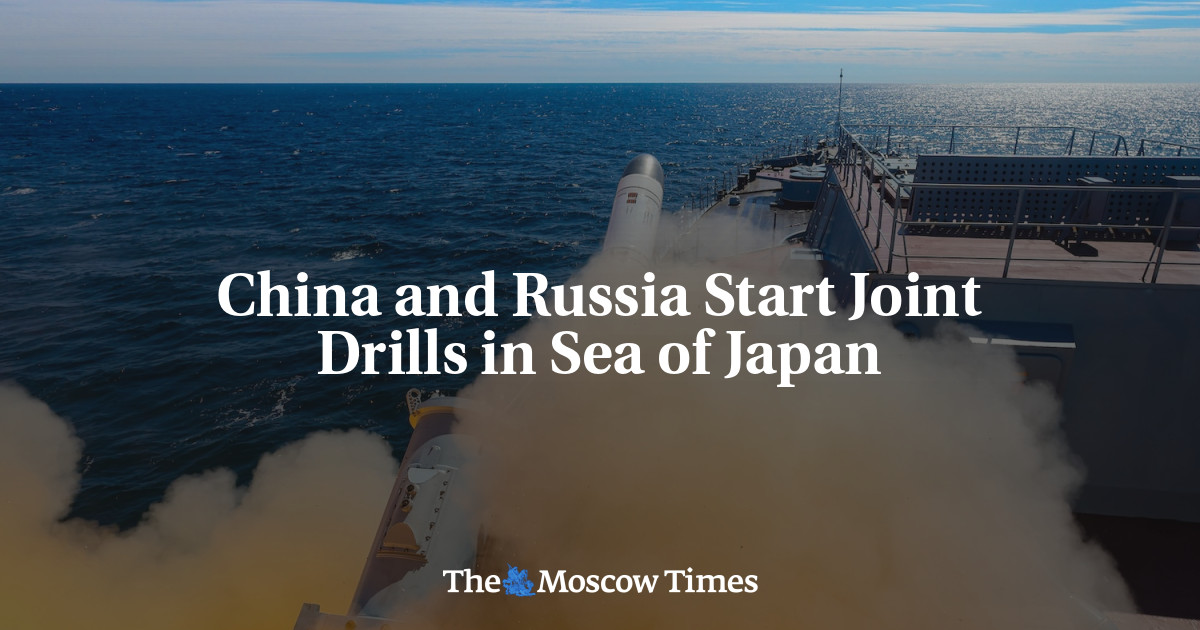
China and Russia have commenced their three-day "Joint Sea-2025" naval drills in the Sea of Japan, near Vladivostok, involving guided-missile destroyers and covering anti-submarine, air defense, and maritime combat operations, to be followed by joint Pacific patrols. These exercises aim to deepen their military cooperation and strategic partnership, explicitly counterbalancing what they perceive as a U.S.-led global order. The drills highlight the intensifying alignment between Beijing and Moscow, particularly since Russia's invasion of Ukraine, with significant geopolitical implications for regional stability.
The initiation of the "Joint Sea-2025" naval exercises by China and Russia in the Sea of Japan marks a significant and deliberate escalation in their military cooperation. These drills, which involve complex operations such as anti-submarine and anti-missile defense, demonstrate a deepening level of interoperability and a shared strategic objective to counterbalance what both nations perceive as a U.S.-led global order. The timing and location near Vladivostok, followed by planned joint patrols in the Pacific, amplify geopolitical tensions in a critical region. This event is not an isolated incident but part of an annual series since 2012, with its significance magnified by the intensified Sino-Russian partnership since Russia's 2022 invasion of Ukraine. The moderately negative sentiment and moderate market impact scores reflect the market's recognition of rising geopolitical risk, which could affect regional stability and international shipping lanes.
AI-powered research, real-time alerts, and portfolio analytics for institutional investors.
Request DemoOverall Sentiment
moderately negative
Sentiment Score
-0.45
