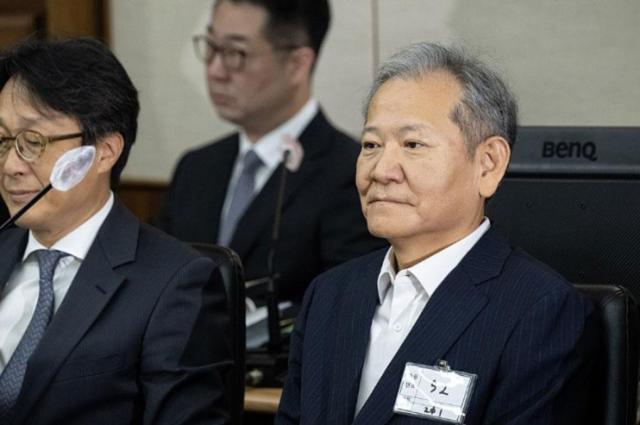
Prosecutors told the Seoul Central District Court that Lee, a former judge and official responsible for national security and disaster management, took part in President Yoon's illegal Dec. 3 attempt to declare martial law and allegedly instructed police and fire agencies to cut power and water to media outlets; Lee is also charged with perjury for denying involvement during Yoon's impeachment trial. A verdict is expected in mid‑February, and the charges increase political and media‑freedom risk in South Korea, a development that could modestly weigh on local risk sentiment and investor flows if the case escalates.
Market structure: A guilty verdict or sustained political instability in Seoul would directly hurt domestic-facing sectors (media, retail, regional banks) and likely benefit large exporters via KRW depreciation. Expect a rotation from small/mid-cap domestic discretionary names into large-cap export tech (Samsung 005930.KS, SK Hynix 000660.KS) as currency-driven earnings translation improves; implied equity volatility and FX vol should rise 30–80% around the mid-Feb catalyst.
Risk assessment: Tail risks include widescale protests, emergency powers or capital controls (low probability but high impact) that could widen Korea sovereign spreads by 50–150bps and push USDKRW 5–10% higher within weeks. Immediate (days) risk centers on headline-driven flows into FX and safe-havens; short-term (weeks/months) risk is equity de-rating and credit repricing; long-term (quarters+) could raise structural country risk premia if governance erosion persists.
Trade implications: Tactical defensive hedges and export-biased longs are optimal: hedge KRW exposure with 3-month USDKRW calls and buy protection on EWY/KOSPI via put spreads, while biasing portfolio to global tech exporters. Position sizing should be small (1–3% per signal), scalable on volatility spikes, and re-assessed 7 business days after the mid-Feb verdict or upon a >3% move in USDKRW.
Contrarian angles: The market may over-rotate into outright Korea sell-offs; history (2016–2017 political shocks) shows a 3–6% KRW move and KOSPI rebound within 3–6 months as exporters recover. If USDKRW depreciation exceeds 3–5% without systemic financial stress, pivot to long large-cap exporters and close defensive hedges — there is a material mispricing opportunity in export-heavy names if panic overshoots.
AI-powered research, real-time alerts, and portfolio analytics for institutional investors.
Request DemoOverall Sentiment
moderately negative
Sentiment Score
-0.35
