
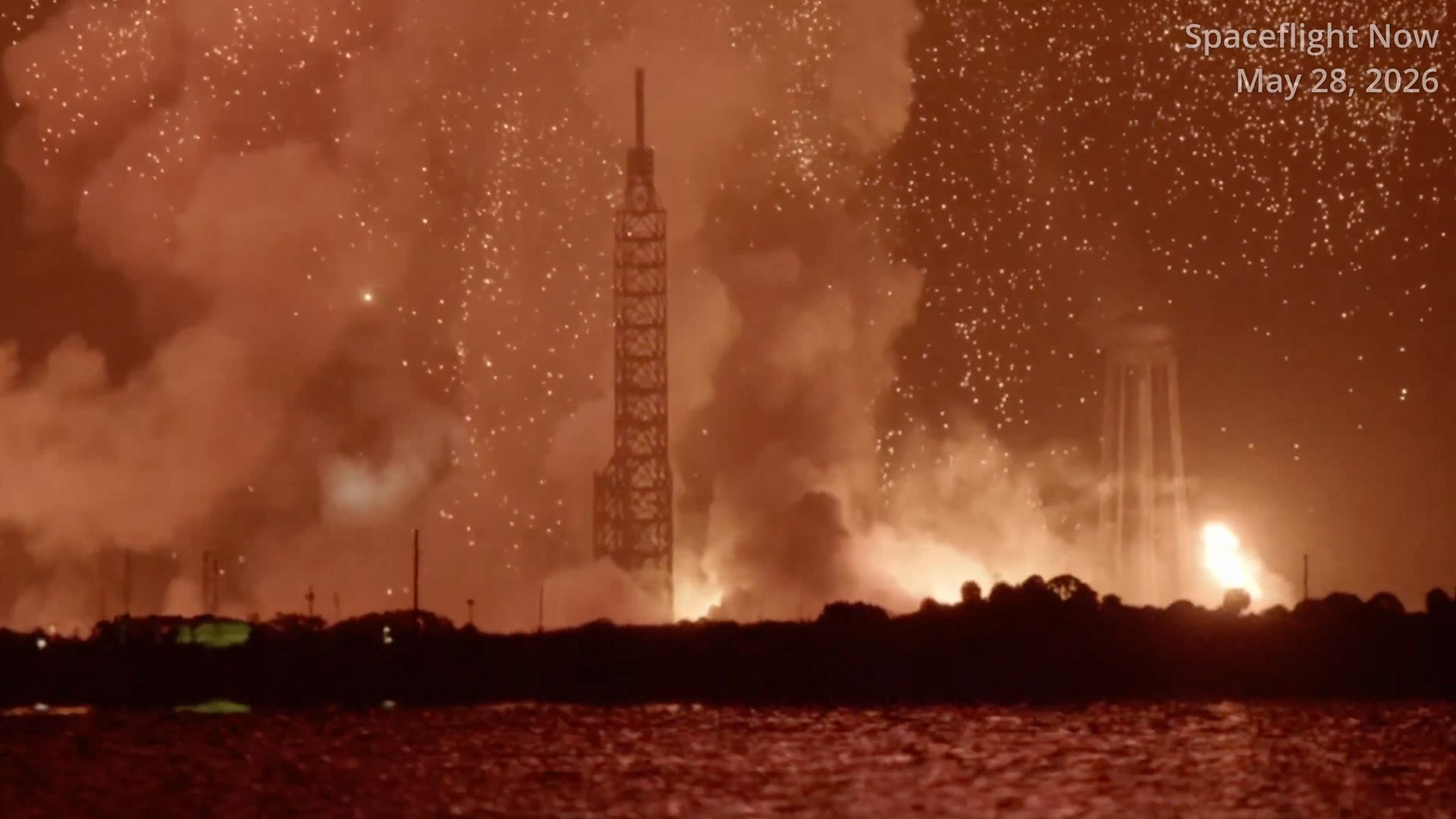
Blue Origin’s New Glenn rocket exploded during a static fire test, destroying the vehicle and severely damaging LC-36 just before a planned June 4 launch. The setback likely delays New Glenn’s return to flight, threatens Blue Origin’s support role in NASA’s Artemis timeline, and may push back the Blue Moon lunar lander program, which depends on New Glenn. The incident increases competitive pressure on Blue Origin and could give SpaceX an advantage in upcoming NASA lunar contracts.
This is not just a launch failure; it is a schedule-compounding event. The key second-order effect is that Blue Origin’s bottleneck shifts from vehicle debugging to fixed-infrastructure recovery, which means every week of technical investigation now also cascades into months of pad reconstruction, re-qualification, and range coordination. That makes Blue Origin a far less credible backup for NASA planning, and it mechanically improves SpaceX’s negotiating leverage on lunar architecture, since program managers will optimize for the only provider with visible cadence and redundant launch capacity.
AST SpaceMobile is the clearest near-term loser because the market had been discounting a path to recurring New Glenn access for large payloads; that assumption now gets pushed out by at least one to two launch cycles, likely longer if pad refurbishment triggers design changes. The bigger hidden risk is capital allocation: Blue Origin will need to spend to rebuild launch capacity before it can re-accelerate payload throughput, which can slow burn-down on technical debt and delay the Blue Moon qualification stack. That increases the probability that NASA’s lander schedule slips from a timing issue into a procurement issue, where “ready” beats “promising” and late entrants lose share even if their hardware is superior.
The market is likely underestimating the duration because launch-pad destruction creates a physical choke point, not just a software fix. If FAA findings point to a systemic propulsion or integration issue, the grounding window could stretch into the back half of 2026, which would overlap with multiple Artemis decision points and make Blue Origin structurally non-competitive for milestone-driven awards. A partial offset is that prolonged delay could improve Blue Origin’s engineering rigor and make the eventual system more reliable, but that is a years-out optionality, not a tradable near-term support.
Consensus may be too quick to frame this as a generic SpaceX win; the more precise trade is that any program manager with a deadline gets pushed toward the provider with spare capacity and launch cadence, not necessarily the cheapest or most elegant architecture. That favors incumbents with multi-pad redundancy and penalizes single-asset launch economics across the sector. For ASTS, the read-through is weaker execution confidence on future launch-dependent constellation expansion, which matters more than the single stranded payload because it increases the discount rate on the whole deployment narrative.
AI-powered research, real-time alerts, and portfolio analytics for institutional investors.
Request TrialOverall Sentiment
strongly negative
Sentiment Score
-0.72
Ticker Sentiment
