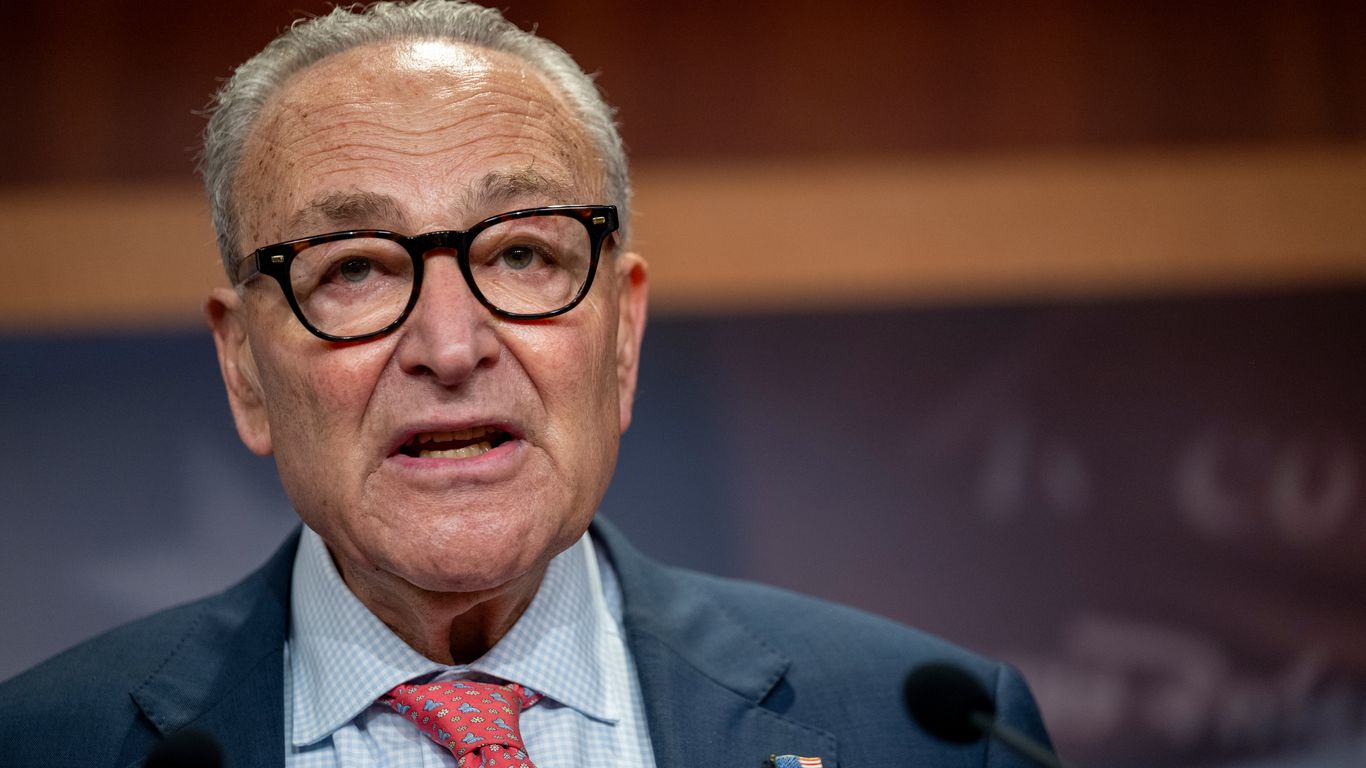
Senate Minority Leader Chuck Schumer is strategically aligning with progressive liberal groups to harden his stance on government funding negotiations, a departure from previous compromises. This coordinated effort, involving weekly meetings and a 'war room' for messaging, is largely influenced by potential primary challenges from figures like Rep. Alexandria Ocasio-Cortez, pushing Schumer to satisfy his base. The intensified political maneuvering signals an elevated risk of a government shutdown and increased partisan conflict over fiscal policy, as Democrats prepare for a more confrontational approach.
Senate Minority Leader Chuck Schumer is strategically altering his approach to government funding negotiations by closely coordinating with progressive groups, a notable departure from his more compromising stance in March. This shift is driven by internal political pressures, including the potential for a 2028 primary challenge from figures like Rep. Alexandria Ocasio-Cortez, compelling him to adopt a more hardline position to satisfy his party's base. The coordination is highly structured, featuring weekly meetings and a 'war room' for synchronized messaging on key issues such as Medicaid cuts and Affordable Care Act tax credits. This organized opposition, backed by a 'six-figure' ad buy from an allied group, significantly increases the probability of a government shutdown, signaling that domestic political calculus is taking precedence over a swift fiscal resolution and introducing greater uncertainty into upcoming budget discussions.
AI-powered research, real-time alerts, and portfolio analytics for institutional investors.
Request DemoOverall Sentiment
neutral
Sentiment Score
0.00
