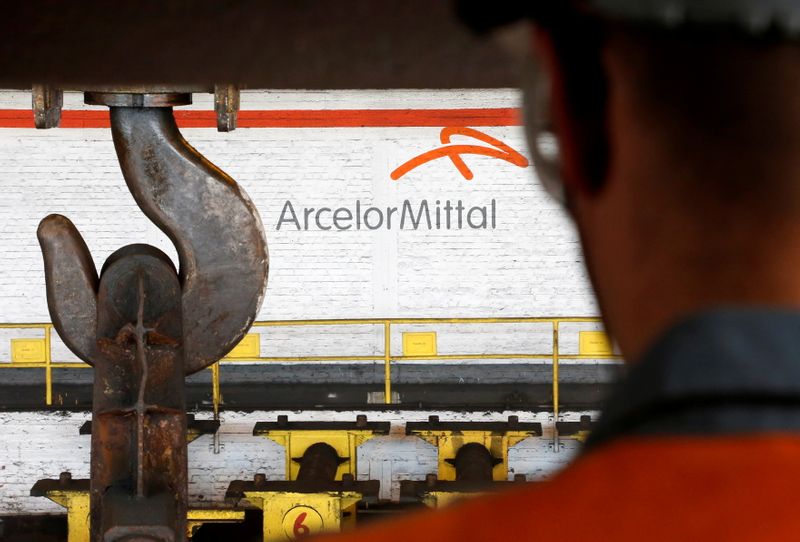
ArcelorMittal reported Q1 EBITDA of $1.68 billion, slightly above consensus, while EPS of $0.76 also beat estimates of about $0.65 despite declining from $1.05 a year ago. Sales rose 3.2% quarter-on-quarter to $15.5 billion, helped by higher steel prices and lower financing costs/FX effects. Management maintained a positive outlook for stronger pricing and margins in Q2, supported by European carbon border taxes and new import quotas from July.
MT looks less like a one-quarter beat and more like a policy-driven re-rating candidate: the market is likely underestimating how quickly European steel utilization can tighten once quota enforcement and carbon-border friction bite. The second-order effect is on domestic/regionally exposed producers and processors—imports get displaced, but the bigger margin lever is pricing discipline spreading from flat steel into downstream fabrication and service centers over the next 2-3 quarters. The main risk is that this is a macro- and policy-sensitive trade dressed up as an earnings story. If European industrial demand rolls over or Chinese export pressure re-accelerates, the pricing tailwind can fade faster than the market expects, especially given steel’s typical 1-2 quarter lag between policy change and realized margin capture. FX is another hidden swing factor: a stronger euro or weaker emerging-market currencies can blunt translated profitability even if local steel prices stay firm. Consensus may be anchoring on “better outlook” without fully pricing the optionality from capacity utilization. If quotas meaningfully constrain imports from July, the next leg higher should come from spread expansion, not volume growth, which is more durable and tends to re-rate EV/EBITDA before the earnings numbers fully catch up. The contrarian angle is that the most attractive expression may not be MT alone, but a relative long against lower-quality European steel exposure or highly cyclical industrials that depend on cheap metal inputs. Near term, the stock can keep grinding higher for weeks if management commentary is confirmed by spot pricing and order books. But if policy implementation slips or steel prices stall, the trade likely de-risks quickly because the market is front-loading earnings revisions into the next two reporting cycles.
AI-powered research, real-time alerts, and portfolio analytics for institutional investors.
Overall Sentiment
mildly positive
Sentiment Score
0.45
Ticker Sentiment
