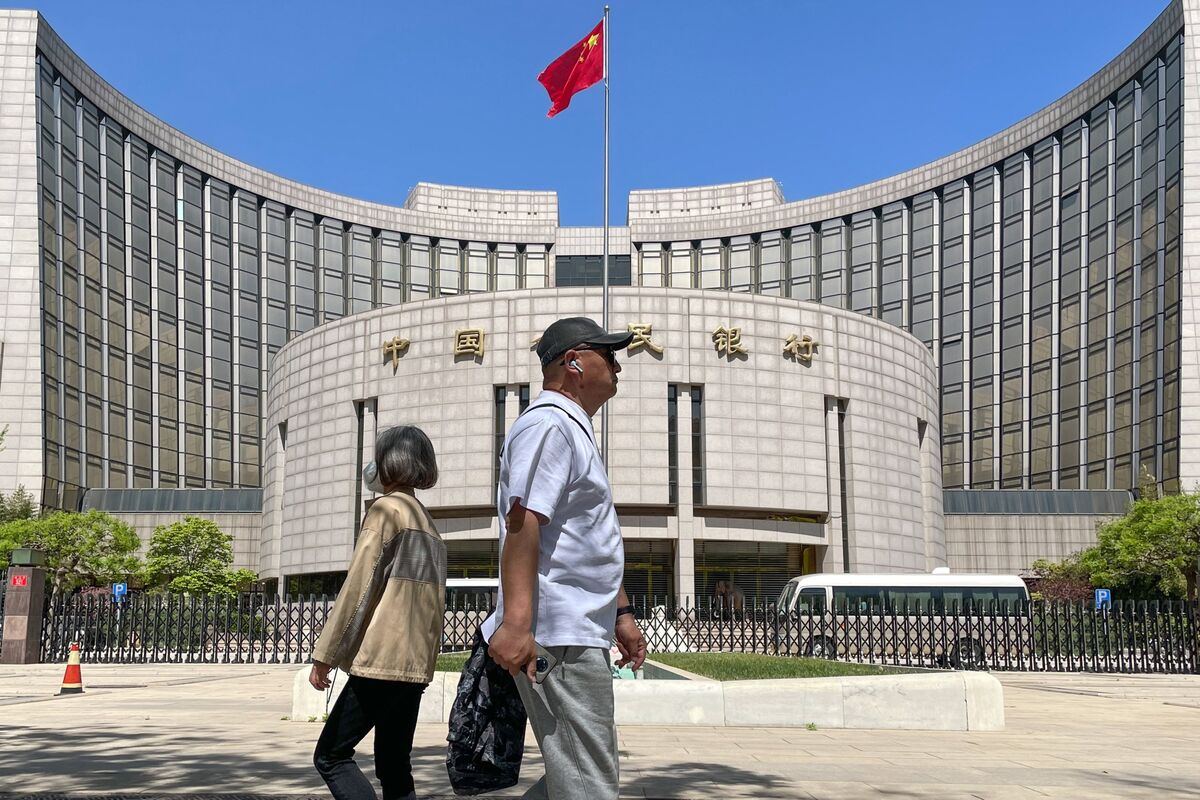
China's aggregate financing rose 621 billion yuan in April, sharply below the roughly 1.3 trillion yuan economist consensus and down from 1.2 trillion yuan a year earlier. New bank loans also contracted, indicating a seasonal lending slowdown and softer credit momentum. The weaker-than-expected credit data points to cautious domestic demand and could reinforce expectations for policy support.
The key market signal is not simply softer Chinese credit; it is that the transmission mechanism from policy easing to private demand is still broken. When credit growth undershoots by this margin, the first-order impact is usually on domestically levered cyclicals, but the second-order effect is broader: weaker loan creation implies slower inventory restocking, delayed capex, and less working-capital demand across regional supply chains, which can pressure Asian industrial and commodity-beta names before it shows up in headline GDP. Banks are not the immediate earnings risk so much as the policy-response risk: if lending stays muted for another 1-2 months, authorities may lean harder on targeted easing, reserve cuts, or window guidance, which can flatten the curve and compress net interest margins. For markets, the more actionable read-through is that this is bearish for hard-asset demand expectations over the next 1-2 quarters, especially copper, iron ore, and bulk-shipping exposures where China’s marginal credit impulse matters more than absolute GDP prints. The surprise downside also raises the odds that any near-term commodity rally is fragile unless it is accompanied by a visible pickup in credit carding into infrastructure and property channels. Conversely, exporters with low China end-demand sensitivity and firms that benefit from lower input costs can outperform if this turns into a broader China-demand disappointment. The contrarian angle is that investors may be overfitting one weak monthly datapoint to a structural slowdown. Seasonal volatility in April lending is notoriously noisy, and policy makers have room to offset with quasi-fiscal tools that do not immediately show up in bank-loan data; that means the market could reprice too aggressively for a growth scare if liquidity injections arrive within days. The bigger risk is not an imminent hard landing, but a grinding disappointment cycle where each incremental easing step buys less real activity than the last, extending the underperformance of China-sensitive assets for months rather than triggering a fast crash.
AI-powered research, real-time alerts, and portfolio analytics for institutional investors.
Request DemoOverall Sentiment
moderately negative
Sentiment Score
-0.35
