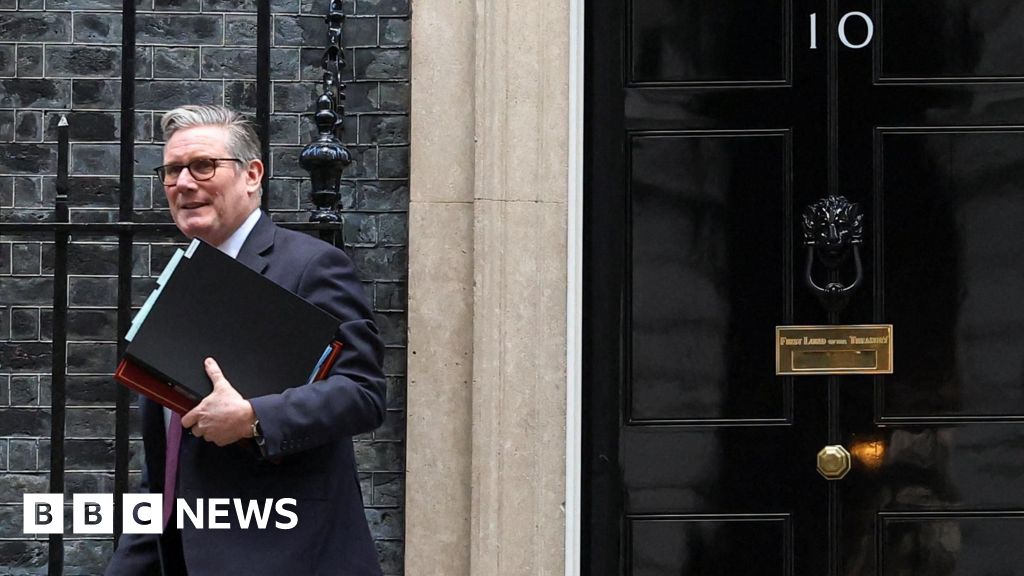
Prime Minister Keir Starmer is politically exposed after his chief of staff Morgan McSweeney resigned amid the Lord Mandelson controversy, leaving internal Labour divisions and questions about his authority. With a by-election in Gorton and Denton imminent and major devolved and local elections ahead, the piece flags a heightened risk of leadership challenge or prolonged stalemate, raising short-term UK political risk and potential downside to investor sentiment.
Market structure: Political turbulence in Downing Street is a clear negative for domestically exposed UK assets (FTSE 250, housebuilders, local services) and a relative positive for global exporters and commodity names listed in the UK (FTSE 100 miners/oil majors) if sterling weakens. Expect immediate rotation: demand out of gilts and sterling into USD and core sovereigns; utilities and regulated assets hold pricing power but growth/capex names face higher funding costs. Volatility should be concentrated around the next 2–8 weeks (by-election in ~2 weeks, devolved/local elections in months).
Risk assessment: Tail scenarios include (A) rapid leadership change or snap election (20–30% probability over 3 months) causing a 30–80bp spike in 10y gilt yields and GBP down 3–7%; (B) prolonged stalemate pushing risk premia +50–150bps over 6–12 months. Hidden dependencies: headlines on Mandelson/Rayner/HMRC can cascade into renewed scrutiny of ministers and policy paralysis, exacerbating capital flight. Key catalysts: Gorton & Denton by-election within 2 weeks, devolved election polling within 1–3 months, any UK–US diplomatic noise under Trump affecting gilt/FX flows.
Trade implications: Favor tactical GBP downside and gilt sell-off trades in the next 1–3 months; hedge domestic cyclicals and buy exporters. Use options to cap risk: cheap 3-month GBP puts and 3–6 month UK 10y short futures; size exposures to 0.5–2% portfolio risk per trade and reassess after election results.
Contrarian angles: The market may overprice immediate collapse; if Labour survives by-elections and retains PM, sterling/gilts can mean-revert quickly (20–40% of initial move) within 1–3 months. Look to buy deep-value entry points: accumulate FTSE 100 commodity/exporters on >6% GBP move or >10% index correction, and only widen gilt shorts if political headlines worsen beyond the 30–80bp band.
AI-powered research, real-time alerts, and portfolio analytics for institutional investors.
Request DemoOverall Sentiment
moderately negative
Sentiment Score
-0.50
