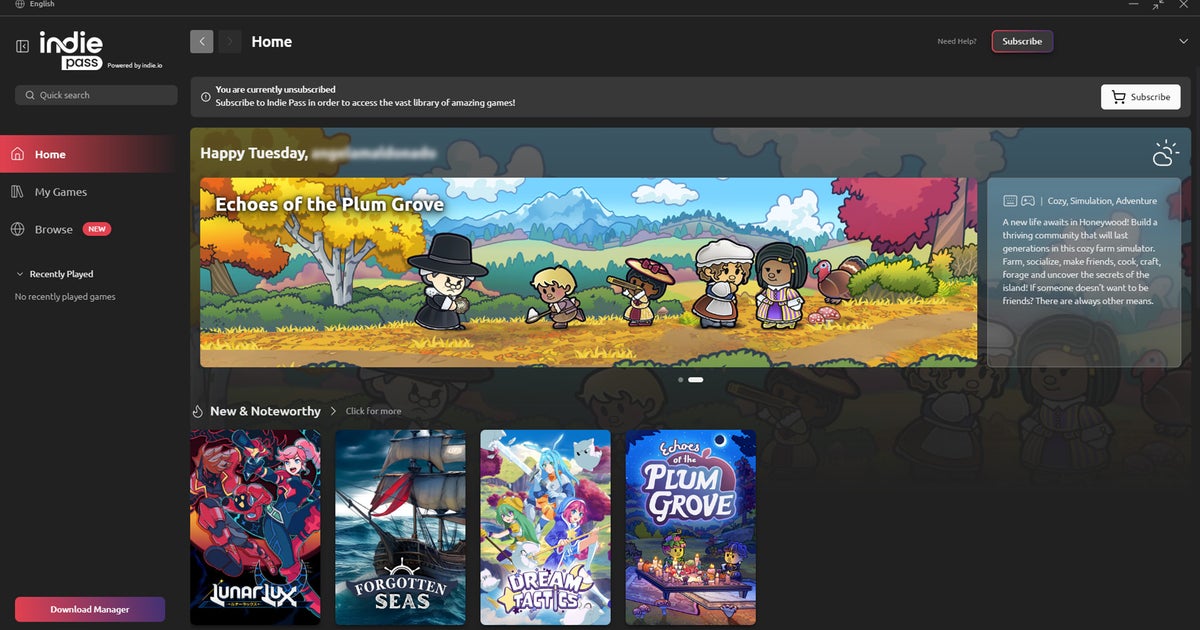
Indie.io is launching Indie Pass on April 13: a $6.99/month subscription offering a revolving catalogue of ~70 indie titles at launch; the company also operates a 200+ game publishing catalogue and community platform wiki.gg (claimed 10 million monthly active users). Developers will be paid via an engagement-based revenue-share model (no exclusivity), with recommendations and session-time analytics guiding discoverability and payments; Indie.io plans regular additions and expects the service to drive renewed attention to back-catalogue titles.
A time-weighted revenue share plus curated subscription creates a new incentive structure for small-studio economics: engagement per user, not unit price, becomes the main monetizable metric. That will favor a bifurcation within indies — a minority that optimizes for retention (and captures disproportionate revenue) and a longer tail that struggles unless the platform scales materially to their benefit. Expect studios to iterate toward ‘session-rich’ design patterns (checkpoint pacing, micro-quests, replay loops) even in traditionally single-sitting narrative games; that design drift is a second-order product risk for narrative purists and a potential long-term uplift for middleware/analytics vendors that sell retention tooling.
Competition dynamics are nuanced rather than zero-sum. Major subscription bundles remain defensible at the AAA/console level, but curated indie-only services can neuter discoverability as a competitive moat — shifting where indie attention concentrates and raising the value of any company that controls recommendation signals or community reach. The holder of first-party engagement data (owner/operator of community wikis, recommendation graphs) gains optionality to monetize discovery beyond pure distribution — expect bundle partners, marketing deals, and targeted merchandising to follow if user cohorts materialize.
Key fragilities: the model’s economics are scale-sensitive and fragile to heavy-multigame consumption (a small cohort playing many titles dilutes payouts). Near-term success hinges on rapid user growth and retention (weeks→months signal), while medium-term viability requires developer buy-in or the platform faces supply attrition within 6–18 months. Triggers to watch: large developer churn or public complaints about opaque payout math, platform partnerships with major storefronts, and early signals of session-length inflation across participating titles.
AI-powered research, real-time alerts, and portfolio analytics for institutional investors.
Request DemoOverall Sentiment
mildly positive
Sentiment Score
0.25
Ticker Sentiment
