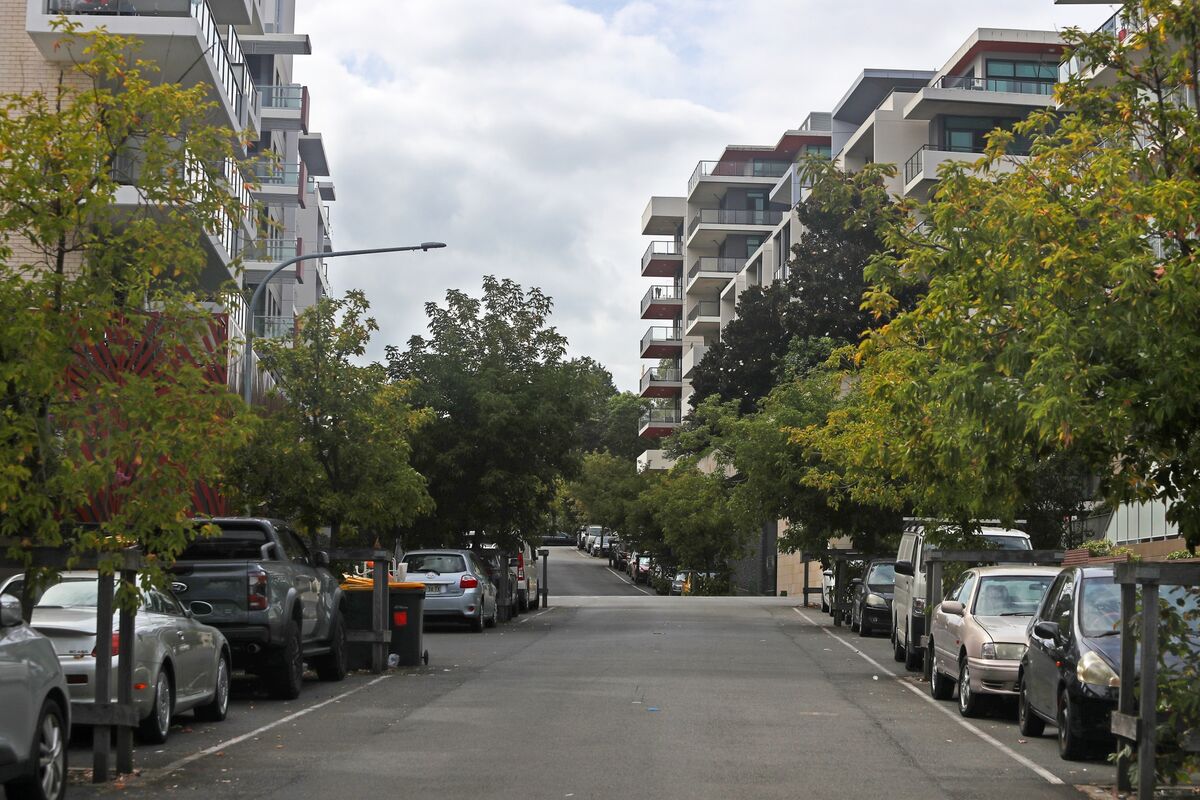
A new report finds Australia could add close to 1 million homes by converting standalone houses into duplexes or low‑rise apartments under a ‘gentle density’ approach, a policy model that helped address New Zealand’s accommodation shortage. Separately, New Zealand central bank governor Anna Breman appeared before parliament and Australian government bonds are experiencing a selloff likely to persist as markets price in interest‑rate hikes next year, underscoring a hawkish monetary backdrop that may pressure fixed income and influence housing policy debates.
Market structure: Gentle-density policy could unlock up to ~1.0m homes over 5–10 years concentrated in infill suburbs, benefiting mid-rise developers, modular builders and construction-materials suppliers (CSR.AX, BLD.AX, JHX.AX) while pressuring land-bank value for detached-home specialists and long-duration A-REITs (MGR.AX, SGP.AX, DXS.AX). Pricing power will shift toward firms that control infill development pipelines and prefab capabilities; standalone landowners face margin compression as supply elasticity rises.
Risk assessment: Key tail risks are political/regulatory reversal (NIMBY legal challenges), a 50–100bp+ surprise lift in Australian cash rates or a 10–20% surge in construction input costs that negates supply benefits. Immediate (days–weeks) risk is bond-market volatility as markets price hikes; short-term (3–12 months) risk is policy implementation uncertainty; long-term delivery risk is 3–7 years for material realization and infrastructure constraints.
Trade implications: Favor materials and mid-rise builders and underweight/hedge long-duration REITs and land-heavy developers; expect construction demand to lift EBITDA for materials by ~10–25% over 12–24 months if policy proceeds. Cross-asset: higher yields imply short ACGB 10y exposure; AUD may appreciate on tighter-rate expectations, benefitting commodity-linked exporters.
Contrarian view: Consensus underestimates time-to-market and underprices developer margin upside from higher-density infill (per-unit land efficiency improves). However, development levies/infrastructure charges could raise per-unit cost by 5–15%, muting house-price downside—creating asymmetric opportunities for suppliers over pure-play developers.
AI-powered research, real-time alerts, and portfolio analytics for institutional investors.
Request DemoOverall Sentiment
neutral
Sentiment Score
-0.05
