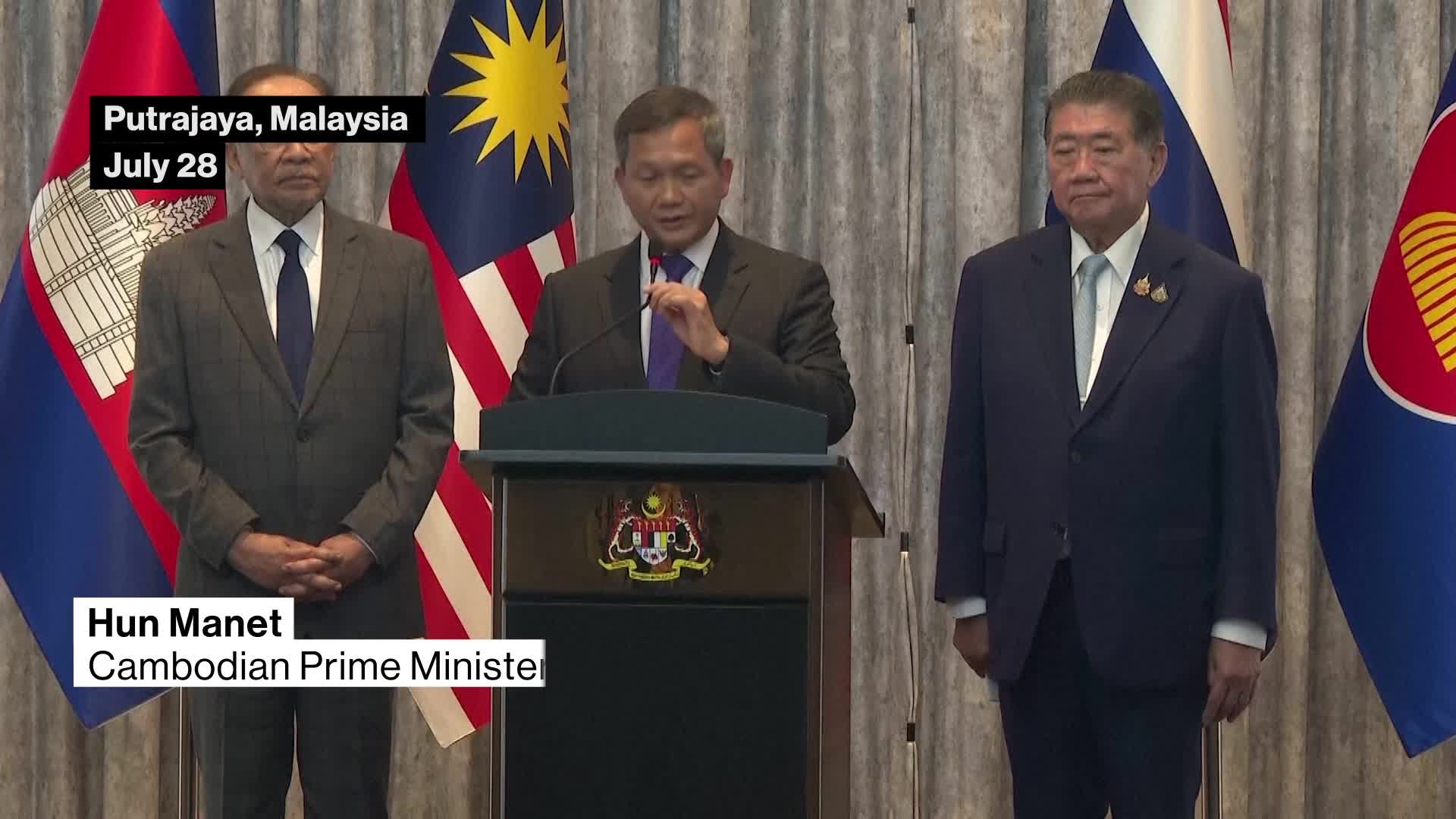
Thailand and Cambodia have agreed to a ceasefire, halting five days of deadly border fighting that claimed at least 36 lives. The diplomatic resolution, reached by Acting Thai Prime Minister Phumtham Wechayachai and Cambodian Prime Minister Hun Manet in Malaysia, was notably accelerated by President Donald Trump's tariff threats, underscoring the influence of external economic pressures on regional geopolitical stability.
A ceasefire agreement has been reached between Thailand and Cambodia, concluding five days of border fighting that resulted in at least 36 casualties. The diplomatic resolution, brokered during talks in Malaysia between the respective prime ministers, was significantly accelerated by external economic pressures, specifically tariff threats attributed to U.S. President Donald Trump. This development underscores the potent influence of trade policy as a tool in geopolitical de-escalation. While the cessation of hostilities is a moderately positive event for regional stability, its direct market impact is assessed as low. The situation highlights a key dynamic where the threat of economic sanctions can serve as a powerful catalyst for resolving localized military conflicts, even without direct financial market contagion.
AI-powered research, real-time alerts, and portfolio analytics for institutional investors.
Request DemoOverall Sentiment
moderately positive
Sentiment Score
0.50
