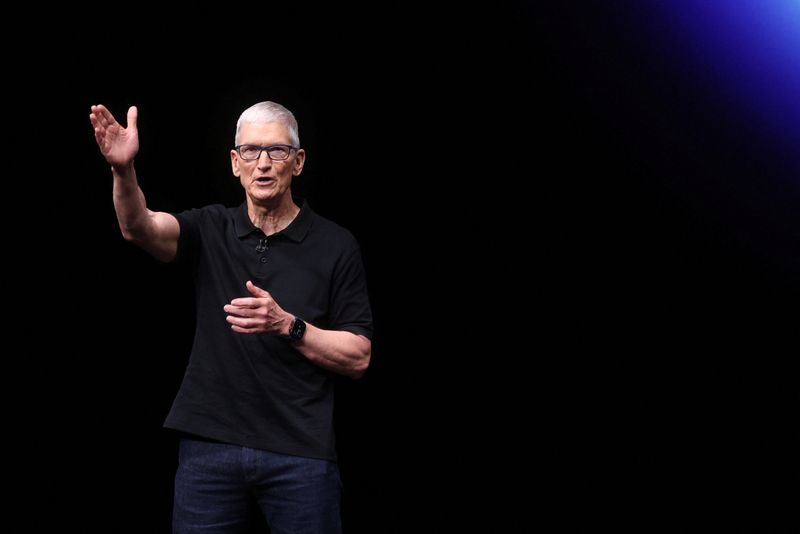
JPMorgan analysts led by Samik Chatterjee highlight Apple succession planning as a key investor focus, identifying John Ternus (age 50), SVP of hardware engineering, as the most likely internal successor to Tim Cook (age 65). The note cites Ternus’s visibility on product launches and alignment with Apple’s push into new product categories and AI-capable platforms, expects a measured reshuffle of an executive team averaging ~59 years old (with recently appointed CFO Kevan Parekh among the younger members), and suggests Cook could transition to chairman. Analysts underscore continuity risks but note Cook’s tenure delivered mid-teens EPS growth over ~1.5 decades, roughly 10% annual revenue growth and a market value climb from under $400 billion to $4 trillion.
Market structure: A product-focused CEO succession at AAPL benefits Apple and upstream component suppliers (camera, RF, display vendors) and platform partners that monetize new form factors, while commodity smartphone OEMs and non-ecosystem app platforms risk share loss. Pricing power for Apple devices and sticky services should support ASPs and 5–10% incremental services y/y growth assumptions over 12–24 months; chip stocks (INTC, SMCI) re-rate differentially depending on exposure to AI servers vs consumer components. Cross-asset: stronger tech leads to modest equity risk-on, potential curve steepening if capex expectations rise, USD tailwinds, and higher industrial metals demand (copper/silicon) over 6–18 months.
Risk assessment: Tail risks include an unexpected external CEO appointment, a major product flop, or intensified US/China regulatory action—each could compress AAPL multiple by 15–25% in 3–12 months. Immediate (days) volatility will spike on any succession announcement; short-term (weeks) earnings/launch cadence will drive flows; long-term (quarters/years) depends on execution in new categories and TSMC/supply-chain constraints. Hidden dependencies: Apple’s services margins, TSMC capacity allocation, and China manufacturing policy; catalysts are WWDC/product launches and quarterly results over next 3–12 months.
Trade implications: Tactical overweight AAPL vs. high-multiple AI infra names; prefer 9–12 month call-spreads (20–30% OTM) to capture product upside while buying 3–6 month puts (8–10% OTM) as hedge around key announcement windows. Initiate selective INTC exposure (1–2% positions) on tech-capex beats; trim SMCI after large runs and monetize IV via 30–60 day covered calls or call overwrites. Use pair: long AAPL / short SMCI to express rotation from consumer-platforms to volatile AI infra multiples over 3–12 months.
Contrarian angles: Consensus assumes seamless continuity — markets underprice CEO-execution risk and R&D dilution from aggressive new product bets; if Apple accelerates R&D to define AI form factors, near-term margins could drop 200–300bps before revenue materializes, creating a buying opportunity on a >15% pullback. Historical parallel: post-Jobs Apple showed durability but also a multi-year shift in margin profile; a sudden external CEO or failed product could force a >20% multiple reset, creating asymmetric long-term entry points.
AI-powered research, real-time alerts, and portfolio analytics for institutional investors.
Request DemoOverall Sentiment
mildly positive
Sentiment Score
0.28
Ticker Sentiment
