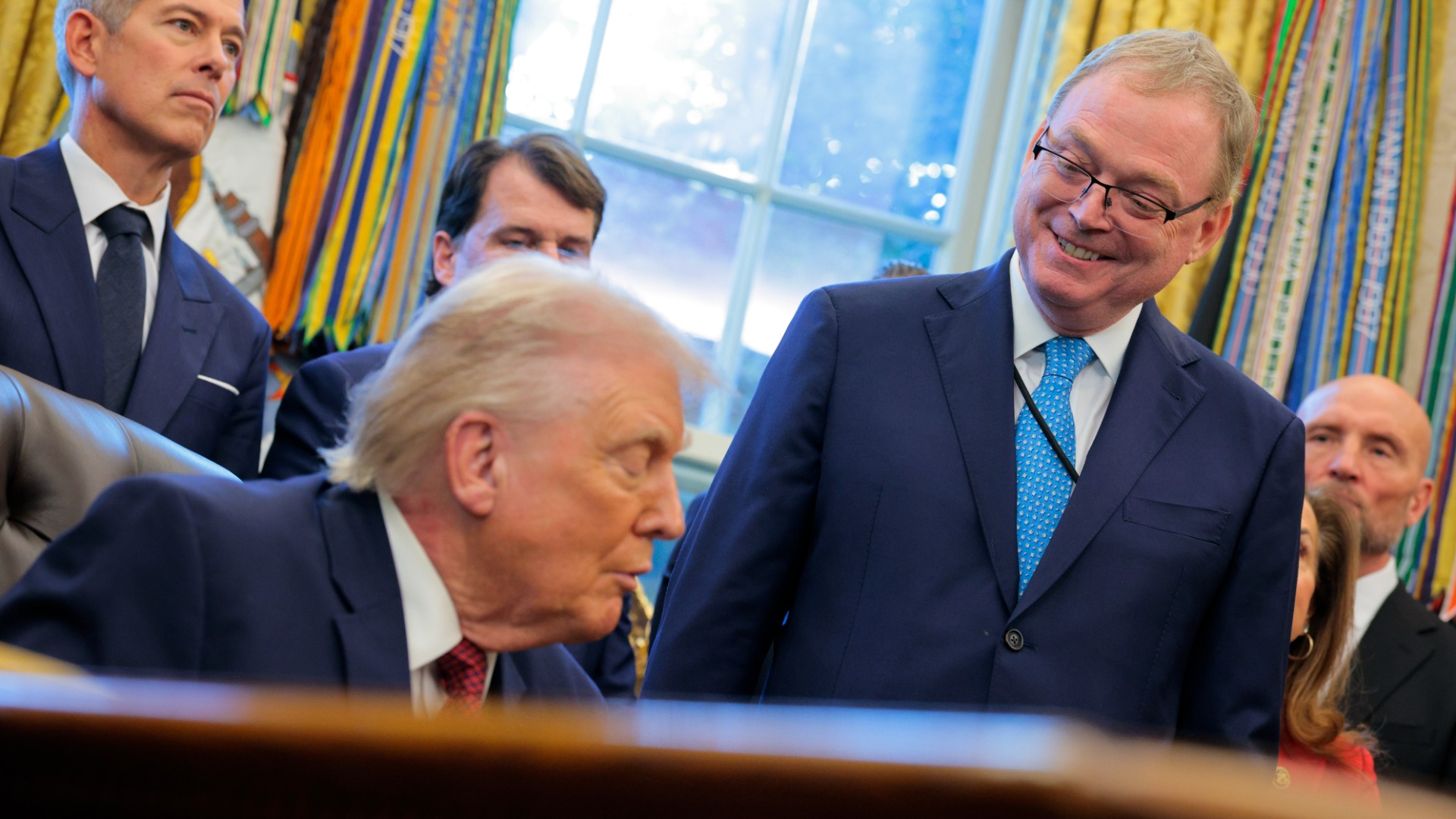
Discussion centers on potential Fed leadership change under a Trump administration, with reporting pointing to Kevin Hassett as a likely chair nominee and debate over whether Jerome (Jay) Powell would step down as chair earlier than his term end while remaining a governor through 2026. Market reaction and the Senate confirmation timeline are highlighted as the near-term risk to investor positioning, while structurally higher housing costs and tight supply are noted to blunt the traditional transmission of Fed rate cuts to Main Street, reducing the efficacy of monetary easing for affordability and household wealth creation.
Market structure: A potential replacement of Powell with a more dovish chair (candidate talk around Kevin Hassett) raises the probability of easier Fed policy within 6–12 months, which favors long-duration assets (20+yr Treasuries, TLT), housing plays (PHM, DHI, XHB) and rate-sensitive utilities (XLU), while pressuring regional banks (KRE) and USD short-term strength. Expect a 30–70bp compression in real yields if markets price a sustained easing path; mortgage spreads and housing supply will cap housing upside even if nominal rates fall.
Risk assessment: Tail risks include a sudden political shock (Senate rejects/ delays confirmation) that spikes 10y yields >100bp within days, or inflation surprises (CPI >4% y/y) that force higher-for-longer rates; both would invert the dovish trade rapidly. Time horizons matter: immediate volatility around nomination/confirmation (days–weeks), policy repricing in 3–9 months, structural housing and bank-margin impacts over 12–36 months; hidden dependency—mortgage credit spreads and deposit flows will determine who actually benefits.
Trade implications: Direct plays are long duration (TLT), selective homebuilders (PHM/DHI), mortgage REITs (AGNC) and short regional-bank exposure (KRE), sized to view confirmation as a catalyst. Use options to express asymmetric risk: 3–6 month call spreads on XHB and GLD to hedge inflation rewrite, and puts on KRE or short-dated 2y futures if yields fall sharply; targets and stops keyed to 2y/10y moves (see decisions).
Contrarian angles: Consensus assumes rate cuts automatically fix affordability — ignored is chronic housing supply and higher down-payment requirements, which means homebuilder earnings may lag price action and be binary around local permitting trends. The market may underprice the risk of a Senate delay or an inflation re-acceleration; therefore size trades modestly (1–3% per idea) and use tight, yield-based triggers rather than calendar bets.
AI-powered research, real-time alerts, and portfolio analytics for institutional investors.
Request DemoOverall Sentiment
neutral
Sentiment Score
-0.05
