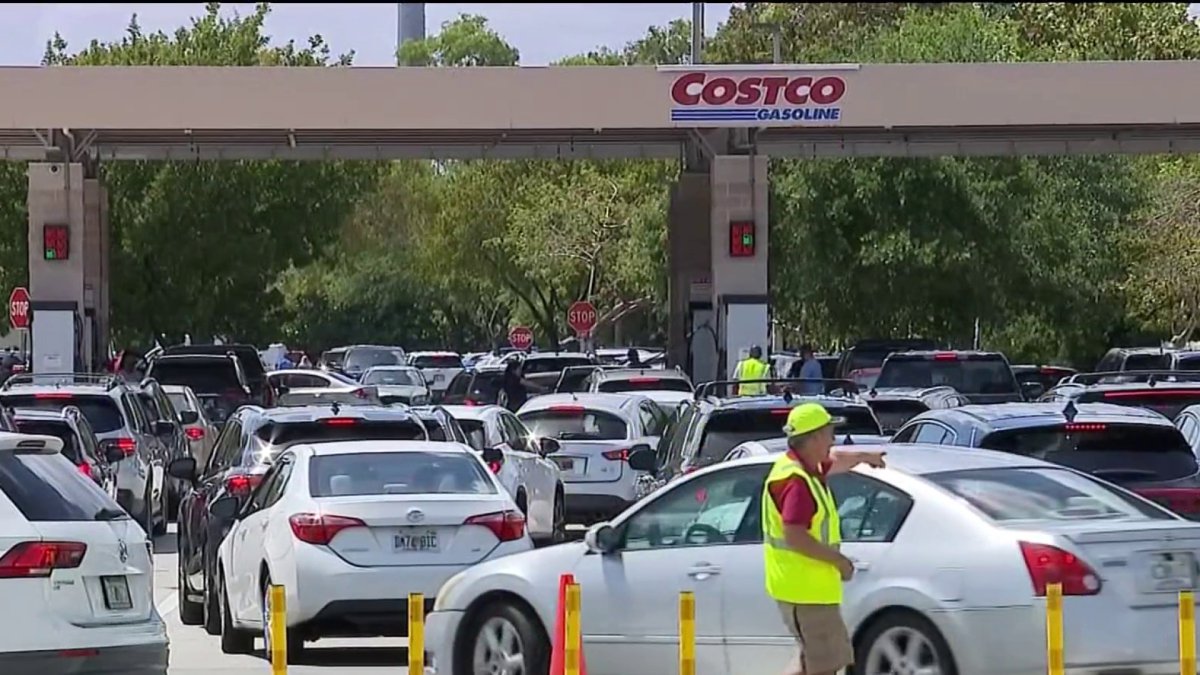
Gasoline at ~$4.15/gal in South Florida is roughly $1/gal higher than last year, with Costco offering ~ $0.20/gal discounts versus other stations. Local small businesses report closures or lost orders due to high fuel costs; lawmakers attribute the spike to the war with Iran and cite recent U.S. policy on oil sanctions. The article notes oil producers (including Russia and Iran) are benefiting from higher prices and that presidential threats to strike Iranian infrastructure add uncertainty about Strait of Hormuz oil flows, implying higher energy-sector volatility and a risk-off stance for markets.
Costco is an underappreciated tactical beneficiary from localized fuel-price dispersion: fuel loss-leaders that draw incremental car visits convert into high-margin ancillary baskets (household, cold-chain, discretionary). If just 1,000 incremental daily fuel customers convert at a conservative $30 ticket, that is roughly $11M annual gross sales — a non-linear boost to comp-store metrics for the next 6–12 weeks while the fuel discount persists.
The larger energy complex is still pricing in episodic supply shocks rather than structural tightness; that makes the near-term volatility catalyst-driven (days–weeks) — escorts, strikes, or a single major shipping-lane incident can spike spreads, while a diplomatic de-escalation or SPR release can compress them within 30–90 days. Secondary channels matter: higher pump prices raise last-mile delivery costs (hurting small delivery-heavy businesses fast), raise freight/CPG input inflation over months, and accelerate consumer substitution away from discretionary services.
From a trade-construction standpoint prioritize asymmetric, short-dated exposure to event risk plus selective alpha capture in retail traffic winners. Use cheap option structures around crude volatility and directional/relative-value retail exposure to monetise persistent retail share gains without taking full commodity beta. Monitor two-week news flow around diplomatic channels and inventory prints as execution triggers.
The consensus narrative pins the move on geopolitics alone; that misses domestic refinery cycles and inventory seasonality which frequently account for >50% of weekly Brent/WTI moves. If domestic throughput and imports normalize, much of the price premium will unwind quickly — making short-dated options and relative-value retail plays the preferred implementation rather than long-duration commodity beta.
AI-powered research, real-time alerts, and portfolio analytics for institutional investors.
Request DemoOverall Sentiment
strongly negative
Sentiment Score
-0.60
Ticker Sentiment
