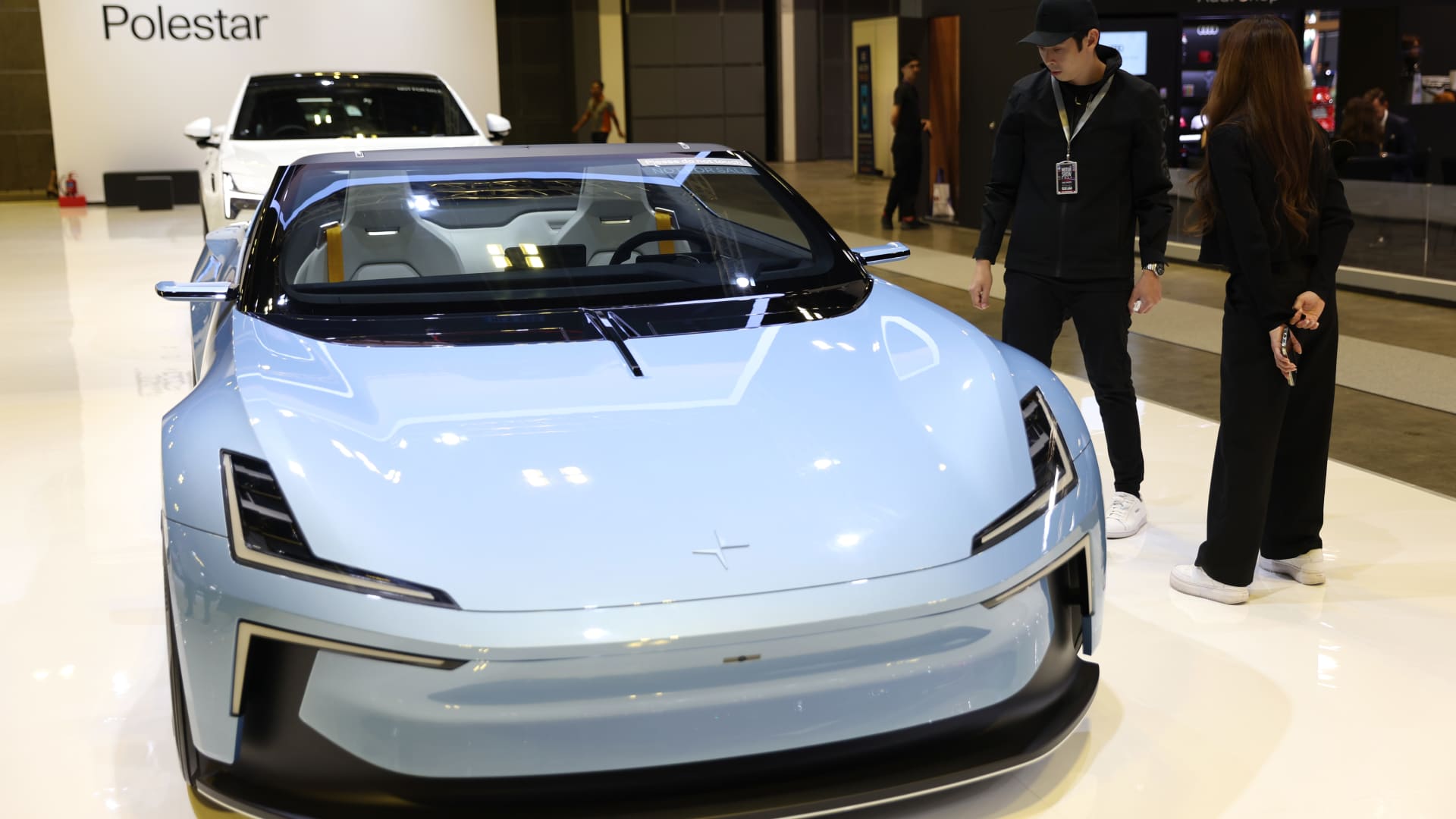
Polestar says rising fuel prices are boosting EV demand as oil markets react to Middle East disruptions, with WTI at $101.27 a barrel and Brent at $106.31, both up about 50% since Feb. 27. CEO Michael Lohscheller said 'pump anxiety' is replacing 'range anxiety,' lifting interest in both new and used EVs. Offsetting that, Polestar recently reported a widening first-quarter net loss of $383 million amid pricing pressure, tougher competition, and EU/U.S. tariffs.
The key second-order effect is not just higher EV demand, but a faster bifurcation within autos: price-sensitive consumers will gravitate toward brands with the lowest all-in cost of ownership, while weaker OEMs get squeezed by both lower pricing power and higher working capital needs. That favors scaled EV players with local manufacturing and clean balance sheets, and it hurts legacy OEMs and niche EV names that still rely on incentives, financing subsidies, or import-heavy supply chains. Near term, the biggest beneficiary is likely not the most premium EV brand but the cheapest credible alternative to ICE commuting. If fuel stays elevated for 1-3 months, the demand elasticity shows up first in used EV volumes, then in entry-level new EVs, and only later in upper-trim segments. That sequencing matters because used-EV strength can cannibalize new-vehicle pricing, so the headline demand boost may come with margin compression for the industry. The market is also underestimating policy fragility in the U.S. If federal incentives weaken while fuel remains expensive, consumers may still migrate to EVs, but the benefit accrues more to non-U.S. OEMs and used-car platforms than to domestically exposed EV manufacturers. Conversely, if oil retraces quickly, this becomes a short-lived sentiment trade rather than a durable adoption inflection, which caps the upside for anything priced on a multi-quarter demand re-acceleration. Contrarian view: the consensus may be overweighting the EV-positive headline and underweighting the oil-price tax on the consumer. Sustained $100+ crude typically hits discretionary spend, insurance, and rates-sensitive auto financing within weeks, so the net effect on total auto demand could be neutral-to-negative even if EV mix improves. The cleanest expression is therefore relative value, not outright beta.
AI-powered research, real-time alerts, and portfolio analytics for institutional investors.
Overall Sentiment
mildly positive
Sentiment Score
0.15
