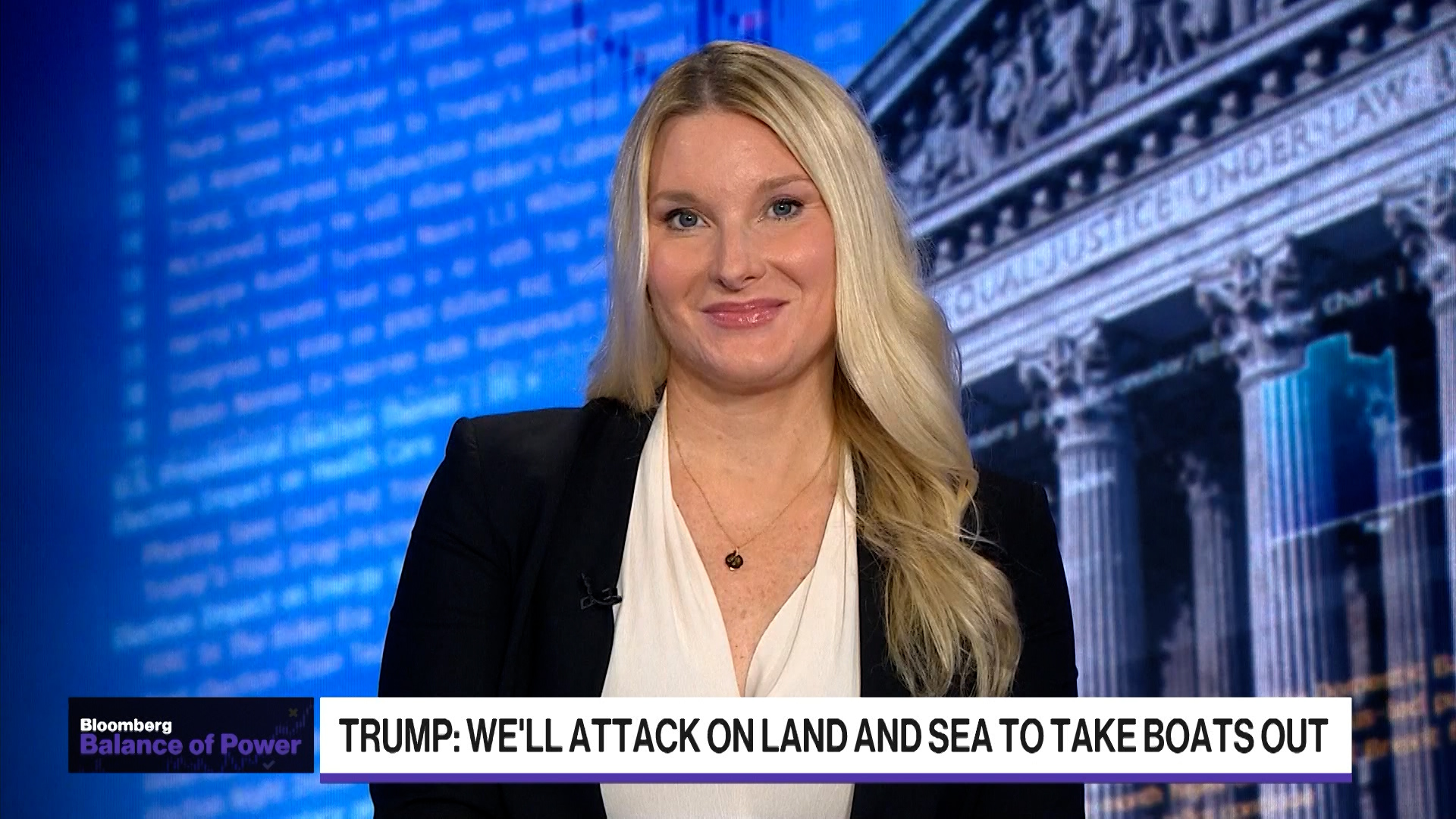
Legal experts raised serious concerns that recent U.S. strikes on vessels alleged to be drug smugglers could amount to war crimes or domestic murder charges if survivors were non‑combatants, creating potential legal and congressional oversight risks and the possibility of military-justice proceedings. The piece flags geopolitical escalation risks if strikes shift to land (notably involving Venezuela), highlights political inconsistency concerns tied to a presidential pardon for a convicted drug‑trafficker, and underscores an imminent Supreme Court ruling fast‑tracked on the Trump administration's tariff authority that could remove a major trade policy tool and increase regulatory uncertainty for markets.
Market structure: Geopolitical escalation (sea/possible land strikes) and accelerated legal scrutiny create asymmetric winners: defense primes (Lockheed LMT, Raytheon RTX, General Dynamics GD) and commodity hedges (GLD, energy majors XOM/CVX) on flight-to-safety and supply disruption, while travel, Mexico/Latin America-exposed equities (EWW, EEM) and tariff‑sensitive retailers (WMT, TGT) face downside. The imminent Supreme Court tariff ruling (expected before year‑end) is a second, near-term structural shock: a decision striking down tariffs would re-rate exportables and consumer names by a mid‑single-digit to low‑double‑digit move; upholding them boosts domestic manufacturing/steel (NUE) and depresses importers.
Risk assessment: Tail risks include a major escalation (land strikes, wider Venezuela confrontation) that could push Brent +$10–$20 within days and force a sharp safe‑haven bid (UST yields down 20–40bp; TLT up), or a legal finding that curtails executive kinetic options, reducing DoD forward revenue 5–10% over 12–24 months. Time horizons: days for testimony/news shocks, weeks for SCOTUS ruling, quarters for policy/capex reallocation. Hidden dependencies: congressional oversight could slow contracting cycles, and tariff jurisprudence will cascade into capex and supply‑chain reshoring decisions.
Trade implications: Prefer tactical long exposure to defense and commodity hedges and short EM/Latin America cyclicals. Use options to size risk: buy 3‑month call spreads on LMT/RTX (5%–10% OTM) and 3‑month put spreads on EEM (5% OTM) to express asymmetry. Pair trades: long CAT vs short NUE conditional on SCOTUS invalidating tariffs (execute within 7 trading days post‑ruling). Entry/exit: act on confirmed escalation (admiral testimony or land‑strike confirmation) within 48 hours; otherwise wait for the court ruling to size industrial/tariff trades.
Contrarian angles: Consensus assumes defense is unambiguously the beneficiary — but legal/political pushback could cap sustained military spending upside and create a 10% downside haircut for recent rally multiples; this is underpriced. Historical parallel: episodic U.S. strikes (2017–2019) produced short oil spikes but limited multi‑quarter equity impact; therefore GLD/energy longs should be sized small (1–3%) and rebalanced on mean reversion. A mispriced opportunity: Mexican exporters with hedged FX and local production (e.g., KMX?/auto suppliers) may be oversold if tariffs are struck down — accumulated positions after ruling can capture 8–15% rebounds.
AI-powered research, real-time alerts, and portfolio analytics for institutional investors.
Request DemoOverall Sentiment
moderately negative
Sentiment Score
-0.35
