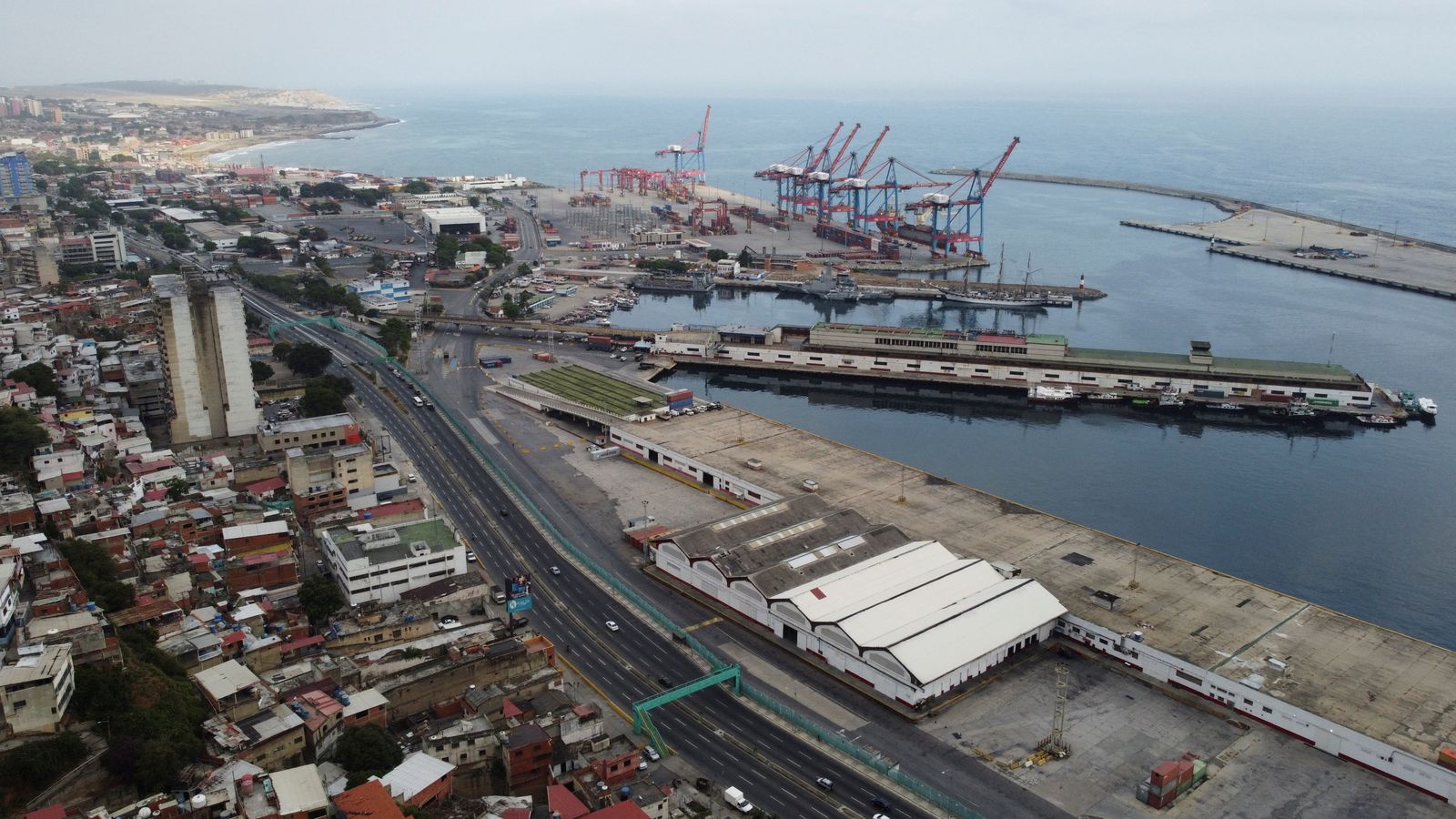
U.S. authorities are in active pursuit of a third oil tanker — identified as the OFAC‑sanctioned vessel Bella 1, listed since June 2024 — near Venezuela amid a broader U.S. naval buildup including the USS Gerald R. Ford and a declared "blockade" by the president. U.S. officials say the ship is part of a "dark fleet" used to evade sanctions and was sanctioned under counterterrorism authority for links to a Houthi financial facilitator; the operation and repeated seizures raise the likelihood of elevated risk premia for crude and increased volatility in shipping and regional energy flows. Hedge funds should monitor potential disruptions to Venezuelan exports, further sanctions on tankers/shipping firms, and geopolitical escalation that could affect oil prices and maritime insurance/shipping costs.
Winners: US defense primes (NOC, LMT, GD) and energy producers (XOM, CVX, XOP) should see near-term bid from defense spending and tighter crude availability; insurers and tanker/shipping equities (STNG, NAT) and small-cap maritime service providers are clear losers as seizure risk and insurance premiums rise. Competitive dynamics favor vertically integrated majors and traders that can flex barrels and absorb freight/insurance cost increases; independent refiners and airlines will face margin pressure if Brent moves above $85/bbl for more than 30 days.
Supply/demand signal: US interdictions targeting “dark fleet” cargoes could remove an incremental 0.1–0.3 mbpd of illicit flows in the next 30–90 days, tightening Atlantic basin balances and pushing Brent volatility (OVX) and time spread backwardations wider. Cross-asset: expect a flight-to-quality into USD and USTs intraday, compressed front-end yields if escalation spikes risk-off, higher commodity-linked FX (CAD, NOK) and widening credit spreads for emerging-market energy borrowers.
Risks & horizons: immediate (days) — headline-driven oil spikes and FX moves; short-term (weeks–months) — insurance premium repricing, rerouting costs, and physical delays; long-term (quarters) — policy/legal normalization or escalation (>$120/bbl) if seizures provoke wider confrontation. Tail risks include armed engagement near tanker convoys or secondary sanctions on neutral shipping flags, each causing >20% move in tanker equity basket or >30% in Brent.
Contrarian: market may overprice a persistent supply shock; historical parallels (2019 Gulf tensions) show spikes faded in 6–12 weeks as rerouting and spare capacity absorbed flows. If seizures continue but are legally constrained, expect mean reversion — short-duration option structures capture premium decay while owning selective physical-exposure equities for 3–9 month upside.
AI-powered research, real-time alerts, and portfolio analytics for institutional investors.
Request DemoOverall Sentiment
moderately negative
Sentiment Score
-0.45
Ticker Sentiment
