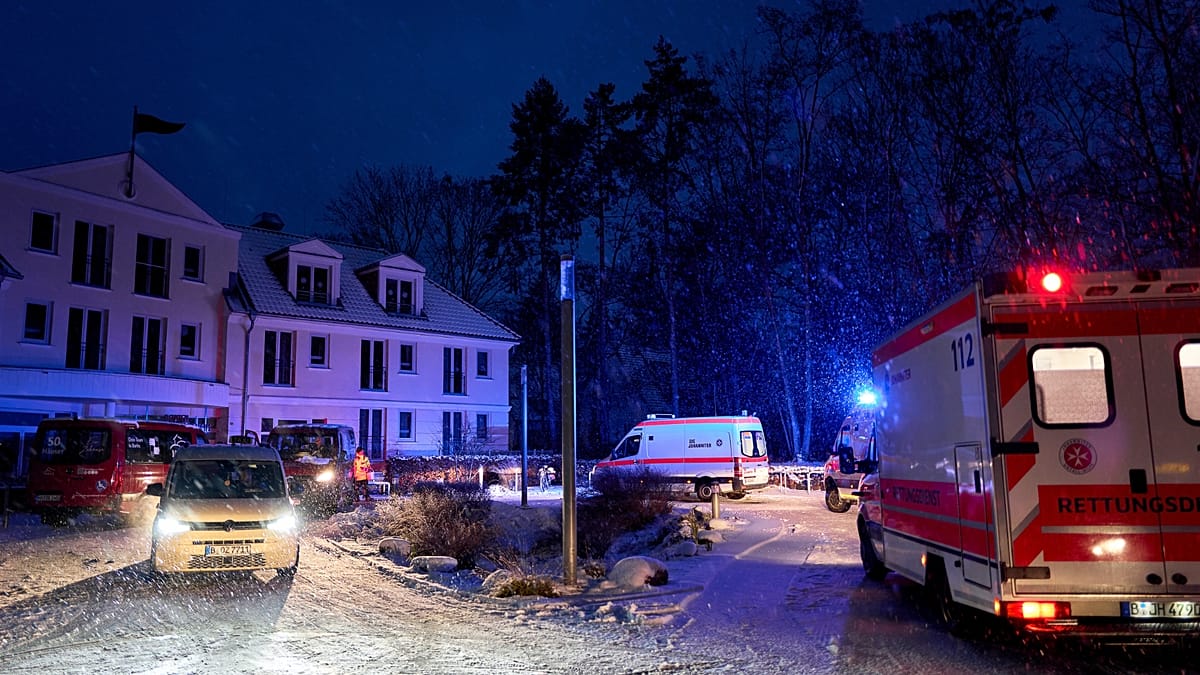
A far-left extremist group claiming to be the 'Vulkan Group' carried out an arson attack on high-voltage cables crossing the Teltow Canal in Berlin on Jan. 3, cutting power to about 45,000 households and leaving roughly 25,500 still without electricity; federal prosecutors have opened a terrorism probe with charges including membership in a terrorist organisation, sabotage and arson. Repairs to around 300 metres of damaged seven-component cable are technically challenging and expected to be completed by Thursday, while authorities have deployed emergency generators, military logistics support, and set up shelters; officials plan permanent surveillance and AI thermal monitoring for critical cables. The incident raises operational and regulatory risk for utilities and infrastructure operators, may prompt stricter surveillance and security requirements, and has limited near-term localized economic disruption with low direct systemic market impact.
Market structure: Physical attack shifts near-term winners to emergency power and surveillance vendors and contractors (rental generators, thermal cameras, grid-repair services) while hurting Berlin municipal utilities, local retail, and commercial real estate demand near affected nodes. Expect a 3–12 month procurement cycle: ~€100m–€500m of municipal / federal spending is plausible for hardening and surveillance across major German cities, favoring large industrial integrators that already service grid projects.
Risk assessment: Tail risks include escalation to coordinated attacks or stricter data-privacy pushback that delays deployments; worst-case supply disruptions to Germany’s urban business districts could shave 25–50 bps off city GDP growth in a quarter if outages recur. Immediate risk window is days–weeks (service restorations, reputational fallout); medium-term (3–12 months) sees regulatory and capex responses; multi-year outcome is structural security spending and possible privacy litigation.
Trade implications: Direct plays are long industrial integrators and generator OEMs, and long specialist surveillance/thermal-imaging names; hedge with puts on German domestic demand proxies (DAX/EWG) for 1–3 months. Volatility is likely to rise in local equities and power-contracts; buy 1–3 month protection on German equity ETFs if not holding defensive industrials.
Contrarian angles: Consensus expects only short-lived demand; this underestimates regulatory momentum — if Berlin rolls out permanent thermal/AI surveillance, annual recurring services could reach €50–150m run-rate for suppliers within 12–24 months. Conversely, heavy-handed surveillance could spark legal challenges that favor hardware vendors over software/cloud analytics (higher one-time capex, lower SaaS multiples).
AI-powered research, real-time alerts, and portfolio analytics for institutional investors.
Request DemoOverall Sentiment
moderately negative
Sentiment Score
-0.40
