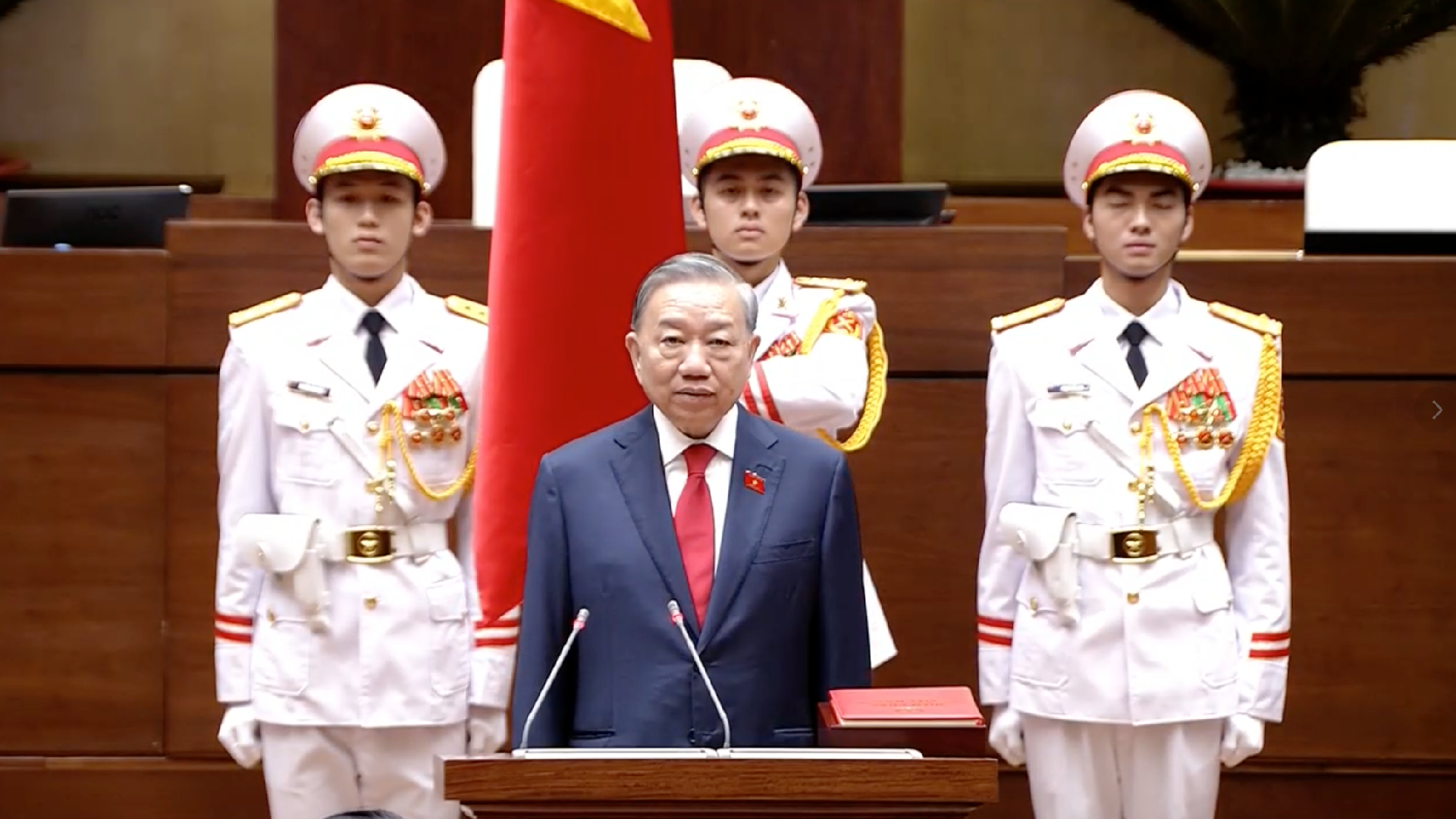
The National Assembly confirmed To Lam as Vietnam's state president for the 2026-2031 term with all 495 deputies present voting in favor. Lam, re-elected general secretary of the CPVCC on Jan 23, 2026, previously served as state president from May to Oct 2024. He emphasized developing a highly skilled workforce, improving institutions and governance toward a modern, inclusive, sustainable society, and aligning Vietnam with global political and economic trends.
Political continuity at the top materially lowers the idiosyncratic political tail risk premium for Vietnam over a 3–12 month window — expect a meaningful re-rating in local asset risk premia if policy predictability persists. Mechanically this should compress sovereign and corporate CDS by tens of basis points and tighten 5–10y local-currency bond yields by a similar order (30–80bps) as strategic investors re-open long-duration allocations.
Lam’s stated emphasis on workforce upskilling and governance reform favors export-upgrading (higher value manufacturing, electronics assembly moving up the value chain) and IT/outsourcing services over commodity-heavy sectors. That reallocation plays out over 1–3 years via increased FDI into capex-light services and capex-heavy advanced electronics; near-term winners are scalable service exporters and infrastructure players executing state-backed projects, while legacy SOEs and speculative real-estate may face slower privatization and tighter oversight.
Second-order geopolitical effects matter: continuity reduces short-term policy risk but also concentrates decision-making, increasing the probability of coordinated industrial policy that can tilt supply chains towards favored partners. Tradeable catalysts to watch in the next 6–12 months are large announced FDI projects, changes in foreign ownership limits, and any fiscal stimulus or credit guidance from the central bank — reversals would come from a global EM risk shock or overt geopolitical realignment that scares off Western capital.
AI-powered research, real-time alerts, and portfolio analytics for institutional investors.
Overall Sentiment
neutral
Sentiment Score
0.00
