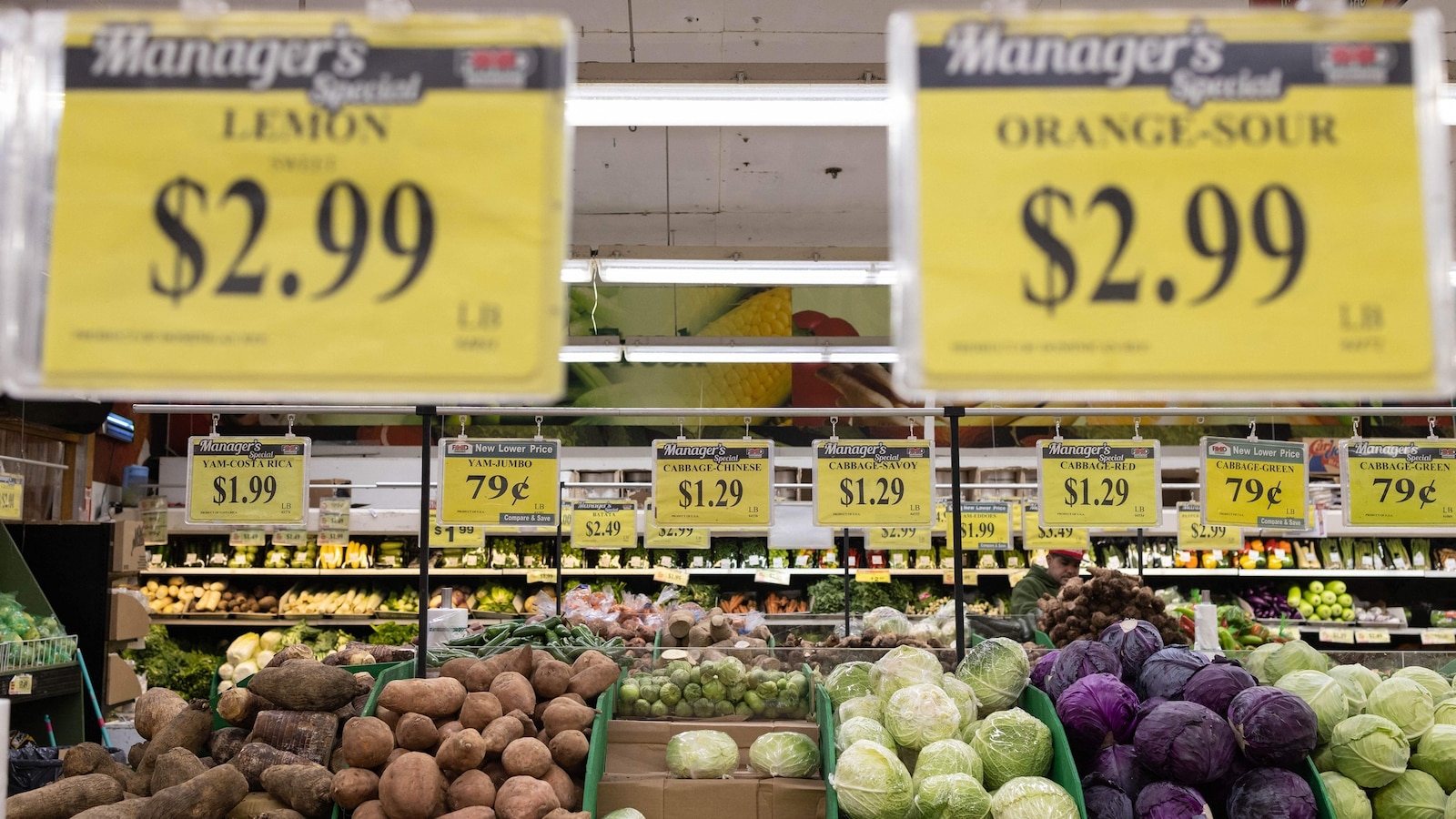
Economists expect year‑over‑year CPI inflation to have held at 2.7% in December, the lowest since July but still nearly a full percentage point above the Fed’s 2% target, with outsized price swings in items such as coffee (+19% YoY in Nov) and beef (+16%). The DOJ has opened a criminal probe into Fed Chair Jerome Powell over alleged false testimony about Fed HQ renovation overruns, raising fresh concerns about central‑bank independence and its ability to manage inflation; markets reacted with higher Treasury yields even as stocks closed higher. Policymakers face a difficult tradeoff after three consecutive rate cuts late last year aimed at supporting the labor market, and the investigation increases policy uncertainty that could influence yields, risk premia and investor positioning.
Market structure: The DOJ probe into Fed Chair Powell amplifies tail-risk pricing around central-bank credibility and keeps CPI (2.7% YoY) front-and-center; immediate winners are inflation hedges (TIPS, gold, commodity producers) and banks if yields stay elevated, while long-duration growth (QQQ, high-duration tech names) is vulnerable to a 25–75bp rise in real yields over 1–3 months. Competitive dynamics shift marginally toward cyclical/commodity sectors if markets price persistent above-target inflation (>3.0% yoy) for the next 6–12 months, eroding the relative valuation premium of growth stocks and increasing funding costs for levered sectors.
Risk assessment: Tail scenarios include (A) political escalation removing/paralyzing Fed leadership → policy drift and a sustained inflation overshoot (+150–300bp real policy mismatch over 12–24 months), or (B) market reasserts Fed independence and front-runs tighter policy → rapid 50–150bp sell-off in rates in days. Short-term (days–weeks) risk is headline-driven volatility around CPI and DOJ developments; medium-term (1–6 months) depends on employment and PCE; long-term (>6 months) hinges on credibility and fiscal path. Hidden dependency: US election cycle amplifies politicization risk and elevates term premium; catalysts include CPI/PCE prints, DOJ filings, and FOMC minutes.
Trade implications: Construct directional and relative-value positions: buy real-rate protection (TIPS/TIP) and gold (GLD) while shortening duration (sell TLT, buy IEF) — target a 2–4% portfolio tilt, time horizon 1–6 months. Pair trades: long XLF (financials) vs short QQQ to capture steepening/rotation if yields rise 20–60bp; use options (3-month put spreads on TLT, call spreads on GLD) to cap cost and exploit implied vol spikes around CPI. Enter ahead of CPI release within 1 week; set stop-loss thresholds tied to 10-yr yield moves of ±25bp.
Contrarian angles: Consensus assumes politicization equals easier policy and lower yields; instead, loss of independence can raise term premium and yields (historical parallels: 1970s politicized policies → higher yields and inflation risk premium). Reaction may be underdone in TIPS/gold and overdone in shorting banks; if CPI cools to <2.4% in next two prints, unwind inflation hedges quickly. Unintended consequence: a credibility shock could de-anchor global rates, creating larger relative dislocations in EM FX and sovereign curves — opportunity for volatility-selling strategies with tight risk controls.
AI-powered research, real-time alerts, and portfolio analytics for institutional investors.
Request DemoOverall Sentiment
moderately negative
Sentiment Score
-0.45
