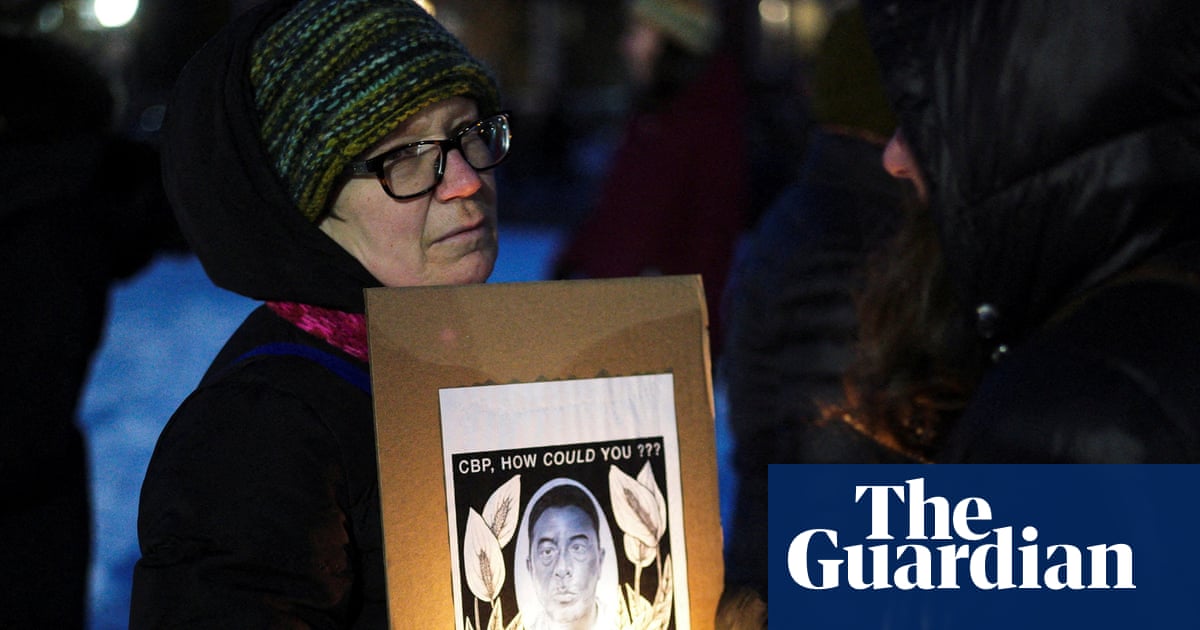
The Erie County medical examiner ruled the death of 56-year-old Rohingya refugee Nurul Amin Shah a homicide on 31 March, citing "complications of a perforated duodenal ulcer precipitated by hypothermia and dehydration." Shah was dropped by US Border Patrol agents at a Tim Hortons parking lot on 19 February at about 8:18pm and found dead five days later roughly four miles away; he had resettled in Buffalo in December 2024 and was arrested on 15 February 2025. New York Attorney General Letitia James has opened a formal investigation and the Erie County DA is reviewing the autopsy; DHS disputes a Border Patrol role, raising potential legal and political scrutiny of federal immigration practices.
The medical-examiner determination materially raises the probability of civil enforcement and damages exposure beyond the immediate locale: expect state-level probes to evolve into targeted civil suits and FOIA-driven discovery that can reveal systemic practices. Typical wrongful-death settlements for local governments run low-single-digit millions, but coordinated multi-plaintiff or AG-driven systemic cases against federal programs can escalate to tens of millions and force policy-driven budget reallocations over 6–24 months.
From a procurement angle, heightened scrutiny creates a near-term demand shock for monitoring, medical triage, and accountability tech (wearables, fixed cameras, integrated evidence platforms) as agencies seek defensive investments to reduce legal risk. Contracts are unlikely to shift overnight, but RFP activity and pilot funding typically accelerate within 3–12 months after high-profile rulings, benefiting incumbent tech vendors with existing footholds in public-safety deployments.
Second-order winners include vendors that can credibly reduce downstream liability through auditable data capture and analytics; losers include firms whose revenue is derived from high-utilization detention or enforcement volumes and insurers that underprice public-entity liability. Politically, state-federal friction will be the multiplier: aggressive AG action or local ordinances could cascade into procurement reprioritization, while a strong federal defense or legislative preemption would blunt reforms and favor incumbents tied to enforcement volumes.
Key catalysts to watch are (1) formal civil complaints or class-action filings within 30–90 days, (2) RFP issuance and procurement budgets disclosed in 3–12 months, and (3) election-cycle messaging that either amplifies reform momentum or triggers defensive federal budget increases. The consensus risk is binary overreaction; absent systematic evidence of widespread malfeasance, policy and contract flows will reassert slowly, leaving asymmetric opportunities for selective event-driven exposure.
AI-powered research, real-time alerts, and portfolio analytics for institutional investors.
Request DemoOverall Sentiment
strongly negative
Sentiment Score
-0.60
