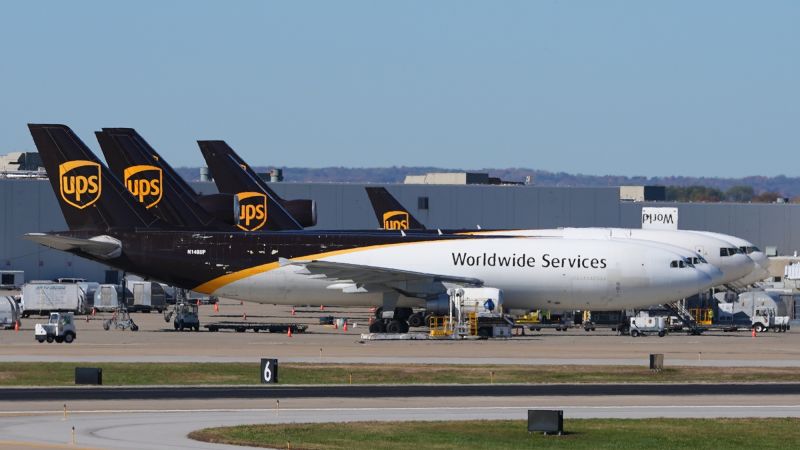
UPS has grounded its McDonnell Douglas MD-11 fleet after a fatal Nov. 4 Louisville crash and now expects inspections and potential repairs to take several months, meaning the type likely won’t return to service during the peak holiday season. The company relies on contingency plans to meet delivery commitments; the 109 remaining MD-11s (average age >30 years) comprise roughly 9% of UPS’s airline fleet and about 4% of FedEx’s. Boeing will develop inspection and corrective-action procedures for FAA approval, creating a multi-month operational and regulatory timeline with potential near-term logistics strain and reputational risk for both carriers and Boeing.
Market structure: UPS is the direct loser — MD-11s are ~9% of UPS capacity vs ~4% for FDX — creating a near-term airlift deficit that will tighten express capacity through the peak season. Winners are FedEx (FDX), third‑party ACMI/charter carriers and spot freight markets which should see rate uplifts; estimate a 5–15% spike in air freight spot rates in key lanes over the next 4–10 weeks. Boeing (BA) is reputationally exposed and will face short‑term negative flow but may capture aftermarket services revenue from mandated inspections.
Competitive dynamics & supply/demand: The outage shifts market share concisely toward operators with younger widebodies or available block hours; expect UPS to deploy ground/partner lift and paid charters, compressing margins for ground but supporting package price pass‑through. With ~109 MD‑11s grounded and avg age >30 years, deliberate retirements could accelerate — creating replacement demand for widebody leasing/MRO over 12–36 months. Network substitutes are capacity constrained, so pricing power moves to carriers and freight brokers.
Cross‑asset & risks: Expect immediate equity downside for UPS (-) and BA (mild -), rising implied vols for both; corporate credit spreads for UPS/BA likely widen 10–50bps if guidance worsens. Tail risks include a broader MD‑11 fleet grounding or multi‑month FAA mandate, large litigation or insurance losses, or a FAA/DOJ inquiry that drags BA; each could materially impair cash flow and capital plans over 6–18 months.
Trade catalysts & contrarian view: Key binary catalysts — FAA approval of Boeing inspection procedures, UPS Q4 guidance (shipping volumes/margin commentary), and any insurer/reserve filings — will move prices within 2–8 weeks. Consensus may underprice UPS’s ability to pass higher spot/ground rates to customers; conversely, market may overpenalize BA for a maintenance/aging‑fleet issue rather than new design failure, creating asymmetric short‑term opportunities.
AI-powered research, real-time alerts, and portfolio analytics for institutional investors.
Request DemoOverall Sentiment
moderately negative
Sentiment Score
-0.45
Ticker Sentiment
