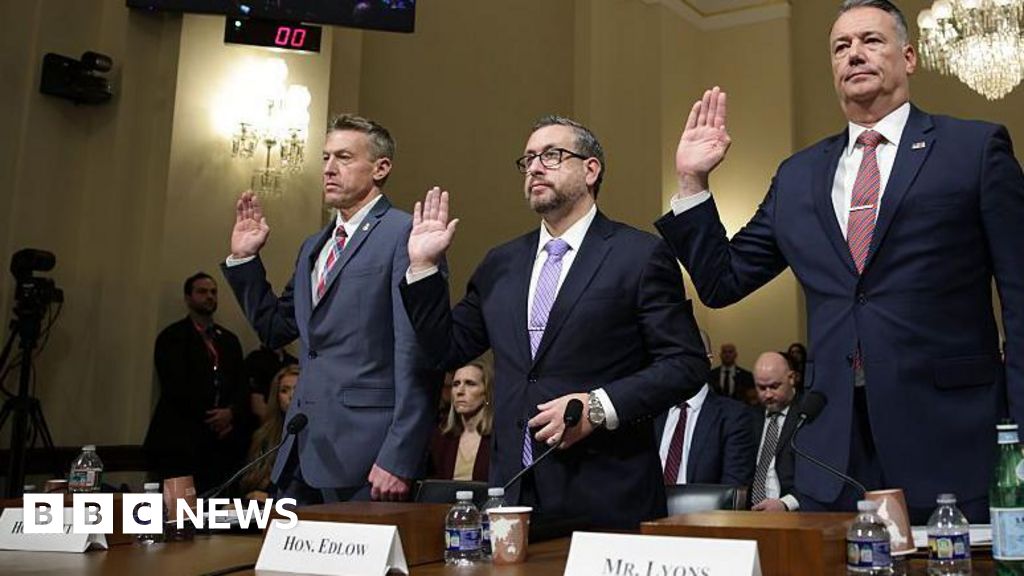
Senior ICE and CBP officials defended the administration's immigration operations at a contentious congressional hearing after ICE agents shot and killed two U.S. citizens, Alex Pretti and Renee Nicole Good, in Minneapolis. DHS announced body-worn camera rollout progress: roughly 3,000 ICE officers have received cameras with another 6,000 being deployed (out of ~13,000 ICE agents), and about 10,000 of ~20,000 CBP agents have cameras; officials said footage would be made public. Lawmakers pressed on training and recruitment—ICE said training hours were accelerated from five days/week at eight hours to six days/week at 12 hours—while agency heads resisted calls to unmask agents or concede deliberate targeting of U.S. citizens, signalling heightened political and legal scrutiny that could increase operational risk and litigation exposure for federal immigration enforcement.
Market structure: Near-term beneficiaries are body‑worn camera and evidence‑management vendors (AXON, Motorola Solutions MSI, Palantir PLTR for analytics) and cloud providers (AMZN, MSFT) because DHS disclosed ~3k ICE cams active, +6k deploying and CBP ~10k cams — implying an addressable incremental deployment of ~20–30k units across agencies (hardware revenue ~$16–25M, recurring storage/software ~$4–8M/yr). Direct losers are politically exposed contractors (GEO, CXW) and local governments facing legal costs; procurement upside likely concentrates in niche hardware/software vendors, not large defense primes. Competitive dynamics favor integrated vendors offering hardware+cloud+analytics (AXON, PLTR) over commoditized hardware players; pricing power rises where turnkey evidence chains reduce legal risk for agencies.
Risk assessment: Tail risks include DOJ civil rights investigations, Congressional funding cuts, state-level lawsuits or bans that could trigger 20–40% downside for private‑prison stocks and derail procurement timelines. Time horizons: immediate (days) for headlines/stock volatility, short (30–90 days) for footage release/IG reports and DHS RFPs, long (6–24 months) for multi‑year contracts and litigation outcomes. Hidden dependencies: procurement requires budget appropriations and GSA/IDIQ vehicles; footage release timing is a catalyst that can accelerate legal action. Watch election outcomes and Attorney General signals as binary policy catalysts.
Trade implications: Favor modest overweight in security tech/cloud: tactical 1–2% positions in AXON/MSI and 0.5% in PLTR/AMZN, funded by reducing or shorting GEO/CXW exposure. Options: buy 3–6 month AXON calls (25–30 delta) to lever upside tied to procurement news; buy 3‑month puts on GEO/CXW (10–15% OTM) to hedge litigation risk. Sector rotation: reduce exposure to private‑prison & municipal credit where litigation/tax costs may rise; increase exposure to niche security hardware/software and cloud storage names.
Contrarian angles: Consensus overweights political risk to camera vendors; historical parallels (2014–2016 police reform cycle) show sustained camera demand despite political noise — niche vendors with end‑to‑end solutions captured durable contracts. The market underprices ancillary winners: cloud storage (AMZN, MSFT) and analytics (PLTR) which can win recurring revenue streams; unintended consequence — increased evidence storage/AI moderation creates multi‑year SaaS hooks that can justify 3–5% EPS uplift for small vendors over 2 years.
AI-powered research, real-time alerts, and portfolio analytics for institutional investors.
Request DemoOverall Sentiment
moderately negative
Sentiment Score
-0.50
