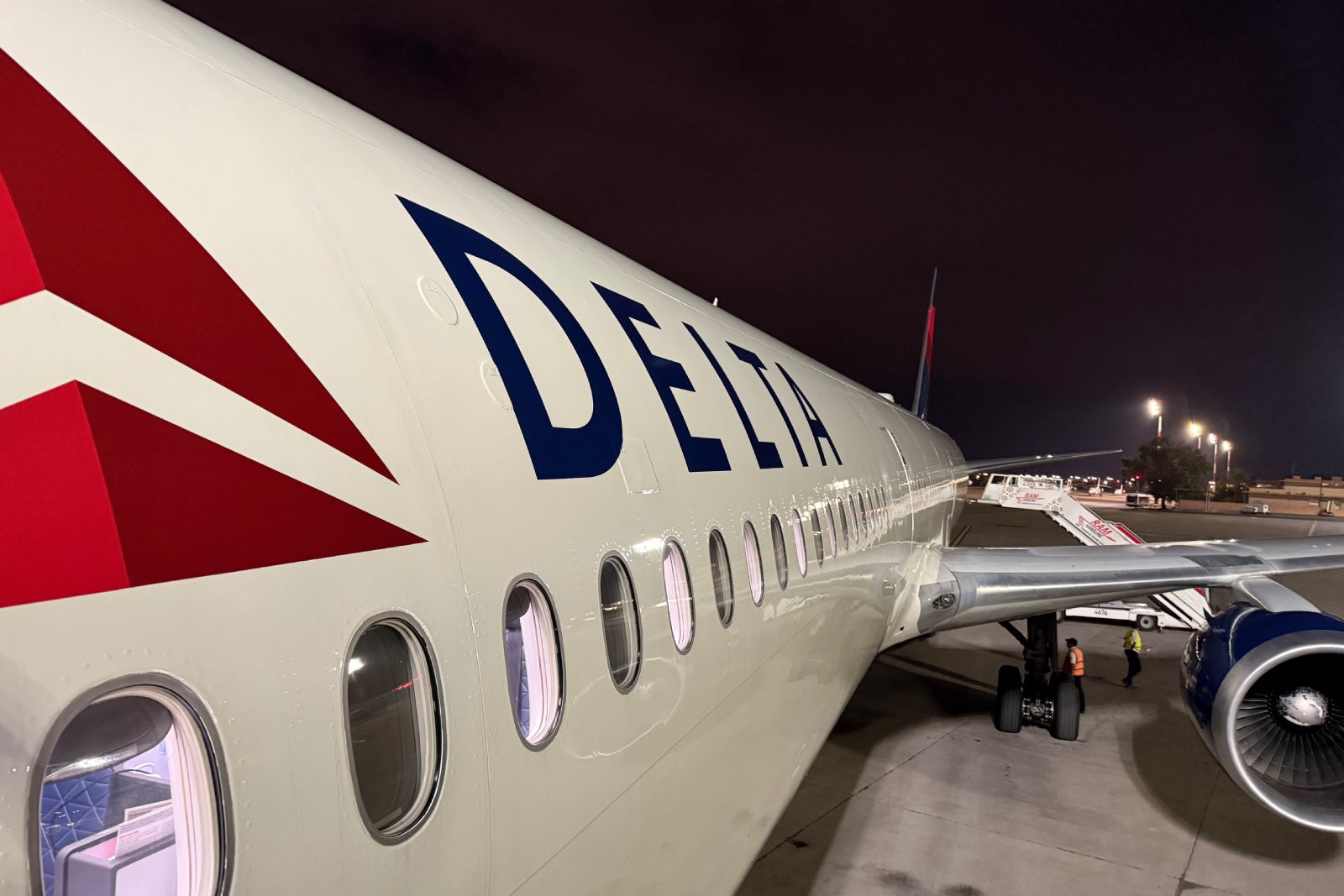
Delta will raise checked-bag fees for tickets booked from April 8: first bag $45 (up $10, ~28%), second bag $55 (up $10), third bag $200 (up $50). The carrier cited rising jet-fuel costs amid fallout from the Middle East conflict; JetBlue and United have already hiked fees, elite members and eligible Delta AmEx cardholders retain free baggage, and long-haul international fees were unchanged.
Ancillary pricing is now a direct margin lever rather than a secondary revenue stream — a modest increase in per-bag charges can translate into low-single-digit percentage lifts to PRASM if attach rates are material (50%+), and into high-single-digit EBITDA upside for network carriers where baggage volumes concentrate. That dynamic rewards scale and yield management sophistication: carriers with better retailing engines and loyalty-linked waivers extract more wallet share with less customer churn, while point-to-point and ultra-low-cost operators gain share among price-sensitive flyers who shift to carry-on only.
Co-branded card issuers are a second-order beneficiary: any widened premium on ancillary bundles increases the value proposition of card-embedded waivers, supporting issuance economics and retention for AXP-style franchises. Conversely, travel intermediaries and mid-market corporates face higher reimbursement friction that can shorten booking windows and push a tilt toward non-refundable, bundled fares — a subtle revenue mix change that will show up across distribution and GDS flows over the next 2–4 quarters.
Near-term catalysts are concentrated and fast-moving: competitor mimicry typically occurs within days–weeks after a leader move, compressing the opportunity to arbitrage fee differentials; fuel-price normalization or a visible demand slowdown are the clearest reversal drivers and would roll back the need for fee hikes within 1–3 quarters. Regulatory and political scrutiny is a longer-tail risk (6–18 months) — sustained consumer complaints or concentrated price increases for ancillary services can attract hearings or state-level interventions that cap upside.
For portfolio positioning, emphasize differentiation not direction: prefer carriers with sticky loyalty economics and superior distribution capture, hedge against a demand pullback, and express card-franchise upside separately from airline equity exposure. Monitor card application trends, bag-attach rates disclosed on calls, and near-term unit revenue vs. ticket elasticity as primary read-throughs; these will be the clearest indicators whether ancillary price-taking is sustainably accretive or transitory.
AI-powered research, real-time alerts, and portfolio analytics for institutional investors.
Request DemoOverall Sentiment
neutral
Sentiment Score
0.00
Ticker Sentiment
