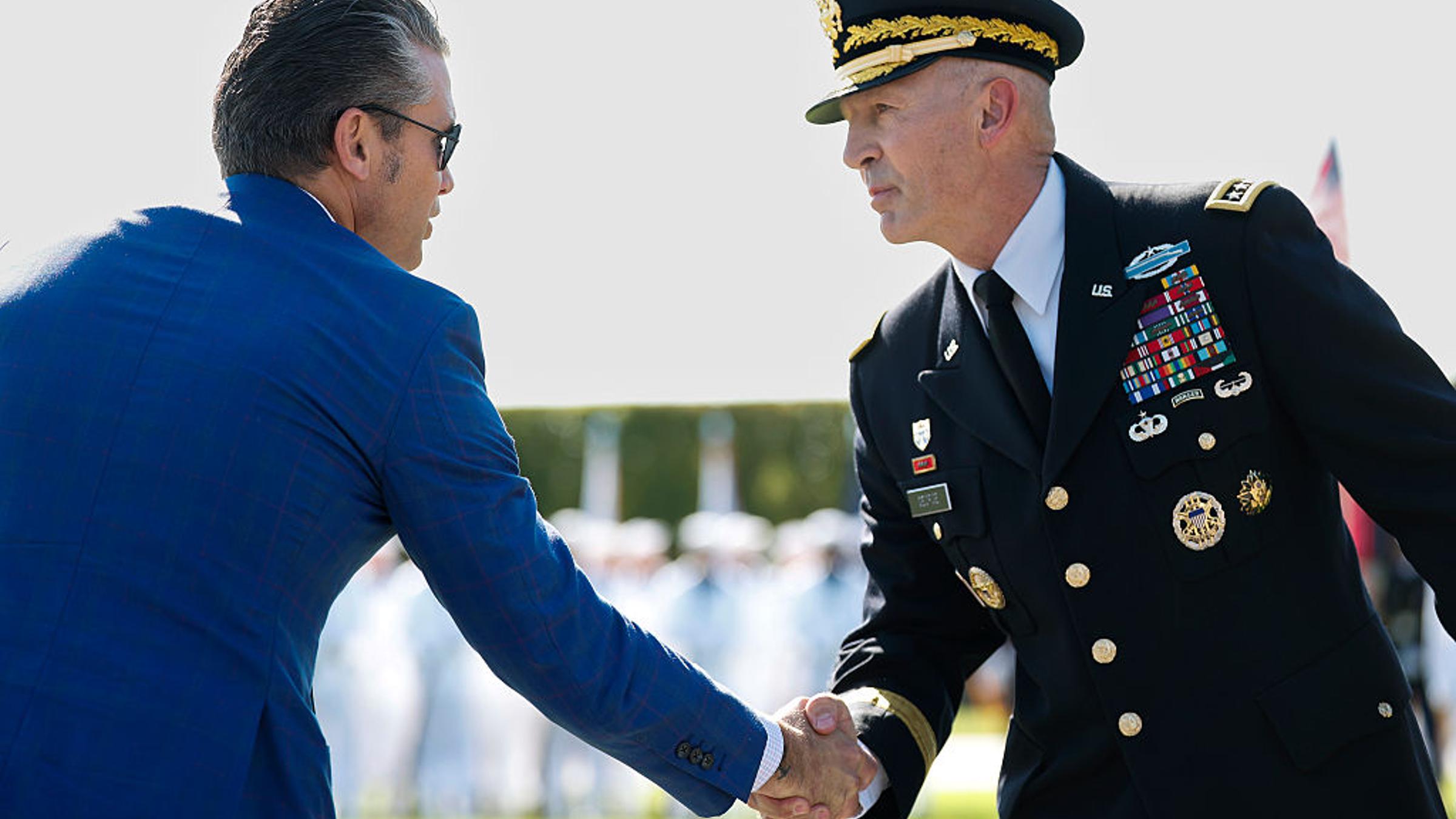
Three senior Army generals—including Army Chief of Staff Gen. Randy George, Chief of Chaplains Maj. Gen. William Green Jr., and Gen. David Hodne—were fired immediately by Defense Secretary Pete Hegseth amid the U.S.-Israel war with Iran; Gen. Christopher LaNeve was named acting Army chief. The abrupt leadership purge, part of a wider post-inauguration overhaul under President Trump, raises operational and geopolitical uncertainty and is likely to increase volatility in defense stocks and prompt risk-off flows; monitor defense contractors, Treasury yields and oil prices for spillovers.
Rapid senior leadership churn inside the Pentagon is a structural shock to program continuity: expect a near-term tilt from long-cycle modernization toward readiness, sustainment, and munitions as new leaders prioritize visible, fast-executing wins. Operationally this translates into procurement reprogramming windows over the next 3–9 months where contract awards and unclassified funding could shift by hundreds of millions (and in stressed scenarios low single-digit billions) from NGCV/airframe milestones into spare parts, depot work, and ammunition buys.
Second-order winners are companies that can scale logistics, depot MRO, tactical comms, and high-rate production of munitions within 30–180 days — they benefit from stop-gap buy decisions that bypass multi-year acquisition cycles. Conversely, large-platform primes with heavy reliance on multi-year R&D and milestone-driven payments face execution and backlog risk: program delays compress revenue recognition and defer margin-accretive follow-on work for 6–24 months.
Catalysts that will validate or reverse these trends are concrete reprogramming notices, accelerated sole-source bridge contracts, and Congressional hearings that either constrain or endorse DoD moves. Tail risks include sharp escalation in the theater (days-weeks) that forces emergency buys across the board, or political pushback (weeks-months) that restores program continuity — both produce large, asymmetric price moves in defense names and suppliers.
AI-powered research, real-time alerts, and portfolio analytics for institutional investors.
Overall Sentiment
mildly negative
Sentiment Score
-0.25
