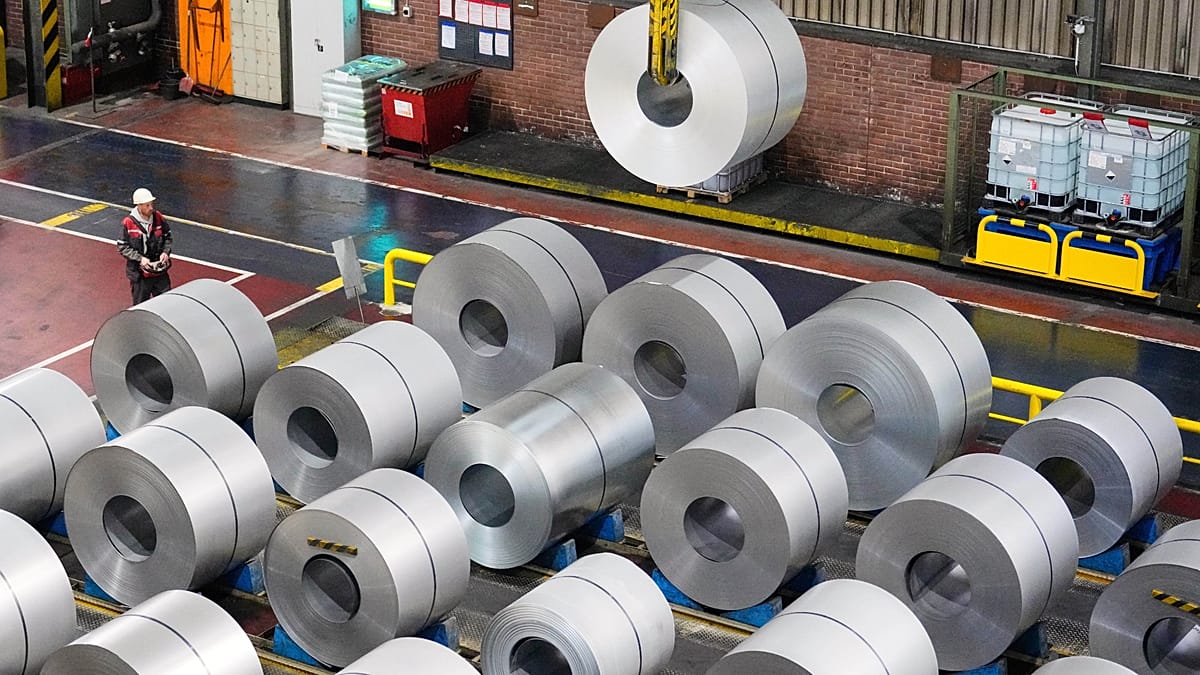
The EU will require importers of steel, aluminium, cement and other heavy goods to purchase CBAM certificates for embedded CO2 from 1 January 2026, after a three-year reporting transition that began in 2023. Certificates will be priced in line with the EU carbon market (roughly €70–€100/tonne), countries with domestic carbon pricing can offset exports, and the Commission expects around €1.5bn in CBAM revenues by 2028 and has proposed a temporary decarbonisation fund to mitigate costs. The measure is intended to prevent carbon leakage and push global carbon pricing but is triggering trade tensions with the US, China, India, Russia and others and risks raising production costs for exporters and EU importers, particularly in steel and aluminium.
MARKET STRUCTURE: CBAM directly raises marginal costs for imported steel, aluminium, cement and fertilizer; European low-carbon producers and recyclers gain relative pricing power while high-emission exporters face margin shocks. Expect certificate-driven passthrough to EU domestic prices and narrower gross margins for import-reliant downstreams; preliminary EU Commission math (certificates ~€70–100/tCO2) implies single-digit percent cost hits for exposed smelters over 12–24 months.
RISK ASSESSMENT: Tail risks include WTO/US retaliation, broad exemptions, or a delayed ETS linkage that could remove demand for CBAM certificates — each could collapse EUA pricing and re-rate beneficiaries within 6–18 months. Hidden dependency: accurate emissions data is now a commercial requirement; exporters unable to document emissions will default to conservative factors, creating cliff-edge revenue losses and customer reallocation in quarters, not years.
TRADE IMPLICATIONS: Near term (days–months) favors buying EU carbon (EUA) exposure and selectively long European low-carbon metal names while shorting high-emission exporters; medium-term (6–24 months) monitor Temporary Decarbonisation Fund disbursements (~€1.5bn by 2028) which soften incumbent industrial pain and cap upside. Volatility catalysts: EU ETS auctions, WTO complaints rulings, and announced domestic carbon taxes in exporting nations.
CONTRARIAN ANGLES: Consensus assumes permanent protectionism; less visible is the incentive for exporters to invest in emissions reporting and domestic carbon pricing — a fast compliance wave would blunt certificate demand and depress EUA prices. Historical parallel: early renewable subsidies spurred rapid tech adoption and cost declines; similarly, expect a bifurcation where certified low-carbon producers capture pricing power and legacy high-emission firms face permanent market-share loss over 2–5 years.
AI-powered research, real-time alerts, and portfolio analytics for institutional investors.
Request DemoOverall Sentiment
moderately negative
Sentiment Score
-0.45
Ticker Sentiment
